Once I made the classic mistake almost everyone makes when buying an air conditioner for the first time. I walked into a store thinking, “An AC is just an AC.” I picked the cheapest one that looked decent, brought it home, and within a week I realized I had chosen the completely wrong type for my room.
The cooling was uneven, electricity bills went up, and the noise drove me crazy at night.
That experience taught me something important: choosing the right type of AC unit matters just as much as choosing the right brand.
Some air conditioners are perfect for small bedrooms. Others are designed for large homes, offices, or even single rooms without windows. Some focus on energy efficiency, while others prioritize portability or powerful cooling.
Once I started learning about the different AC systems, things became much clearer. And honestly, understanding the differences can save you a lot of money, frustration, and repair headaches later.
If you’re confused about which type of air conditioner is best for your home, this guide will explain everything in simple language without sounding overly technical.
Why Choosing the Right AC Unit Matters
Many people focus only on:
- Brand name
- Price
- Cooling capacity
But the actual type of AC system affects:
- Electricity consumption
- Installation cost
- Noise level
- Cooling performance
- Maintenance requirements
I learned this after installing a portable AC in a room that really needed a split unit. The portable system worked, but it struggled constantly during hot afternoons.
The right AC unit should match:
- Room size
- Building layout
- Climate conditions
- Budget
- Usage habits
That’s why understanding different AC types is important before buying anything.
1. Split Air Conditioner
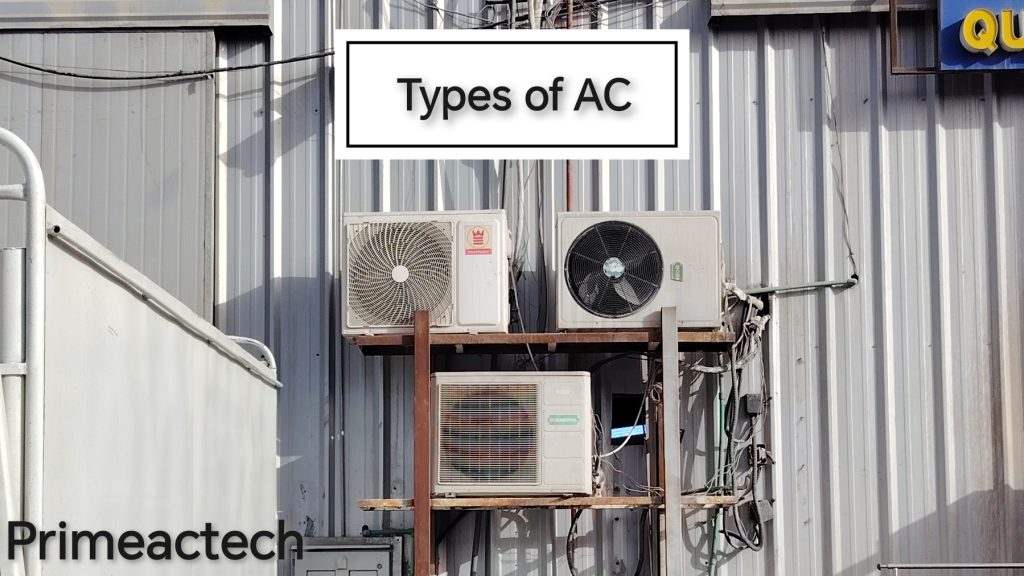
This is probably the most common AC type in modern homes.
A split AC has two main parts:
- Indoor unit
- Outdoor unit
The indoor unit blows cool air into the room.
The outdoor unit contains the compressor and releases heat outside.
Why People Like Split ACs
Split systems are popular because they:
- Cool efficiently
- Run quietly
- Look modern
- Save space
I switched from a window AC to a split AC years ago, and the difference was huge. The room became quieter immediately, and cooling felt more balanced.
Best For
- Bedrooms
- Living rooms
- Apartments
- Offices
Downsides
Installation can be expensive because it requires:
- Wall drilling
- Copper piping
- Professional setup
But once installed properly, split ACs usually perform very well.
2. Window Air Conditioner
Window ACs are older but still extremely common.
These units contain all components inside one box installed directly in:
- A window
- A wall opening
I grew up using window ACs, so there’s honestly a nostalgic feeling attached to them. They cool surprisingly well for their size.
Advantages
- Lower cost
- Easy installation
- Simple maintenance
Problems I Experienced
The biggest downside is noise.
Since the compressor sits inside the same unit, window ACs are usually louder than split systems.
I also noticed they block part of the window and reduce natural light.
Best For
- Small rooms
- Rental apartments
- Budget cooling
If affordability matters most, window ACs still make sense.
3. Portable Air Conditioner
Portable ACs became very popular because they seem convenient.
You simply place the unit inside the room and connect an exhaust hose to a window.
Sounds perfect, right?
Well… sort of.
I tested one during a summer when I couldn’t install a split AC in a rented apartment. It worked reasonably well, but there were some things nobody mentioned online.
What I Liked
- Easy to move
- No permanent installation
- Good for temporary use
What I Didn’t Like
Portable ACs are usually:
- Noisier
- Less efficient
- Slower at cooling larger rooms
The exhaust hose also makes windows look awkward.
Best For
- Small rooms
- Rental spaces
- Temporary cooling setups
Portable ACs are useful, but they’re rarely the best long-term solution.
4. Central Air Conditioning System
Central AC systems are common in large homes, villas, hotels, and commercial buildings.
These systems use:
- Ductwork
- Large compressors
- Air vents throughout the building
The cool air travels through ducts into multiple rooms.
My Experience With Central AC
The first thing I noticed in homes with central AC is how evenly the temperature stays balanced.
Unlike smaller systems, central AC cools the entire building consistently.
Advantages
- Whole-house cooling
- Cleaner appearance
- Better airflow distribution
Downsides
Installation and maintenance costs can be high.
Duct cleaning is also important because dirty ducts affect airflow and air quality.
Best For
- Large homes
- Offices
- Commercial spaces
5. Ductless Mini-Split System
Mini-split systems are becoming extremely popular now.
They work similarly to split ACs but can cool multiple rooms without traditional ductwork.
Each room usually has its own indoor unit connected to one outdoor compressor.
Why People Love Mini-Splits
The biggest advantage is zone cooling.
You can cool:
- One room
- Two rooms
- Specific areas only
without cooling the entire house.
I visited a home recently using mini-splits, and honestly, the flexibility was impressive.
Each room had different temperature settings.
Best For
- Homes without ducts
- Room extensions
- Energy-saving setups
Downsides
Initial installation cost can be high.
But long-term energy savings are often better.
6. Cassette Air Conditioner
Cassette ACs are usually installed in ceilings.
You’ll often see them in:
- Offices
- Shops
- Restaurants
- Meeting rooms
The indoor unit sits inside the ceiling while air blows in multiple directions.
What Makes Them Different
Cassette systems distribute air very evenly.
I noticed this immediately inside a café using ceiling cassette units. Every corner felt equally cool without strong airflow hitting directly.
Best For
- Commercial spaces
- Large rooms
- Modern interiors
Downsides
They require:
- False ceilings
- Professional installation
- Higher installation cost
7. Floor-Mounted Air Conditioner
These units are installed near the floor instead of high on walls.
They’re less common but very useful in certain situations.
Good For
- Rooms with low ceilings
- Spaces with limited wall access
- Elderly users wanting easier maintenance access
I once saw these installed in an older home where wall structure made standard split installation difficult.
They actually worked surprisingly well.
8. Smart Air Conditioners
Modern AC systems are getting smarter every year.
Smart ACs connect with:
- Wi-Fi
- Mobile apps
- Voice assistants
Some can even learn your cooling habits automatically.
I personally tested a smart split AC connected with Google Home, and controlling temperature from bed honestly felt addictive.
Smart Features Include
- Smartphone control
- Energy tracking
- Scheduling
- Voice commands
- Remote access
Best For
- Smart homes
- Energy-conscious users
- Convenience lovers
Which AC Type Is Best?
This depends completely on your situation.
Here’s a simple comparison table.
| AC Type | Best For | Main Advantage |
|---|---|---|
| Split AC | Homes & bedrooms | Quiet cooling |
| Window AC | Budget users | Lower cost |
| Portable AC | Temporary use | Mobility |
| Central AC | Large buildings | Whole-house cooling |
| Mini-Split | Multi-room cooling | Energy efficiency |
| Cassette AC | Offices & shops | Even airflow |
| Floor-Mounted AC | Special layouts | Flexible placement |
There’s no “perfect” AC for everyone.
The best choice depends on:
- Budget
- Room size
- Installation options
- Energy usage
- Cooling needs
Common Mistakes People Make When Buying an AC
I’ve personally made some of these mistakes myself.
Buying Based Only on Price
Cheap AC units sometimes cost more later through:
- Higher electricity bills
- Poor efficiency
- Frequent repairs
Ignoring Room Size
An undersized AC struggles constantly.
An oversized AC cycles too quickly and wastes energy.
Matching BTU capacity properly is extremely important.
Forgetting About Noise
This matters more than people realize.
I once installed a loud portable AC in a bedroom and regretted it immediately during sleep.
Skipping Professional Installation
Bad installation causes:
- Water leaks
- Refrigerant problems
- Weak airflow
- Higher energy use
Even expensive AC systems perform badly when installed incorrectly.
Tips Before Buying Any AC Unit
Here are a few practical things I always recommend now.
Check Energy Efficiency
Look for:
- Inverter technology
- Energy ratings
- Smart temperature control
These features reduce electricity usage significantly.
Think Long-Term
Don’t only focus on purchase price.
Also consider:
- Maintenance
- Spare parts
- Electricity consumption
- Repair availability
Choose Trusted Brands
Reliable brands usually offer:
- Better support
- Easier spare parts access
- Longer lifespan
That matters a lot over time.
Final Thoughts
Understanding the different types of AC units completely changed the way I look at home cooling systems. Before learning about them properly, I honestly thought every AC worked basically the same way. But after using window units, portable systems, split ACs, and smart cooling setups over the years, the differences became very obvious.
Some systems prioritize quiet operation. Others focus on flexibility, affordability, or whole-house cooling. The trick is finding the one that actually fits your space and lifestyle instead of simply buying the cheapest option available.
The biggest lesson I learned is simple: the right AC unit makes your home feel comfortable without constantly reminding you it’s running. Good cooling should feel natural, efficient, and reliable — not noisy, frustrating, or expensive every month.
1 thought on “What are the Different Types of AC Units”
Comments are closed.