
Several years ago, a small grocery store owner asked me to look at a drinks cooler that had become noisy, slow to cool, and expensive to run. The original compressor had already been “repaired” twice, and every fix seemed to buy only a few weeks.
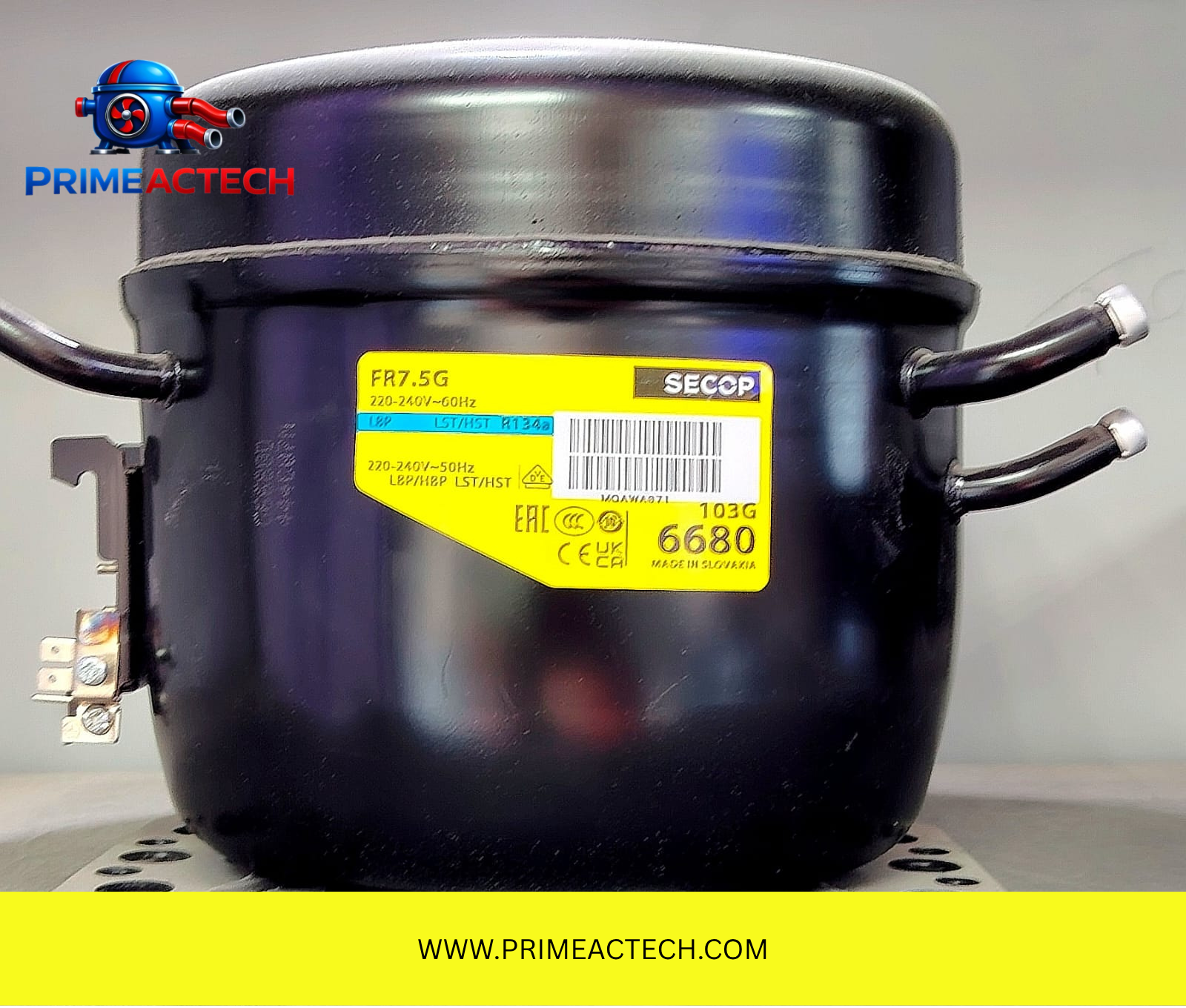
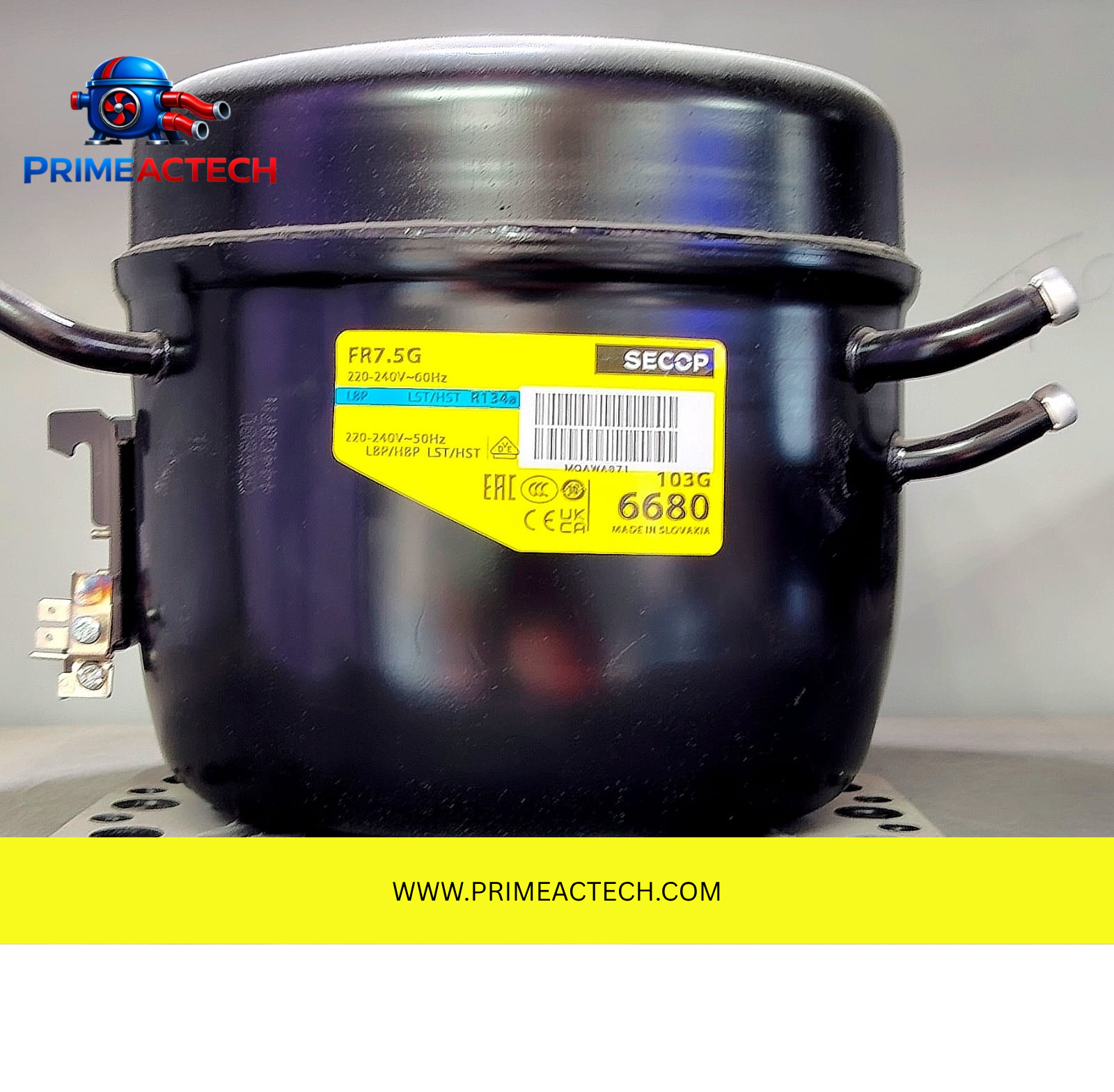
We eventually replaced it with a Danfoss FR‑series unit—specifically an FR7.5G for R134a on 220V/50Hz. What stood out wasn’t some dramatic marketing claim. It was the absence of drama afterward. The cooler pulled down temperature reliably, the compressor ran noticeably quieter than the failing unit, and service calls for that case basically disappeared.
If you’re considering a Danfoss Universal Compressor FR7.5G R134a 220V‑50Hz, here’s the kind of information I wish every technician and buyer got before ordering one.


5
What the FR7.5G is actually good at
This is a small hermetic refrigeration compressor designed for R134a systems running on 220V/50Hz. In practical terms, think:
- Drink coolers
- Display refrigerators
- Small commercial reach‑ins
- Certain domestic or light‑commercial refrigeration conversions that already use R134a
The key phrase is “R134a system.”
Don’t treat “universal” as “works with any refrigerant.” I’ve seen people try to substitute compressors across refrigerants and capillary setups because the mounting looked close enough. That shortcut is one of the fastest ways to create poor performance, overheating, or repeat failures.
My first impression after installation
When I unboxed the FR7.5G, the thing that caught my attention was the familiar Danfoss build quality: clean welds, decent paint, properly protected terminals, and the kind of packaging that suggests the manufacturer expects the compressor to survive real shipping.
The installation itself was straightforward, but I made a mistake that taught me a useful lesson. I reused the old filter‑drier because it “looked fine.” The system initially ran, but superheat was unstable and pull‑down was slower than expected. After replacing the drier and pulling a proper vacuum, the system behaved exactly as it should.
That was a reminder that a compressor replacement is rarely just a compressor replacement. Contamination and moisture are often part of the original failure story.
What changed in operation
Compared with the worn compressor it replaced, the FR7.5G delivered three noticeable improvements:
| Area | What I observed |
|---|---|
| Noise | Lower mechanical noise and less rattling during startup. |
| Temperature pull‑down | More consistent pull‑down after door openings. |
| Compressor cycling | Fewer short‑cycle events once the system charge and controls were corrected. |
Notice the last point: the compressor didn’t magically fix a control problem. We also corrected the thermostat settings and verified condenser airflow. Good compressors still need a healthy system around them.
A practical replacement workflow
If you’re replacing an FR‑series compressor in a small R134a cooler, this is the workflow I follow now:
- Confirm the refrigerant and power supply first. Read the nameplate. Verify the system is actually R134a and that the supply is 220–240V/50Hz.
- Recover refrigerant properly. Don’t vent refrigerant. Use recovery equipment that meets local regulations.
- Replace the filter‑drier. I no longer skip this, even if the old one “looks okay.” Moisture and debris can quickly damage a new compressor.
- Check the condenser and fan. A dirty condenser can make a new compressor appear weak because condensing temperatures stay too high.
- Braise carefully. Use nitrogen purging if available. Excessive oxidation inside the tubing becomes contamination later.
- Pull a deep vacuum. I use a micron gauge whenever possible. “The gauge went negative” is not the same thing as a proper evacuation.
- Charge by weight or verified system procedure. Don’t guess the charge by frost patterns alone.
- Measure superheat and subcooling (or the applicable verification method for the system). This is where you find capillary issues, airflow problems, and under/overcharge conditions before the customer does.
Tools that genuinely help
- Digital manifold or quality analog gauges
- Vacuum pump + micron gauge
- Refrigerant scale
- Clamp meter
- Leak detector
- Temperature probes for line measurements
You can get a system “cold enough” without some of these tools, but you’ll spend far more time chasing intermittent issues later.
Common mistakes I’ve seen with the FR7.5G
- Treating “universal” as refrigerant‑agnostic. The FR7.5G is for R134a applications. Match the refrigerant, oil type, and system design.
- Reusing a contaminated drier. The new compressor becomes the most expensive filter in the system.
- Skipping the vacuum because the repair is “small.” Moisture plus POE‑based systems is a bad combination.
- Charging until the suction line looks cold. Frost patterns are not a reliable charging method.
- Ignoring airflow. I’ve had customers swear a new compressor was defective when the real culprit was a condenser coil packed with dust and grease.
- Not checking the start device and overload. A compressor that won’t start cleanly can mimic a locked compressor symptom.
Real‑world use cases
Small drinks cooler in a convenience store
This is probably the sweet spot. Moderate load, frequent door openings, and long operating hours. After replacement, the owner mainly noticed less noise and more stable product temperature.
Back‑bar refrigerator in a café
Good fit if the original system is R134a and the condenser area is kept clean. Café environments often clog condensers faster than people realize because of grease and dust.
Domestic refrigerator conversion
I’m more cautious here. Physical fitment, oil compatibility, capillary sizing, and efficiency expectations all matter. I’ve seen conversions work, but I’ve also seen them become endless tuning projects. For household appliances, I generally prefer matching the original compressor specification as closely as possible rather than “close enough.”
How I judge whether the installation is healthy
After the system stabilizes, I look for:
- Normal running current relative to the compressor and system load
- Stable suction pressure for the application
- Reasonable discharge temperature
- Consistent cabinet temperature recovery after door openings
- No hunting, rapid cycling, or repeated overload trips
- Condenser outlet temperature that makes sense for ambient conditions
These checks tell me much more than whether the compressor “sounds okay.”
A lesson that cost me a callback
On one job, I focused so much on the compressor replacement that I overlooked a partially blocked condenser fan shroud. The new FR7.5G started fine, pressures looked acceptable at first, and I left. Two days later the customer reported intermittent warm temperatures during the hottest part of the afternoon.
The compressor wasn’t the problem. High head pressure from poor airflow was. Once the shroud and condenser were cleaned and airflow restored, the system ran normally.
That experience reinforced a rule I now follow: treat the compressor as one component in a thermodynamic system, not as the system itself.
Is the FR7.5G a good choice?
For a properly designed R134a 220V/50Hz refrigeration system in the small commercial range, I’ve had good results with it. The strengths that matter in practice are reliability, predictable startup behavior, parts availability in many markets, and compatibility with common R134a cooler applications.
What I wouldn’t do is buy it solely because the word “universal” appears in a listing. I’d verify the refrigerant, electrical supply, mounting, tubing connections, and system capacity requirements before ordering.
If you’re replacing a failed compressor and the original system was an R134a 220–240V/50Hz cooler in the same performance class, the FR7.5G is one of those models that technicians tend to feel comfortable installing because it behaves predictably when the rest of the system is healthy.
Quick compatibility checklist before you buy: R134a system • 220–240V / 50Hz supply • Similar cooling capacity class to the original compressor • Matching mounting footprint and tube sizes • New filter‑drier included in the job • Proper evacuation and charging tools available.
If all six boxes are checked, you’re starting from a much better place than most emergency compressor swaps.

| DANFOSS COMPRESSOR |
| FR7.5G HP |
| FR7.5G DATASHEET |
| R134A SECOP |
| FR7.5G 1/5HP |