
I still remember one service call where a customer complained that their split air conditioner was running almost all day without cooling the living room properly. They had already replaced the capacitor and cleaned the indoor filters, but the problem remained. After checking the refrigerant pressure, compressor winding resistance, and current draw with a digital multimeter and clamp meter, I found that the compressor had lost its pumping efficiency. Instead of replacing the entire air conditioning unit, we installed a Mitsubishi NH52VNHT 2.5Ton Compressor, and the difference was immediate. The cooling returned, the outdoor unit became noticeably quieter, and the customer was relieved to avoid the cost of a complete system replacement. Mitsubishi 2.5Ton Compressor NH52VNHT R22/1PH/50HZ,
Experiences like this remind me that the compressor is the heart of any air conditioning system. When it starts to fail, even the best-maintained AC struggles to perform. If you’re considering the Mitsubishi 2.5Ton Compressor NH52VNHT R22/1PH/50HZ, this guide will help you understand its features, applications, installation tips, and maintenance practices.
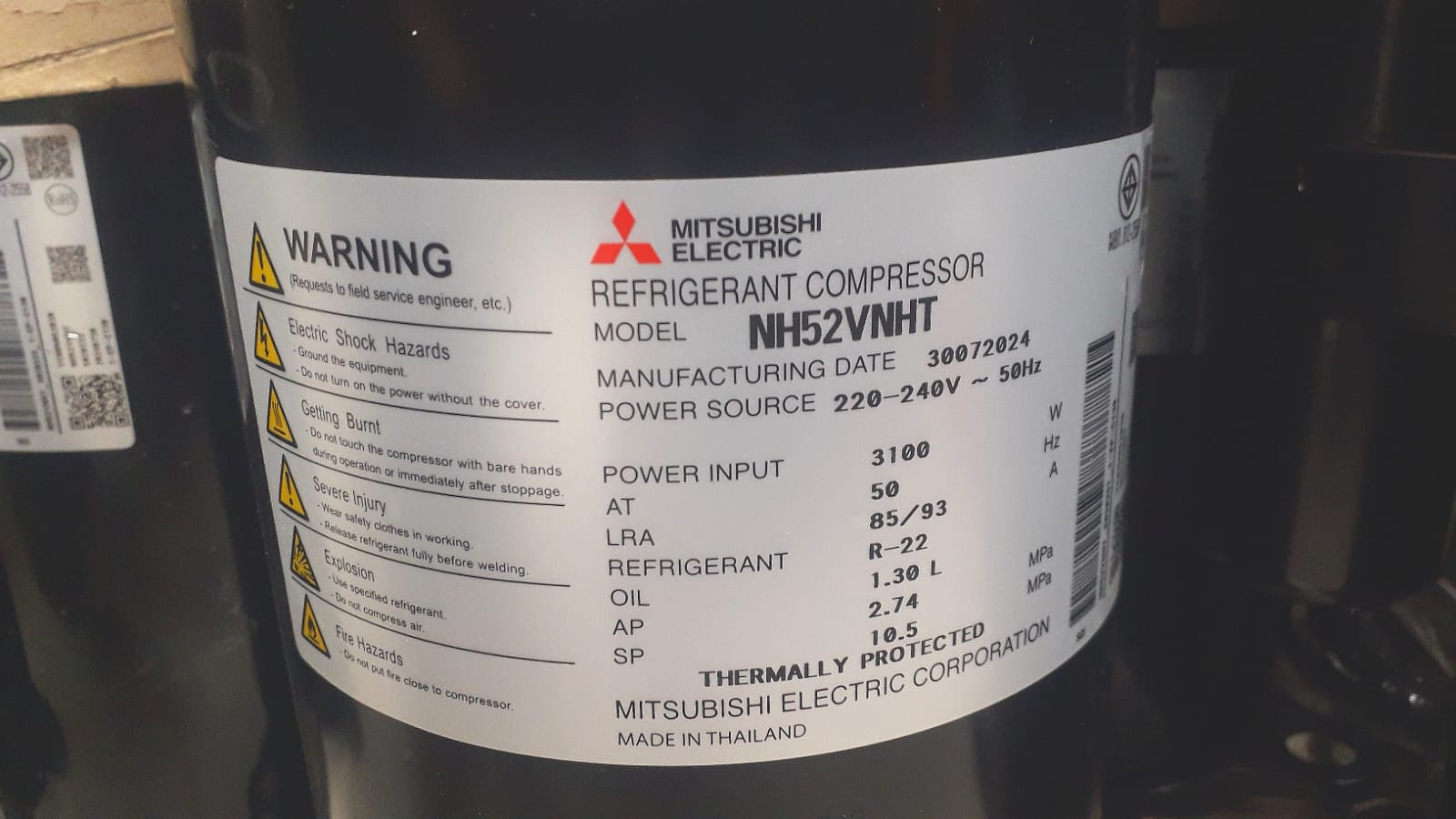
What Is the Mitsubishi NH52VNHT Compressor?
The Mitsubishi NH52VNHT is a 2.5-ton rotary compressor designed for air conditioning systems using R22 refrigerant. It operates on a single-phase (1PH), 50Hz power supply, making it suitable for many residential and light commercial air conditioners installed in regions where 220–240V, 50Hz electricity is standard.
Mitsubishi has built a strong reputation for manufacturing reliable compressors that deliver stable cooling performance while maintaining quiet operation and good energy efficiency.
Although R22 refrigerant has been phased out in many countries for new installations, countless existing systems still rely on it. For these units, replacing a failed compressor with the correct compatible model is often the most economical solution.
Key Features
The Mitsubishi NH52VNHT offers several practical benefits that HVAC technicians and property owners appreciate.
2.5-Ton Cooling Capacity
The compressor is designed for medium-sized split air conditioning systems, providing sufficient cooling for homes, offices, and small commercial spaces.
Rotary Compressor Design
Rotary compressors have fewer moving parts than traditional reciprocating compressors. This design helps reduce vibration, improve efficiency, and lower operating noise.
Single-Phase Operation
Its 1PH power supply allows installation in standard residential electrical systems without requiring three-phase power.
Quiet Performance
One thing I’ve noticed after installing Mitsubishi compressors is how much smoother the outdoor unit sounds. Customers often mention that the rattling or humming noise they had grown used to disappears after the replacement.
Built for Continuous Cooling
The compressor is designed to operate for long hours during hot weather while maintaining reliable cooling performance when the system is properly maintained.
Typical Specifications
Exact specifications can vary depending on the equipment manufacturer, but the Mitsubishi NH52VNHT generally includes the following characteristics.
| Specification | Details |
|---|---|
| Brand | Mitsubishi |
| Model | NH52VNHT |
| Cooling Capacity | 2.5 Ton |
| Compressor Type | Rotary |
| Refrigerant | R22 |
| Power Supply | 1 Phase |
| Frequency | 50 Hz |
| Application | Split Air Conditioner |
| Installation | Professional HVAC Installation Recommended |
Always verify the model number, refrigerant type, voltage, and piping compatibility before purchasing a replacement compressor.
Common Applications
The Mitsubishi NH52VNHT is commonly installed in:
- Residential split air conditioners
- Apartments
- Villas
- Office spaces
- Retail stores
- Clinics
- Small commercial buildings
Its 2.5-ton capacity makes it ideal for cooling medium-sized indoor areas that require reliable performance throughout the day.
Performance in Real-World Use
From my experience, Mitsubishi compressors tend to deliver consistent cooling when matched with a clean refrigeration system.
I’ve worked on systems where homeowners assumed the entire air conditioner was worn out. After replacing only the failed compressor and thoroughly cleaning the condenser coil, the system performed almost like new.
Another thing I appreciate is the smooth startup. Unlike some older compressors that shake the outdoor unit when starting, Mitsubishi rotary compressors usually start quietly when the capacitor and electrical supply are in good condition.
Installation Tips
Replacing a compressor isn’t simply about removing the old one and installing a new one. Following the proper procedure can significantly improve reliability.
Step 1: Confirm Compatibility
Before installation, verify:
- Compressor model
- Voltage
- Refrigerant type
- Cooling capacity
- Pipe connection sizes
- Mounting dimensions
Installing an incorrect compressor can cause poor performance or damage the system.
Step 2: Replace the Filter Drier
This is one step I never skip.
A new filter drier removes:
- Moisture
- Dirt
- Acid contamination
Replacing this inexpensive component helps protect the new compressor from internal damage.
Step 3: Pressure Test the System
Use dry nitrogen to perform a pressure test after brazing the connections.
Checking for leaks before charging refrigerant saves both time and refrigerant.
Step 4: Pull a Deep Vacuum
Use a quality vacuum pump to remove moisture and air from the refrigeration circuit.
Skipping this step can lead to acid formation and reduce compressor life.
Step 5: Charge the Correct Refrigerant
Since the NH52VNHT is designed for R22 refrigerant, always charge the system according to the manufacturer’s recommendations.
Both undercharging and overcharging can reduce cooling performance and increase compressor stress.
Step 6: Monitor System Operation
After startup, check:
- Suction pressure
- Discharge pressure
- Compressor current
- Air outlet temperature
- Noise level
Stable readings usually indicate a successful installation.
Common Problems That Are Often Misdiagnosed
Many compressors are replaced unnecessarily because other faults create similar symptoms.
Dirty Condenser Coil
A clogged outdoor coil increases head pressure and reduces cooling efficiency.
Cleaning the coil often restores normal performance.
Weak Capacitor
A weak run capacitor may prevent the compressor from starting correctly.
Always test the capacitor with a capacitance meter before replacing the compressor.
Refrigerant Leak
Low refrigerant can cause:
- Poor cooling
- Ice formation
- Long operating cycles
- Increased energy consumption
Repair the leak before recharging the system.
Electrical Issues
Loose wiring, worn contactors, or damaged overload protectors can imitate compressor failure.
A few minutes of electrical testing can prevent unnecessary replacement costs.
Maintenance Tips for Longer Compressor Life
Regular maintenance is one of the easiest ways to extend compressor life.
Clean Indoor Air Filters
Dirty filters restrict airflow and force the compressor to work harder.
Cleaning them every few weeks during heavy use improves both cooling and efficiency.
Keep the Outdoor Unit Clean
Leaves, dust, and debris reduce airflow across the condenser.
Wash the outdoor coil carefully during routine maintenance.
Check Refrigerant Levels
Low refrigerant places additional strain on the compressor.
If refrigerant is low, locate and repair the leak instead of repeatedly topping up the system.
Inspect Electrical Connections
Loose electrical terminals generate heat and can damage electrical components.
Checking these connections annually can prevent expensive repairs.
Schedule Professional Servicing
An annual HVAC inspection helps detect:
- Refrigerant leaks
- Electrical problems
- Fan motor issues
- Pressure abnormalities
- Early compressor wear
Preventive maintenance is usually much less expensive than emergency repairs.
Common Mistakes to Avoid
Even experienced technicians occasionally overlook important details.
Avoid these common mistakes:
- Installing the wrong compressor model
- Mixing incompatible refrigerants
- Reusing an old filter drier
- Skipping the vacuum process
- Overcharging or undercharging refrigerant
- Ignoring electrical testing before replacing the compressor
Paying attention to these details greatly improves the reliability of the repair.
Is the Mitsubishi NH52VNHT a Good Choice?
If your air conditioning system is designed for R22 refrigerant and requires a 2.5-ton single-phase compressor, the Mitsubishi NH52VNHT R22/1PH/50HZ is a dependable replacement option. Its rotary design provides smooth, quiet operation, reliable cooling, and durable performance for residential and light commercial applications. When installed correctly, paired with a clean refrigeration system, and maintained through regular servicing, this compressor can deliver years of dependable operation, making it a practical choice for restoring the performance of compatible R22 air conditioning systems.