
If you’ve ever been called to a commercial AC unit on one of the hottest days of the year, you know the pressure. A few months ago, I worked on a rooftop package unit that kept tripping after running for about twenty minutes. The customer was convinced the compressor had failed because the cooling kept dropping off. After checking refrigerant pressures, airflow, capacitors, and electrical connections, the actual culprit turned out to be a faulty condenser fan motor that was causing the compressor to overheat.
The compressor itself—a BH96VEHT 5Ton Scroll Mitsubishi Compressor—was still in excellent condition.
That job reminded me of something every HVAC technician eventually learns: compressors often get blamed for problems they didn’t create. The BH96VEHT is one of those compressors that quietly does its job when the rest of the system is healthy. If you’re considering this model for a replacement or simply want to know whether it’s a reliable option, here’s what I’ve learned from working with similar Mitsubishi scroll compressors.
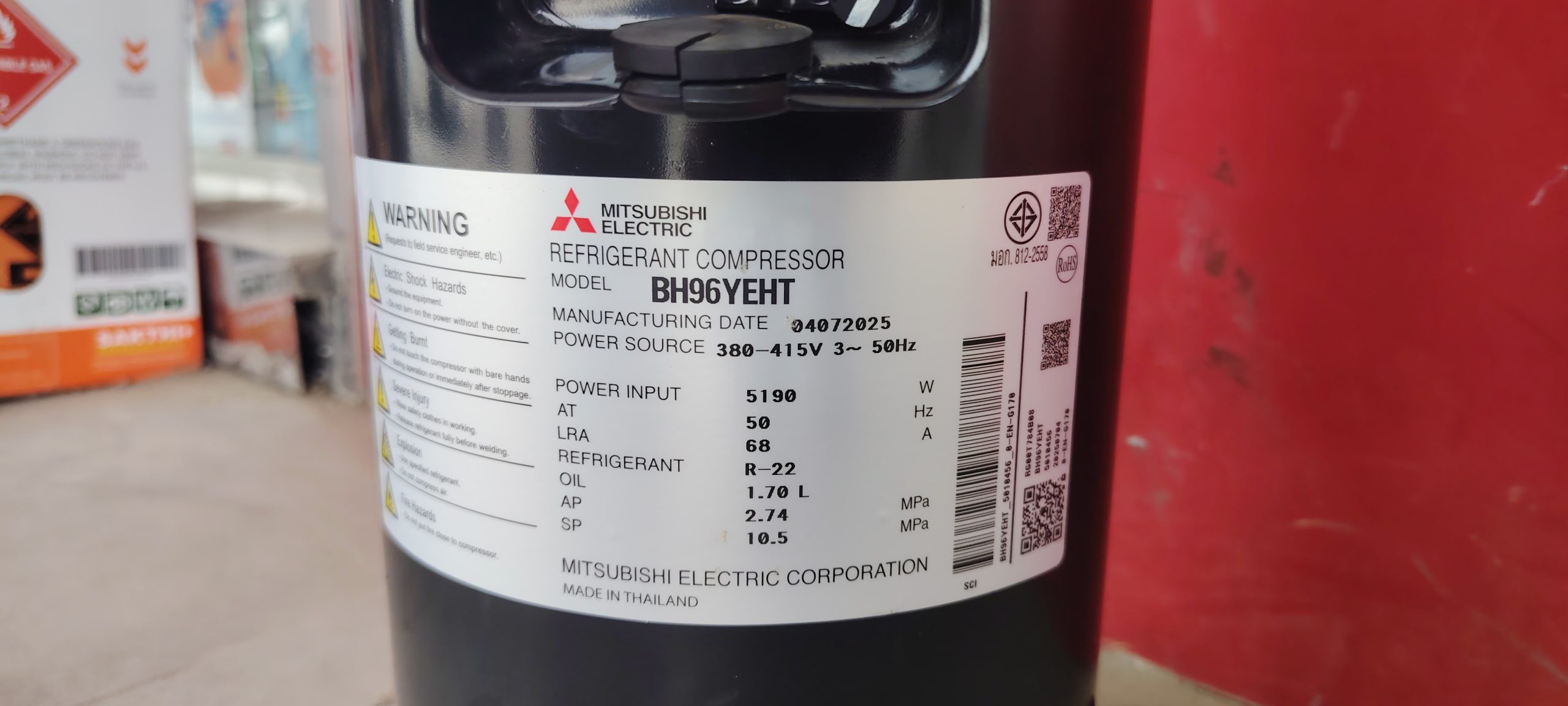
What Is the BH96VEHT 5Ton Scroll Mitsubishi Compressor?
The BH96VEHT is a 5-ton scroll compressor manufactured by Mitsubishi for commercial and residential air conditioning systems. It is designed to provide dependable cooling while operating efficiently under demanding conditions.
Unlike older reciprocating compressors that use pistons, scroll compressors compress refrigerant using two spiral-shaped scrolls. One remains stationary while the other moves in a circular motion. This design has fewer moving parts, resulting in quieter operation, lower vibration, and improved reliability.
These compressors are commonly found in:
- Rooftop package units
- Large split air conditioners
- Commercial cooling systems
- Light industrial HVAC equipment
- Replacement applications for compatible systems
Key Features
The BH96VEHT offers several advantages that make it popular among HVAC professionals.
Scroll Compression Technology
Scroll compressors are known for smooth operation. Since there are fewer internal moving components, wear is reduced and efficiency improves over time.
High Cooling Capacity
A 5-ton compressor can handle larger cooling loads, making it suitable for:
- Medium-sized offices
- Retail shops
- Restaurants
- Villas
- Warehouses
- Commercial buildings
Quiet Performance
One thing I notice during service calls is how much quieter scroll compressors are compared to older piston models. Customers often mention that the outdoor unit sounds smoother after replacement.
Energy Efficiency
While system efficiency depends on many factors, scroll compressors generally use energy more effectively because there is less internal leakage during compression.
Reliable Starting
These compressors usually start smoothly with less vibration, reducing stress on electrical components.
Typical Specifications
Although specifications may vary depending on system design and production version, the BH96VEHT generally falls into this category.
| Specification | Details |
|---|---|
| Compressor Type | Scroll |
| Brand | Mitsubishi |
| Model | BH96VEHT |
| Capacity | 5 Ton |
| Application | Air Conditioning |
| Cooling Type | HVAC Systems |
| Installation | Outdoor Condensing Units |
| Usage | Commercial & Residential |
Always verify the exact electrical ratings and refrigerant compatibility from the compressor nameplate before installation.

Where Is It Commonly Used?
I’ve mostly encountered compressors in this size range in commercial installations.
Typical applications include:
- Office buildings
- Banks
- Shopping outlets
- Medical clinics
- Educational facilities
- Restaurants
- Hotels
- Villas with central AC
A properly sized 5-ton compressor can provide stable cooling even during long operating hours.
Why Many Technicians Prefer Scroll Compressors
After servicing HVAC systems for years, there are several reasons I usually recommend scroll compressors when compatible with the equipment.
Less Noise
Customers immediately notice the quieter operation.
Instead of loud knocking sounds common in worn reciprocating compressors, scroll compressors produce a steady humming sound.
Lower Maintenance
Because there are fewer moving parts, there are fewer components that wear out internally.
Routine maintenance mainly focuses on:
- Cleaning condenser coils
- Checking refrigerant charge
- Monitoring operating pressures
- Inspecting electrical connections
- Verifying airflow
Better Reliability
Many compressor failures are actually caused by:
- Low refrigerant
- Dirty condensers
- Voltage imbalance
- Moisture contamination
- Poor airflow
When these issues are prevented, Mitsubishi scroll compressors often provide years of dependable service.
Installation Tips From Experience
Replacing a compressor isn’t simply a matter of swapping parts. I’ve seen perfectly good compressors fail because shortcuts were taken during installation.
Here’s the process I always recommend.
1. Confirm the Exact Model
Double-check:
- Cooling capacity
- Refrigerant type
- Voltage
- Phase
- Mounting dimensions
Never assume two compressors are interchangeable just because they look similar.
2. Replace the Filter Drier
Skipping this step can allow moisture and contaminants into the system.
A new filter drier is inexpensive compared to the cost of another compressor replacement.
3. Pull a Deep Vacuum
This is one step that should never be rushed.
Use a quality vacuum pump and micron gauge to remove moisture and non-condensable gases before charging refrigerant.
4. Charge the Correct Refrigerant Amount
Overcharging can increase discharge pressure.
Undercharging may cause overheating and poor lubrication.
Always charge according to the manufacturer’s specifications.
5. Verify Electrical Supply
Measure:
- Supply voltage
- Running current
- Starting current
- Phase balance (for three-phase systems)
Electrical issues are among the leading causes of compressor damage.
Performance in Daily Operation
One thing I’ve noticed with Mitsubishi scroll compressors is their consistent performance.
When installed correctly:
- Cooling remains stable.
- Noise levels stay low.
- Vibration is minimal.
- Current draw remains within normal limits.
- Indoor comfort improves noticeably.
I’ve serviced systems that have run for years with only routine maintenance.
Common Problems That Aren’t Actually Compressor Failures
One mistake I made early in my career was assuming every warm AC had a bad compressor.
Experience quickly proved otherwise.
Some common causes include:
Dirty Condenser Coil
Restricted airflow raises operating pressure and reduces cooling.
Cleaning the coil often restores normal performance.
Faulty Capacitor or Contactor
Weak electrical components can prevent proper compressor starting.
Replacing a £15–£30 component may solve what appears to be a major issue.
Refrigerant Leak
Low refrigerant causes:
- Poor cooling
- Higher compressor temperature
- Reduced efficiency
Leak detection should always come before adding refrigerant.
Indoor Airflow Problems
Dirty filters or blower issues reduce cooling capacity even if the compressor is working perfectly.
Fan Motor Failure
I’ve seen compressors replaced unnecessarily when the actual fault was a failed condenser fan motor.
Without proper airflow, head pressure rises rapidly.
Maintenance Tips
Keeping a compressor healthy is much easier than replacing one.
I usually recommend the following routine.
Every Month
- Inspect air filters
- Listen for unusual sounds
- Check thermostat operation
Every Three to Six Months
- Clean condenser coils
- Inspect wiring
- Tighten electrical terminals
- Check operating pressures
Annually
- Inspect refrigerant levels
- Test compressor amperage
- Verify superheat and subcooling
- Check insulation resistance if necessary
Routine maintenance can significantly extend compressor life.
Common Installation Mistakes
These are mistakes I’ve personally seen during service calls.
Skipping System Flushing
Contaminants from a failed compressor can destroy the replacement unit.
Ignoring Acid Cleanup
If the old compressor burned out electrically, acid cleanup is essential.
Incorrect Refrigerant
Always use the refrigerant specified for the system.
Mixing refrigerants or using substitutes without manufacturer approval can damage the compressor.
Poor Brazing Practices
Failure to flow nitrogen while brazing may create oxidation inside refrigerant lines.
These particles can circulate through the system and shorten compressor life.
Not Checking Oil Return
Improper piping or installation can prevent adequate oil return, reducing lubrication over time.
Is the BH96VEHT Worth Considering?
From what I’ve seen, this compressor performs well when matched with the correct system and installed properly.
It isn’t the kind of component that draws attention once it’s running—and that’s actually a good thing. A reliable compressor should quietly deliver consistent cooling without constant service calls.
If you’re replacing an existing compressor, make sure the electrical specifications, refrigerant type, and system capacity all match the original design. Compatibility matters just as much as the compressor itself.
Who Should Choose This Compressor?
The BH96VEHT is a suitable choice for:
- HVAC contractors replacing compatible compressors
- Commercial property owners
- Facility maintenance teams
- Building managers
- Air conditioning service companies
- Technicians restoring 5-ton cooling systems
It’s best installed by qualified HVAC professionals who can verify compatibility and follow proper commissioning procedures.
Final Thoughts
The BH96VEHT 5Ton Scroll Mitsubishi Compressor has the qualities many technicians look for: smooth operation, dependable performance, and solid efficiency when it’s part of a well-maintained system. In my experience, the compressor itself is rarely the weak link. More often, poor airflow, refrigerant leaks, or electrical issues are responsible for the problems people blame on it.
If you’re investing in a replacement, don’t focus only on the compressor. Take the time to inspect the entire system, replace worn accessories such as the filter drier, evacuate the system properly, and charge it with the correct refrigerant. Those extra steps can make the difference between a compressor that lasts a couple of years and one that provides reliable cooling for a decade or more. A quality compressor deserves a quality installation, and the BH96VEHT is no exception.