The first time I came across the Copeland Compressor ZP20KSE-PFZ-522, I was troubleshooting a small commercial air conditioning system that simply refused to cool properly. The outdoor fan was running, the thermostat looked fine, but the compressor wasn’t delivering the cooling everyone expected. At first, I assumed it was another failed capacitor or contactor. After a proper inspection, I realised the compressor itself was still healthy—the actual problem was low refrigerant caused by a tiny leak. Copeland Compressor ZP20KSE-PFZ-522.
That experience reminded me of something every HVAC technician eventually learns: never blame the compressor before checking the basics.
Since then, I’ve worked on several Copeland scroll compressors, and the ZP20KSE-PFZ-522 has always impressed me with its quiet operation and dependable performance when installed correctly. If you’re considering this model or trying to understand whether it’s the right replacement, here’s what I’ve learned.
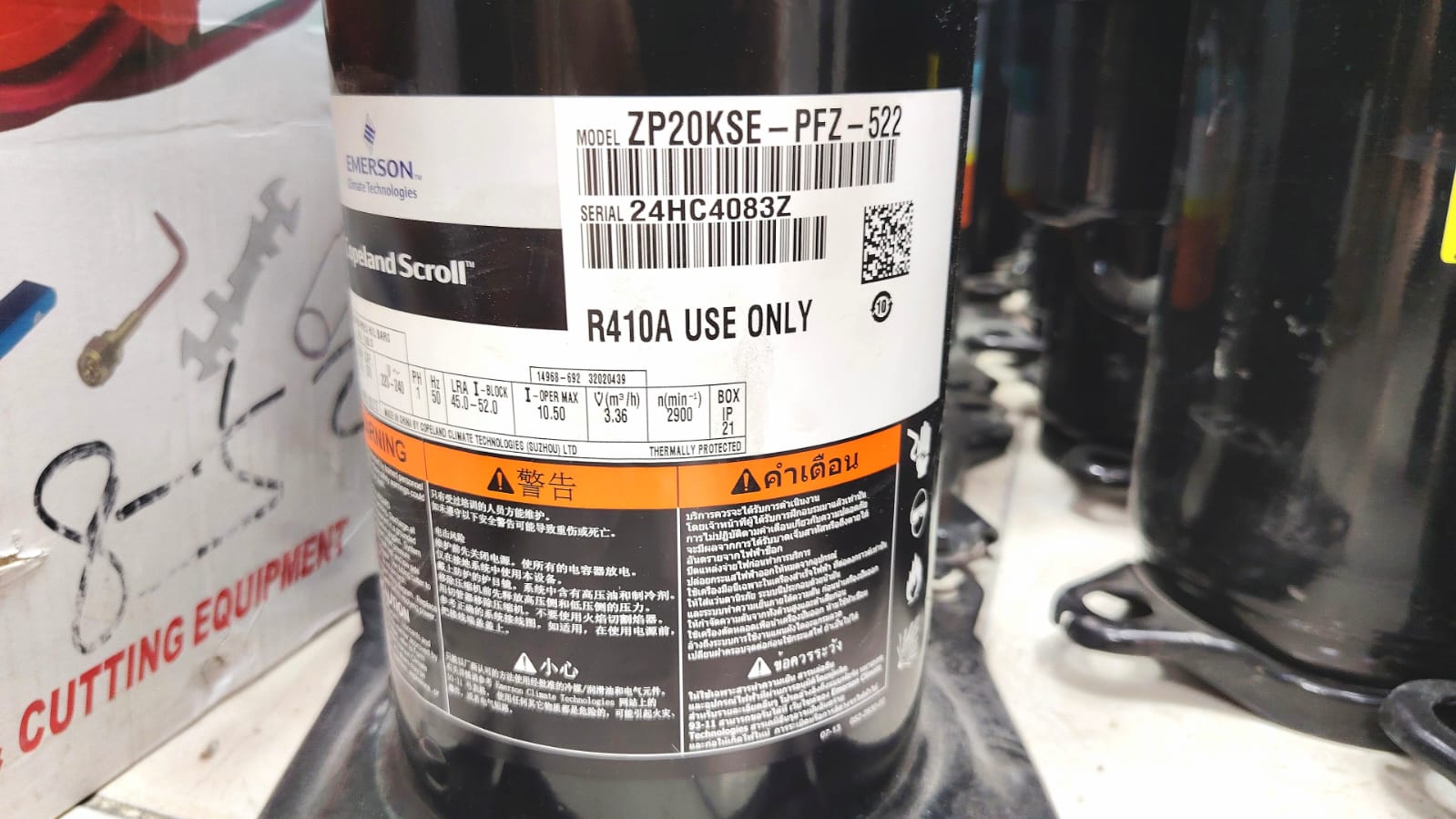
What Is the Copeland Compressor ZP20KSE-PFZ-522?
The Copeland ZP20KSE-PFZ-522 is a scroll compressor designed primarily for R410A air conditioning systems. It is commonly found in residential split air conditioners, light commercial cooling systems, and packaged HVAC units.
Unlike older reciprocating compressors that rely on pistons moving up and down, a scroll compressor uses two spiral-shaped scrolls to compress refrigerant smoothly. This design creates less vibration, reduces noise, and generally lasts longer when maintained properly.
Many technicians prefer Copeland scroll compressors because replacement parts and technical information are widely available, making future servicing much easier.
Key Features
Here are some of the highlights that stand out after working with this model:
- Designed for R410A refrigerant
- High cooling efficiency
- Scroll compression technology
- Smooth and quiet operation
- Lower vibration than piston compressors
- Suitable for residential and light commercial HVAC systems
- Built for continuous operation in demanding climates
- Reliable performance with proper installation
These aren’t just marketing features—they genuinely make a difference during day-to-day operation.
Typical Applications
You’ll often find the ZP20KSE-PFZ-522 installed in:
- Residential split air conditioners
- Rooftop package units
- Light commercial cooling systems
- Small office buildings
- Retail shops
- Villas and apartments
- Computer rooms with dedicated cooling
- HVAC replacement projects
In regions with hot summers, such as the Middle East, these compressors often run for many hours each day, making reliability especially important.
Technical Specifications
Although specifications may vary slightly depending on the manufacturer or system design, the compressor generally offers:
| Specification | Details |
|---|---|
| Model | Copeland ZP20KSE-PFZ-522 |
| Compressor Type | Scroll |
| Refrigerant | R410A |
| Application | Air Conditioning |
| Cooling Capacity | Approximately 2 Ton (varies by system) |
| Phase | Single Phase |
| Frequency | 50/60 Hz |
| Cooling Type | Suction Gas Cooled |
| Motor Protection | Internal Protection |
| Installation | Vertical |
Always verify the system requirements before replacing any compressor.
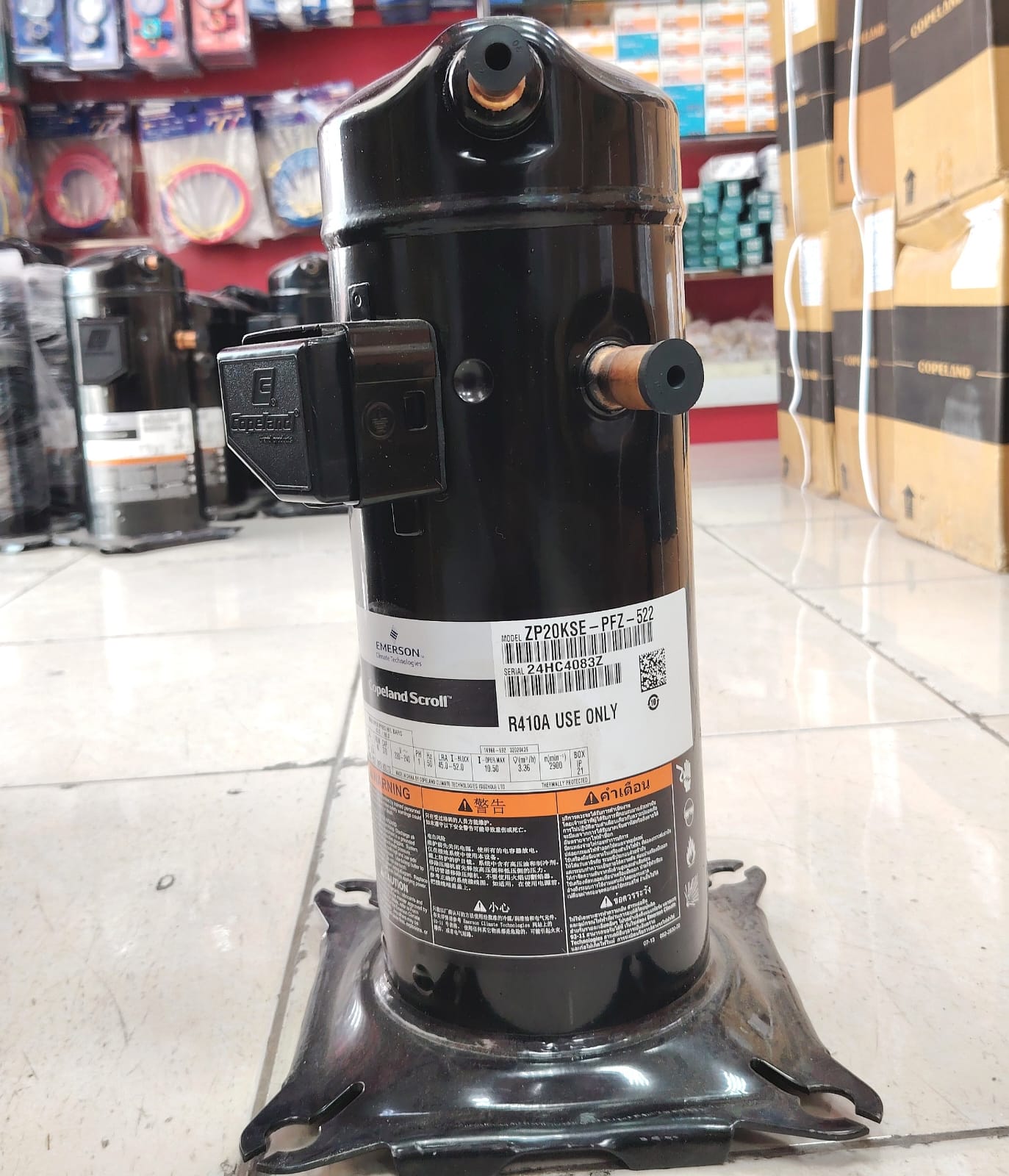
Why Scroll Compressors Are So Popular
Years ago, piston compressors dominated residential air conditioners. Today, scroll compressors have become the preferred choice for many manufacturers.
Here’s why.
Less Noise
The first thing homeowners usually notice after replacing an old reciprocating compressor is how much quieter the outdoor unit becomes.
Better Efficiency
Because there are fewer moving parts, energy losses are reduced. This often leads to lower electricity consumption under normal operating conditions.
Improved Reliability
With fewer internal components rubbing against each other, wear tends to be lower over time.
Reduced Vibration
Lower vibration means less stress on refrigerant piping and fewer annoying noises during operation.
Installation Tips From Experience
Installing a new compressor isn’t simply a matter of swapping parts. The installation process has a huge impact on how long the compressor will last.
Whenever I install a new Copeland compressor, I follow these basic steps.
Step 1: Confirm the Correct Replacement
Never rely only on the appearance of the old compressor.
Check:
- Model number
- Refrigerant type
- Voltage
- Phase
- Capacity
Installing the wrong compressor can create serious performance problems.
Step 2: Replace the Filter Drier
This is one shortcut I never recommend skipping.
The filter drier captures moisture and debris that can damage the new compressor.
Replacing it is inexpensive compared to replacing another compressor.
Step 3: Pressure Test the System
Always perform a nitrogen pressure test before charging refrigerant.
A tiny leak can destroy even the best compressor if ignored.
Step 4: Pull a Deep Vacuum
A proper vacuum removes:
- Moisture
- Air
- Non-condensable gases
I normally aim for a deep vacuum before charging the system.
Step 5: Charge Refrigerant Correctly
Adding refrigerant “by guess” is one of the most common mistakes.
Instead, charge according to:
- Manufacturer recommendations
- Superheat
- Subcooling
- System operating pressures
Real-Life Performance
One installation that stands out involved a small office where the previous compressor had failed because the condenser coil had never been cleaned.
After installing the ZP20KSE-PFZ-522, we also:
- cleaned the condenser
- replaced the contactor
- installed a new filter drier
- repaired a minor refrigerant leak
- evacuated the system properly
The difference was immediate.
The compressor started smoothly, cooling returned quickly, and the current draw stayed well within specifications.
More importantly, the office manager mentioned that the outdoor unit sounded noticeably quieter than before.
Common Problems That Aren’t Actually Compressor Failures
Many people assume the compressor is faulty when the system stops cooling.
In reality, I’ve seen far more issues caused by something else.
Common examples include:
Dirty Condenser Coil
Poor airflow raises head pressure and makes the compressor work much harder.
Low Refrigerant Charge
Even a small refrigerant leak can reduce cooling dramatically.
Weak Capacitor
A failing run capacitor often causes hard starting.
Contactor Problems
Burned electrical contacts may prevent proper compressor operation.
Thermostat Issues
Sometimes the outdoor unit never receives the signal to start.
Maintenance Tips
One reason Copeland compressors have such a good reputation is that they don’t require complicated maintenance.
Instead, focus on maintaining the entire HVAC system.
I recommend:
- Cleaning condenser coils regularly
- Checking refrigerant pressures annually
- Inspecting electrical terminals
- Tightening loose wiring
- Cleaning outdoor debris
- Monitoring operating current
- Replacing dirty air filters
- Checking airflow through the evaporator
These simple tasks often prevent expensive repairs later.
Common Installation Mistakes to Avoid
Over the years I’ve seen a few mistakes repeated again and again.
Reusing the Old Filter Drier
This can introduce contaminants into the new compressor.
Not Flushing Burnout Systems
If the previous compressor suffered an electrical burnout, acid may remain inside the refrigeration circuit.
Cleaning the system thoroughly is essential.
Skipping Nitrogen During Brazing
Without nitrogen flowing through the pipes during brazing, oxidation forms inside the tubing.
Those particles eventually circulate through the compressor.
Incorrect Refrigerant Charge
Both overcharging and undercharging reduce efficiency and shorten compressor life.
Ignoring Airflow Problems
A perfectly healthy compressor cannot compensate for blocked coils or dirty filters.
Who Should Choose This Compressor?
The Copeland ZP20KSE-PFZ-522 is a good choice for:
- HVAC technicians needing an OEM replacement
- Residential air conditioner repairs
- Small commercial cooling systems
- Property maintenance companies
- Facility managers
- Contractors seeking dependable long-term performance
If your existing unit is designed for this exact model and refrigerant, replacing it with the correct compressor usually provides reliable results.
Frequently Asked Questions
Is the Copeland ZP20KSE-PFZ-522 a scroll compressor?
Yes. It uses Copeland’s proven scroll compression technology for smooth, efficient operation.
Which refrigerant does it use?
This model is designed for R410A refrigerant.
Is it suitable for residential air conditioners?
Yes. It is commonly used in residential split AC systems as well as light commercial applications.
Can I replace another compressor with this model?
Only if the system specifications match. Always confirm the refrigerant, voltage, capacity, and manufacturer recommendations before installation.
How long does this compressor usually last?
With correct installation, clean refrigerant lines, proper charging, and routine maintenance, it can provide many years of dependable service. Actual lifespan depends heavily on operating conditions and system care.
Final Thoughts
The Copeland Compressor ZP20KSE-PFZ-522 has earned its reputation because it delivers dependable cooling, quiet performance, and solid efficiency when installed correctly. In my experience, the compressor itself is rarely the root cause of cooling problems. More often, issues such as dirty coils, refrigerant leaks, poor airflow, or skipped installation steps are to blame.
If you’re replacing an existing unit, take the time to inspect the entire refrigeration system rather than focusing only on the compressor. A proper pressure test, deep vacuum, new filter drier, and accurate refrigerant charge can make all the difference. When those fundamentals are done right, this Copeland scroll compressor is well equipped to provide reliable service for years.
Copeland Scroll Compressor ZP120-KCE-TFD-550
Copeland Scroll Compressor ZR81KCE-TFD-522
COPELAND Scroll Compressor ZR94KCE-TFD-550