
A Compressor That Solved an Expensive Cooling Problem
A few months ago, I was called to inspect a split air conditioner that had been cooling poorly for several weeks. The homeowner had already replaced the capacitor, cleaned the filters, and even added refrigerant based on someone else’s advice. Unfortunately, nothing changed. Mitsubishi Rotary Compressor TH338VEET.
After checking the operating pressures, measuring the compressor windings with a digital multimeter, and monitoring the running current with a clamp meter, the problem became obvious—the compressor itself had lost efficiency internally.
The replacement chosen was the Mitsubishi Rotary Compressor TH338VEET. Once installed, the difference was immediate. The system reached the desired temperature faster, power consumption returned to normal, and the compressor operated much quieter than the worn-out unit.
That experience reminded me that even a high-quality air conditioner can only perform as well as its compressor. If you’re considering the Mitsubishi TH338VEET or simply want to understand what makes it popular among HVAC technicians, this guide will help.
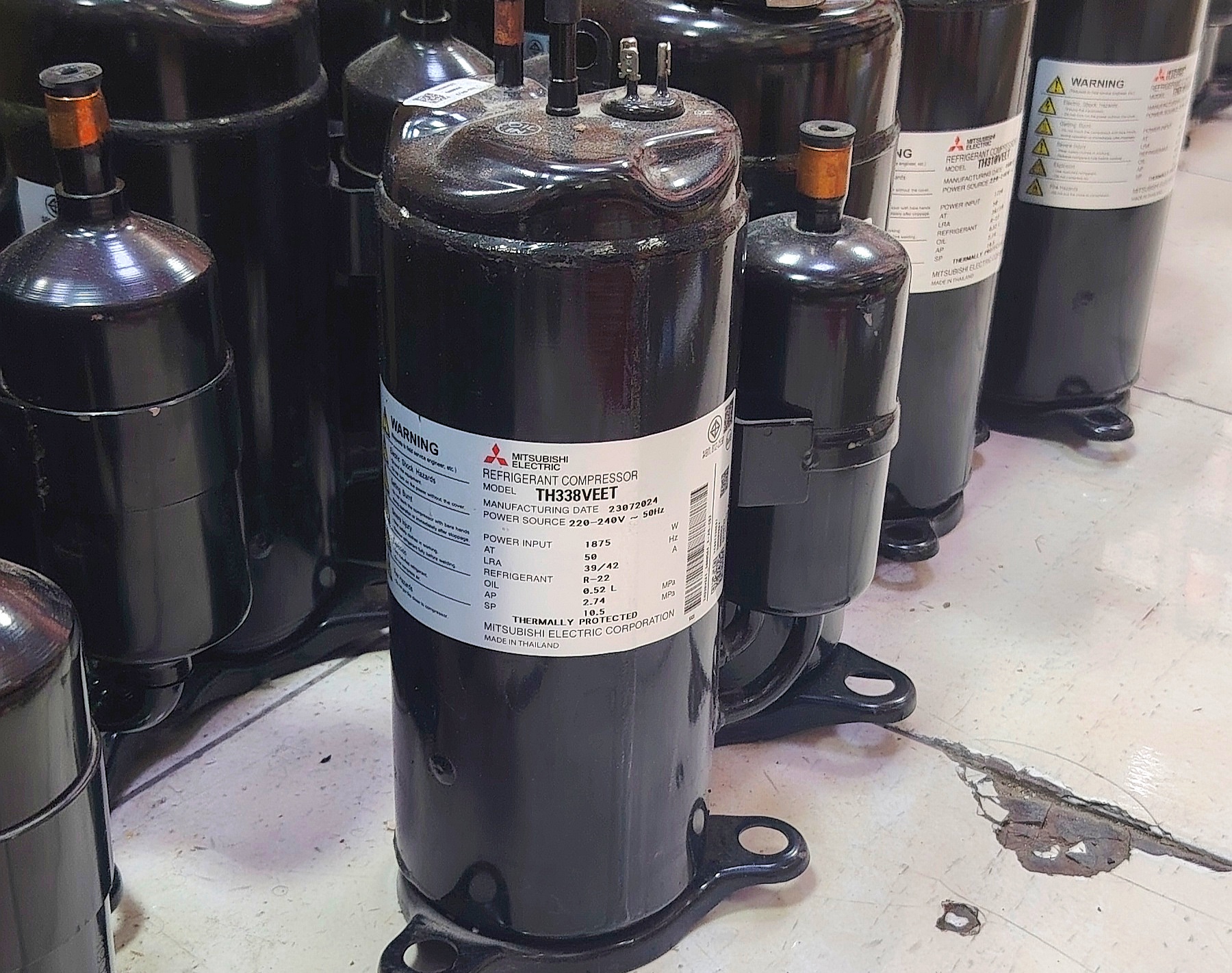
What Is the Mitsubishi Rotary Compressor TH338VEET?
The Mitsubishi Rotary Compressor TH338VEET is a hermetically sealed rotary compressor designed for residential and light commercial air-conditioning systems. Mitsubishi Electric has earned a strong reputation for manufacturing reliable compressors that balance cooling performance, energy efficiency, and long service life. Mitsubishi Rotary Compressor TH338VEET.
Unlike traditional reciprocating compressors that rely on pistons, this rotary compressor uses a rolling rotor mechanism. Fewer moving parts mean less vibration, quieter operation, and improved efficiency.
This model is commonly found in:
- Split air conditioners
- Wall-mounted AC systems
- Small commercial cooling systems
- Residential HVAC installations
- Replacement compressor projects
Main Features of Mitsubishi TH338VEET
After working with several Mitsubishi rotary compressors over the years, I’ve noticed that they all share a few strengths, and the TH338VEET is no exception.
High Cooling Efficiency
The compressor delivers stable refrigerant compression, allowing the indoor unit to cool rooms quickly without constantly running at maximum load.
Quiet Operation
One of the first things customers usually notice after replacement is how much quieter the outdoor unit becomes.
Compact Design
Its relatively compact size makes installation easier, especially in outdoor units with limited internal space.
Reliable Construction
The sealed design protects internal components from dust, moisture, and contamination.
Smooth Performance
The rotary mechanism produces less vibration than many older reciprocating compressor designs.
Typical Technical Specifications
Specifications can vary slightly depending on the equipment manufacturer, but the Mitsubishi TH338VEET generally offers features similar to these:
| Specification | Details |
|---|---|
| Compressor Type | Rotary Compressor |
| Brand | Mitsubishi |
| Application | Air Conditioning |
| Construction | Hermetic |
| Cooling | Residential & Light Commercial |
| Efficiency | High |
| Noise Level | Low |
| Installation | Outdoor Unit |
| Maintenance | Minimal |
Always verify the exact specifications using the compressor nameplate before ordering a replacement.

How the TH338VEET Works
Understanding the basic operation helps explain why rotary compressors have become so popular.
Inside the sealed shell:
- Refrigerant enters as low-pressure gas.
- A rotating roller compresses the gas.
- Pressure and temperature increase.
- The compressed refrigerant moves to the condenser.
- Heat is released outside.
- The cooled refrigerant returns to continue the refrigeration cycle.
The entire process repeats continuously while the air conditioner is running.
Because the compression is smoother than piston-style compressors, vibration and noise are significantly reduced.
Where Is the Mitsubishi TH338VEET Used?
This compressor is suitable for several cooling applications.
Residential Split Air Conditioners
Its most common use is in home air-conditioning systems where reliable everyday cooling is important.
Offices
Small office spaces benefit from consistent cooling during long working hours.
Retail Shops
Many retail stores require continuous operation throughout the day, making reliability essential.
Clinics
Quiet compressor operation helps maintain a comfortable environment.
Apartments
Compact outdoor units often use rotary compressors because they fit well into limited installation space.
Installation Tips From Practical Experience
Replacing a compressor is much more involved than simply swapping one component for another. I’ve seen perfectly good compressors fail early because shortcuts were taken during installation. Mitsubishi Rotary Compressor TH338VEET.
Here are the steps I always follow.
Recover the Refrigerant Properly
Never vent refrigerant into the atmosphere. Use certified recovery equipment.
Replace the Filter Drier
Skipping this step can allow moisture or contaminants to circulate through the system.
Flush the Refrigeration Lines
If the old compressor failed internally, debris may remain inside the tubing.
Pull a Deep Vacuum
Use a quality vacuum pump and micron gauge. Removing moisture is one of the most important steps.
Recharge the Correct Refrigerant
Always charge according to the manufacturer’s recommended weight rather than relying only on pressure readings.
Verify Electrical Supply
Before starting the compressor:
- Check supply voltage.
- Inspect wiring.
- Tighten terminals.
- Measure insulation resistance if necessary.
Taking an extra 30 minutes during installation can add years to compressor life.
Tools I Normally Use
When working on compressors like the TH338VEET, these tools make the job much easier:
- Digital manifold gauge set
- Vacuum pump
- Micron gauge
- Refrigerant recovery machine
- Electronic leak detector
- Clamp meter
- Digital multimeter
- Brazing torch
- Nitrogen cylinder for pressure testing
- Vacuum-rated hoses
Using proper tools helps prevent mistakes that can damage a new compressor.
Performance in Daily Use
One thing I’ve consistently noticed with Mitsubishi compressors is their stable operation during long cooling cycles.
After installation, customers usually mention:
- Faster room cooling
- Lower outdoor unit noise
- Stable indoor temperature
- Smooth compressor start-up
- Less vibration
While no compressor is completely silent, the TH338VEET performs impressively for a rotary design.
Common Problems That Are Not Actually Compressor Failures
Many compressors get blamed when another part of the system is causing the issue.
Before replacing the TH338VEET, check these items first.
Dirty Condenser Coil
A clogged outdoor coil increases operating pressure and reduces cooling performance.
Weak Capacitor
A failing capacitor may prevent the compressor from starting properly.
Low Refrigerant Charge
Low refrigerant often causes poor cooling, even when the compressor is healthy.
Faulty Thermostat
Incorrect temperature signals can prevent normal compressor operation.
Loose Electrical Connections
Voltage drops create overheating and unreliable operation.
Diagnosing the complete system first can save both time and money.
Common Installation Mistakes to Avoid
These mistakes appear more often than many people realise.
Skipping Vacuuming
Leaving moisture inside the system can create acid that damages compressor windings.
Reusing Old Refrigerant
Contaminated refrigerant may carry debris into the replacement compressor.
Incorrect Refrigerant Charge
Both undercharging and overcharging reduce efficiency.
Poor Brazing Practices
Always flow nitrogen while brazing to minimise oxidation inside the tubing.
Ignoring Oil Compatibility
When replacing compressors, verify that the compressor oil matches the refrigerant being used.
Maintenance Tips for Long Compressor Life
Although compressors require very little maintenance directly, the air-conditioning system around them needs regular care.
A few habits can significantly increase service life.
Clean Outdoor Coils
Wash condenser coils regularly, especially in dusty environments.
Replace Dirty Air Filters
Restricted airflow forces the compressor to work harder.
Check Refrigerant Levels
Incorrect refrigerant charge increases operating stress.
Tighten Electrical Connections
Loose terminals generate heat and may damage compressor windings.
Schedule Annual Service
A yearly inspection often catches small issues before they become expensive repairs.
Is the Mitsubishi TH338VEET Energy Efficient?
From what I’ve observed in actual installations, yes.
When paired with the correct indoor unit and charged properly, the TH338VEET delivers excellent cooling while maintaining reasonable energy consumption.
However, efficiency depends on much more than the compressor itself.
Other important factors include:
- Clean heat exchangers
- Correct refrigerant charge
- Proper airflow
- Accurate thermostat settings
- Good system installation
Even the best compressor cannot overcome poor installation practices.
Should You Repair or Replace?
This question comes up frequently.
Repair may make sense if the issue involves:
- Capacitor failure
- Loose wiring
- Contactors
- Sensors
- Electrical connections
Replacement is usually the better option when:
- Windings are burnt
- Internal mechanical parts seize
- Oil becomes contaminated with metal particles
- The compressor repeatedly trips despite correct voltage and refrigerant charge
A qualified HVAC technician can confirm the diagnosis through electrical testing, pressure readings, and performance measurements.
Buying Tips
Before purchasing the Mitsubishi Rotary Compressor TH338VEET, confirm:
- Model number matches exactly
- Refrigerant compatibility
- Voltage and frequency
- Cooling capacity
- Pipe connection sizes
- Warranty availability
- Supplier reputation
Buying the wrong compressor often creates more work than it saves.
Who Should Choose the Mitsubishi TH338VEET?
This compressor is a good choice for:
- Homeowners replacing a failed compressor
- HVAC technicians performing system repairs
- Air-conditioning service companies
- Commercial maintenance teams
- Contractors working on residential cooling projects
When installed correctly and matched to the right system, it provides dependable performance for many years.
Final Thoughts
The Mitsubishi Rotary Compressor TH338VEET stands out as a dependable option for residential and light commercial air-conditioning systems. Its rotary design delivers smooth, quiet operation while maintaining efficient cooling, making it a popular choice among HVAC professionals.
From my experience, the biggest factor in long-term performance isn’t just the compressor itself—it’s the quality of the installation. A proper vacuum, the correct refrigerant charge, clean system components, and careful electrical checks make all the difference. When those steps are followed, the TH338VEET has every chance of providing reliable cooling season after season, whether it’s installed in a family home, a small office, or a retail space.
BH96VEHT 5Ton Scroll Mitsubishi Compressor
Mitsubishi Inverter Compressor SNB172FEKMT
Mitsubishi 3Ton Compressor NH56VNHT R22 / 1PH /50HZ