
The first time I worked on an inverter split air conditioner with an SNB172FEKMT compressor, the customer was convinced the compressor had failed because the cooling was weak during the hottest part of the afternoon. After checking the indoor unit, cleaning the condenser, measuring the refrigerant charge, and monitoring the inverter frequency, the compressor turned out to be perfectly healthy. The real problem was a dirty outdoor coil that was forcing the system to work much harder than it should. Mitsubishi Inverter Compressor SNB172FEKMTM.
That job reinforced an important lesson I’ve learned over the years: modern inverter compressors are incredibly reliable when they’re installed and maintained correctly. Many cooling issues that seem like compressor failures actually have much simpler causes.
If you’ve been researching the SNB172FEKMT, whether you’re an HVAC technician, supplier, or simply curious about the compressor inside your air conditioner, this guide explains what makes it special, where it’s commonly used, and what I’ve learned from working with inverter air conditioning systems.
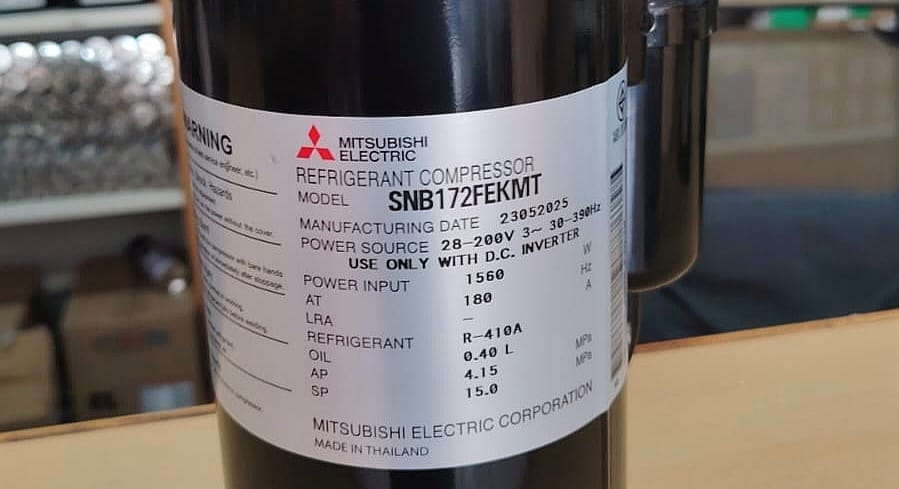
What Is the SNB172FEKMT Compressor?
The SNB172FEKMT is an R410A DC inverter twin rotary compressor designed primarily for residential and light commercial air conditioning systems. Unlike traditional fixed-speed compressors that constantly switch ON and OFF, this inverter model adjusts its speed according to the cooling demand.
Instead of running at full capacity all the time, it speeds up when the room needs rapid cooling and slows down once the desired temperature is reached. This results in smoother operation, lower electricity consumption, and better indoor comfort.
According to the manufacturer’s reference guide, the SNB172FEKMT belongs to the SNB series of R-410A inverter twin rotary compressors and operates within a 15–130 RPS (revolutions per second) speed range.
Main Specifications
Here are the key specifications of the SNB172FEKMT based on the manufacturer’s published data.
| Specification | Details |
|---|---|
| Model | SNB172FEKMT |
| Compressor Type | Twin Rotary DC Inverter |
| Refrigerant | R410A |
| Speed Range | 15–130 RPS |
| Application | Residential & Light Commercial Air Conditioning |
| Cooling Capacity Range | Approximately 1,330–10,835 W |
| COP | Around 3.10 |
| Oil Quantity | 400 cc |
| Weight | Approximately 8.6 kg |
These specifications show that the compressor is designed to provide efficient cooling across a wide operating range rather than running at one fixed speed.
What Makes a Twin Rotary Compressor Different?
When I first started repairing inverter air conditioners, I assumed every rotary compressor worked the same way. That changed after opening training manuals and learning how twin rotary technology reduces vibration.
A standard rotary compressor uses one compression mechanism.
A twin rotary compressor uses two rotating compression elements that balance each other during operation.
The advantages become noticeable over time:
- Less vibration
- Lower operating noise
- Better efficiency
- Improved stability
- Reduced mechanical stress
This is one reason many premium inverter air conditioners feel quieter than older fixed-speed models.
Why R410A Refrigerant Matters
The SNB172FEKMT is designed exclusively for R410A refrigerant. Using the correct refrigerant is essential because compressor oil, operating pressure, and internal components are specifically matched to R410A systems.
Trying to use another refrigerant without proper system redesign can lead to poor performance or compressor damage. Always follow the equipment manufacturer’s recommendations when servicing the system.
Performance in Everyday Use
One thing I appreciate about inverter compressors like the SNB172FEKMT is how smoothly they operate.
After installation, the compressor doesn’t immediately jump to maximum capacity. Instead, it increases speed gradually until the room reaches the target temperature. Once the room is comfortable, it slows down and maintains that temperature with minimal fluctuation.
From the user’s perspective, this means:
- More consistent room temperature
- Less noticeable compressor cycling
- Lower noise levels
- Better energy efficiency
- Improved comfort during long operating hours
Wide Cooling Capacity
One feature highlighted by the manufacturer is the compressor’s broad operating capacity.
Rather than producing only one fixed cooling output, the SNB series is designed to deliver a wide capacity range, making it suitable for various air conditioning applications.
This flexibility allows inverter air conditioners to adjust cooling based on changing room conditions throughout the day.
Common Applications
I’ve seen compressors in this category installed in many different systems, including:
- Wall-mounted split air conditioners
- Inverter residential AC units
- Small commercial cooling systems
- Office air conditioners
- Hotel room HVAC units
- Retail shop air conditioning
Because of its inverter design, it’s especially useful where energy savings and quiet operation are priorities.
Installation Tips From Experience
Replacing an inverter compressor isn’t something to rush. Careful installation has a big impact on long-term reliability.
Step 1: Verify the Cause of Failure
Before replacing the compressor, confirm it’s actually defective.
Check:
- Power supply
- Inverter PCB
- Sensors
- Refrigerant charge
- Outdoor fan
- Wiring connections
Many “failed compressors” turn out to be control board or sensor problems.
Step 2: Recover the Refrigerant
Recover the existing refrigerant using approved recovery equipment before opening the sealed refrigeration system.
Never vent refrigerant into the atmosphere.
Step 3: Replace the Filter Drier
Whenever the refrigeration circuit is opened, install a new filter drier.
This inexpensive component helps remove moisture and contaminants that could shorten compressor life.
Step 4: Pull a Deep Vacuum
I always spend extra time on evacuation.
A proper vacuum removes:
- Moisture
- Air
- Non-condensable gases
Skipping this step is one of the quickest ways to create future problems.
Step 5: Charge the Exact Refrigerant Weight
Modern inverter systems are much less forgiving than older fixed-speed units.
Adding refrigerant “by pressure only” often produces disappointing performance.
Use an electronic charging scale whenever possible.
Step 6: Monitor System Operation
After startup, check:
- Compressor current
- Discharge temperature
- Suction pressure
- Superheat
- Subcooling
- Indoor air temperature
- Outdoor fan speed
These measurements provide a much clearer picture than simply feeling whether the air is cold.
Maintenance Tips That Really Help
Most compressor failures don’t happen overnight.
Simple maintenance can dramatically extend the life of an inverter air conditioner.
I recommend:
- Cleaning condenser coils regularly
- Washing indoor filters every few weeks
- Keeping outdoor airflow unrestricted
- Checking refrigerant leaks early
- Tightening electrical connections during service
- Inspecting fan motors annually
These small tasks reduce compressor workload and improve efficiency.
Common Mistakes to Avoid
I’ve seen plenty of avoidable errors during compressor replacements. Here are the ones that cause the most trouble.
Mixing Refrigerants
Never mix R410A with another refrigerant. It changes system pressures and can seriously affect performance.
Reusing Contaminated Oil
If the previous compressor suffered an internal burnout, contaminated oil must be removed from the system.
Skipping Nitrogen While Brazing
Flowing nitrogen during brazing helps prevent oxidation inside the refrigerant tubing, keeping the system cleaner.
Guessing the Refrigerant Charge
Overcharging or undercharging can reduce cooling efficiency and increase compressor stress.
Ignoring Airflow Problems
Dirty coils and blocked airflow often mimic compressor faults. Always inspect these before assuming the compressor is defective.
Pros
- Twin rotary design reduces vibration
- Smooth inverter operation
- Quiet performance
- Good energy efficiency
- Wide operating capacity
- Compact and lightweight construction
- Suitable for modern inverter air conditioners
Possible Limitations
- Designed specifically for R410A systems
- Requires compatible inverter control electronics
- Professional installation is strongly recommended
- Performance depends on proper refrigerant charging and system maintenance
Is the SNB172FEKMT a Good Choice?
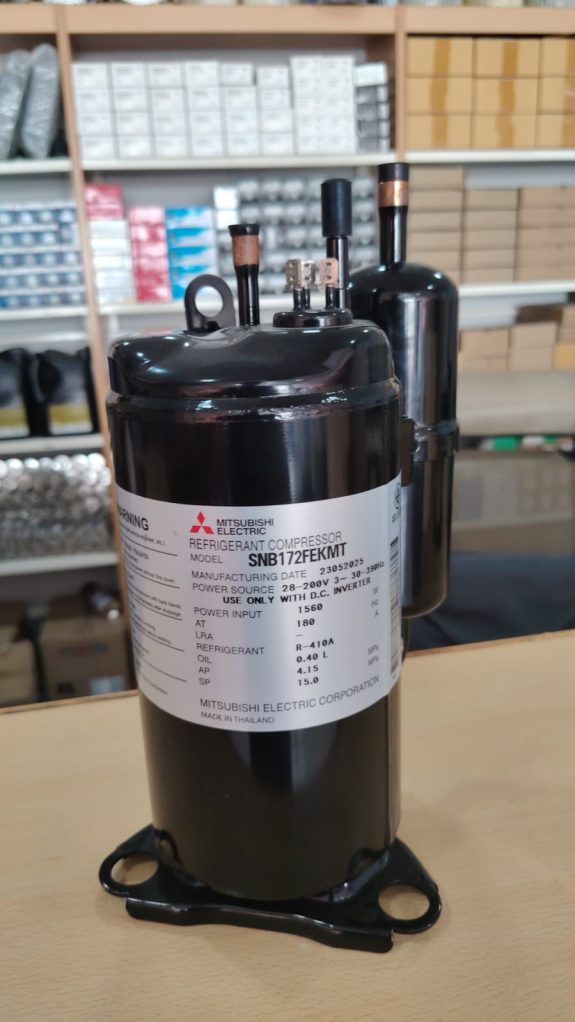
Based on both manufacturer specifications and practical HVAC experience, the SNB172FEKMT is a capable inverter twin rotary compressor for modern R410A air conditioning systems. Its variable-speed operation helps maintain stable indoor temperatures while reducing energy consumption compared to traditional fixed-speed compressors.
The manufacturer’s documentation highlights its compact design, lightweight construction, wide cooling capacity, and suitability for a variety of air conditioning applications.
For technicians, the biggest takeaway is that proper installation matters just as much as the compressor itself. A clean refrigeration circuit, accurate refrigerant charge, correct evacuation, and thorough system testing will do more to ensure reliable performance than simply replacing parts.
When matched with the correct inverter air conditioner and serviced according to manufacturer guidelines, the SNB172FEKMT is well-equipped to deliver efficient, quiet, and dependable cooling for years.