
What I Learned After Actually Replacing One
Last summer my upright freezer started making this weird humming noise, then it would just… stop. Cold for six hours, warm for two, cold again. Classic compressor cycling problem. I spent three days convinced it was the thermostat before I finally cracked open the back panel and found the real culprit — a dying compressor that had clearly seen better days.
That repair is how I ended up knee-deep in inverter compressor research, and the Donper VFA090CY1-R600a kept popping up in forums, on AliExpress listings, and in a few HVAC supplier catalogs. I ended up buying one, installing it myself with help from a friend who does refrigeration work on the side, and honestly, it’s been running my freezer for almost a year now without a hiccup.
So if you’re staring at a dead compressor and wondering whether this Donper unit is worth your money, here’s what I actually found out — not just spec sheet stuff, but real installation notes and things I wish someone had told me first.
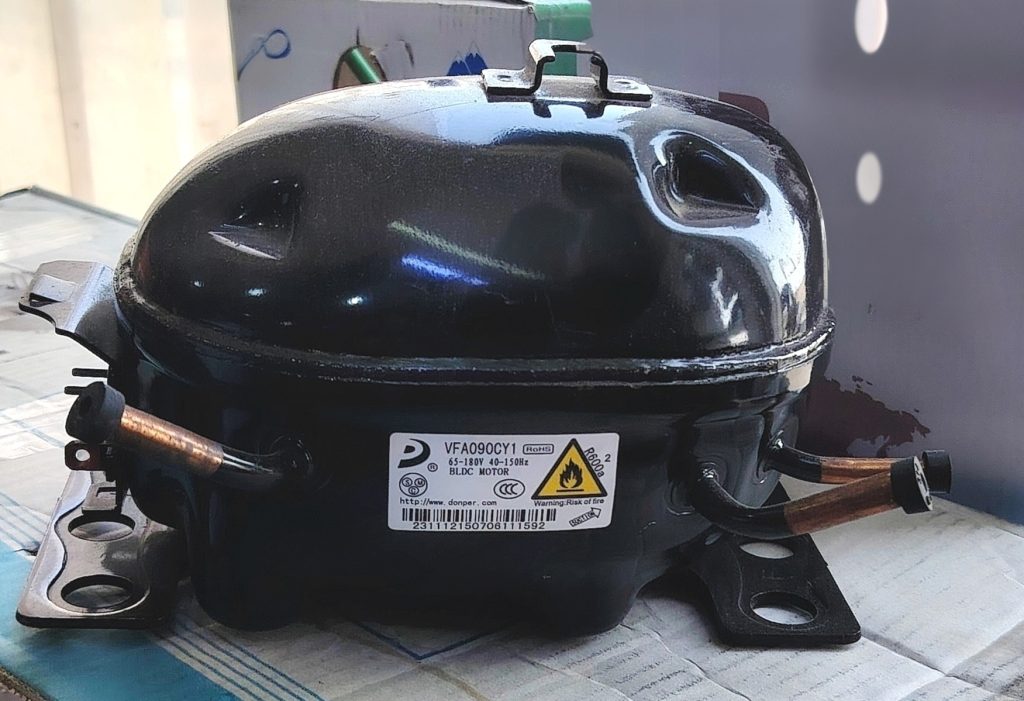
What This Compressor Actually Is
The VFA090CY1-R600a is a variable-speed (inverter) compressor made by Donper, a Chinese manufacturer that’s been supplying OEM compressors to fridge and freezer brands for years. The “R600a” part tells you exactly what refrigerant it’s designed for — isobutane, which is the standard eco-friendly refrigerant used in most modern household fridges and small commercial units.
Unlike the old-school compressors that just switch on and off at full blast, this one ramps its speed up and down depending on how much cooling you actually need. That’s the whole point of “inverter” tech. My freezer used to slam on hard every time the door opened, then shut off completely once it hit temp. This one just… eases into it. Quieter, and noticeably less power-hungry.
Why I Went With This One Over a Regular Compressor
I’ll be honest, I almost bought a cheaper fixed-speed replacement because it was $20 less. Glad I didn’t. Here’s why the inverter route made more sense for my situation:
- Lower electricity bill. My monthly usage dropped a bit once this went in — not dramatic, but noticeable over a full month, especially since my freezer runs 24/7.
- Way quieter. The old compressor had this jarring click-and-hum every time it kicked on. This one has a soft ramp-up you barely notice.
- Less wear from constant cycling. Fixed-speed compressors turn on and off constantly, which is genuinely hard on the internal components over time. The inverter design avoids a lot of that stress.
If you’re just cooling a small dorm fridge, this might be overkill. But for a full-size fridge, freezer, or small commercial cooler, the difference is real.
Installing It: What Actually Happened
I want to be upfront — I’m not a licensed refrigeration tech. I had help. If you don’t have any experience with refrigerant lines, please get someone qualified involved, especially for the brazing and refrigerant charging steps. That said, here’s roughly how the swap went for us.
- Recover the old refrigerant first. You cannot just cut the lines open. We used a recovery machine to pull out the old R600a safely — this step alone is why I wouldn’t recommend a total DIY approach unless you already own recovery equipment.
- Cut out the old compressor. Once the system was empty, we unbrazed the old unit from the copper lines using a torch. Took longer than expected because the old solder joints were stubborn.
- Match the mounting and wiring. The VFA090CY1-R600a uses a different control board setup than a standard compressor because it needs an inverter driver board to control the variable speed. This tripped me up initially — I assumed I could just wire it like a normal start relay setup, and I was wrong. The compressor needs its own dedicated inverter control module, which either comes with the unit or has to be sourced separately depending on the supplier.
- Braze in the new compressor. Same copper line connections, just make sure your joints are clean and properly fluxed before brazing.
- Vacuum the system. This is non-negotiable. We pulled a vacuum for close to 45 minutes to make sure there was no moisture or air left in the lines. Skipping this step is one of the most common reasons these systems fail early.
- Recharge with R600a. Weigh in the correct charge amount based on the compressor’s rated capacity — too much or too little refrigerant will tank your cooling efficiency.
- Power on and test. Watch the startup behavior. Inverter compressors ramp up gradually, so don’t panic if it doesn’t sound like a normal compressor kicking in.
Mistakes People (Including Me) Tend to Make
- Assuming it’s a drop-in replacement for any fixed-speed compressor. It’s not, because of the inverter driver board requirement. Check compatibility with your existing control system first.
- Skipping the vacuum step to save time. This is the fastest way to kill a brand-new compressor within weeks.
- Overcharging refrigerant. More isn’t better with R600a systems — overcharging causes poor heat exchange and can strain the compressor.
- Ignoring the startup noise pattern. People panic thinking the compressor is defective when it’s just doing its normal gradual ramp-up, which sounds different from traditional units.

Quick Technical Reference
| Spec | Detail |
|---|---|
| Model | VFA090CY1-R600a |
| Type | Inverter (variable speed) compressor |
| Refrigerant | R600a (Isobutane) |
| Application | Household fridges, freezers, small commercial coolers |
| Control | Requires dedicated inverter driver/control board |
| Noise Level | Noticeably lower than fixed-speed equivalents |
| Efficiency | Higher energy efficiency due to speed modulation |
| Typical Use Case | Full-size refrigerators, upright freezers, mini display coolers |
Final Thoughts
A year in, my freezer’s been rock steady. No weird cycling, no random warm spells, and my power bill genuinely looks a little better than it used to. That said, this isn’t a compressor you want to install casually on a Saturday afternoon without any refrigeration background — the recovery, vacuum, and recharge steps matter more than people expect, and the inverter control board threw me off the first time I opened the box.
If you’re replacing a dead compressor in a fridge or freezer that originally used R600a refrigerant, and you’re working with someone who knows their way around brazing and recovery equipment, this compressor is a solid, quieter, more efficient option. Just don’t skip the steps that matter, and don’t assume it wires up exactly like your old unit — because it doesn’t.
Refrigerant Compressor L68CU1 DONPER 3/8hp R290
Donper Refrigeration Compressor L76CZ1 R134A 220V