What I Learned After a Rooftop Unit Started Tripping Breakers Every Afternoon
A property manager called me about a rooftop unit on a small office building that kept tripping its breaker, always around 2-3pm, always on the hottest part of the day. Never in the morning. Never at night. Just when the sun was really cooking that roof and the AC was working its hardest. That pattern alone told me a lot before I even climbed up there, and it’s exactly the kind of clue that leads you straight to a scroll compressor problem — in this case, a Copeland ZP31KSE-PFZ-522.
If you’re dealing with a rooftop package unit or a heat pump that uses this compressor and something’s off — tripping breakers, not cooling right, making a weird sound, whatever brought you here — I want to walk you through what I actually found on that job, what I got wrong before I got it right, and how you can approach diagnosing one of these yourself if you’re comfortable with the electrical side of things.
What This Compressor Actually Is
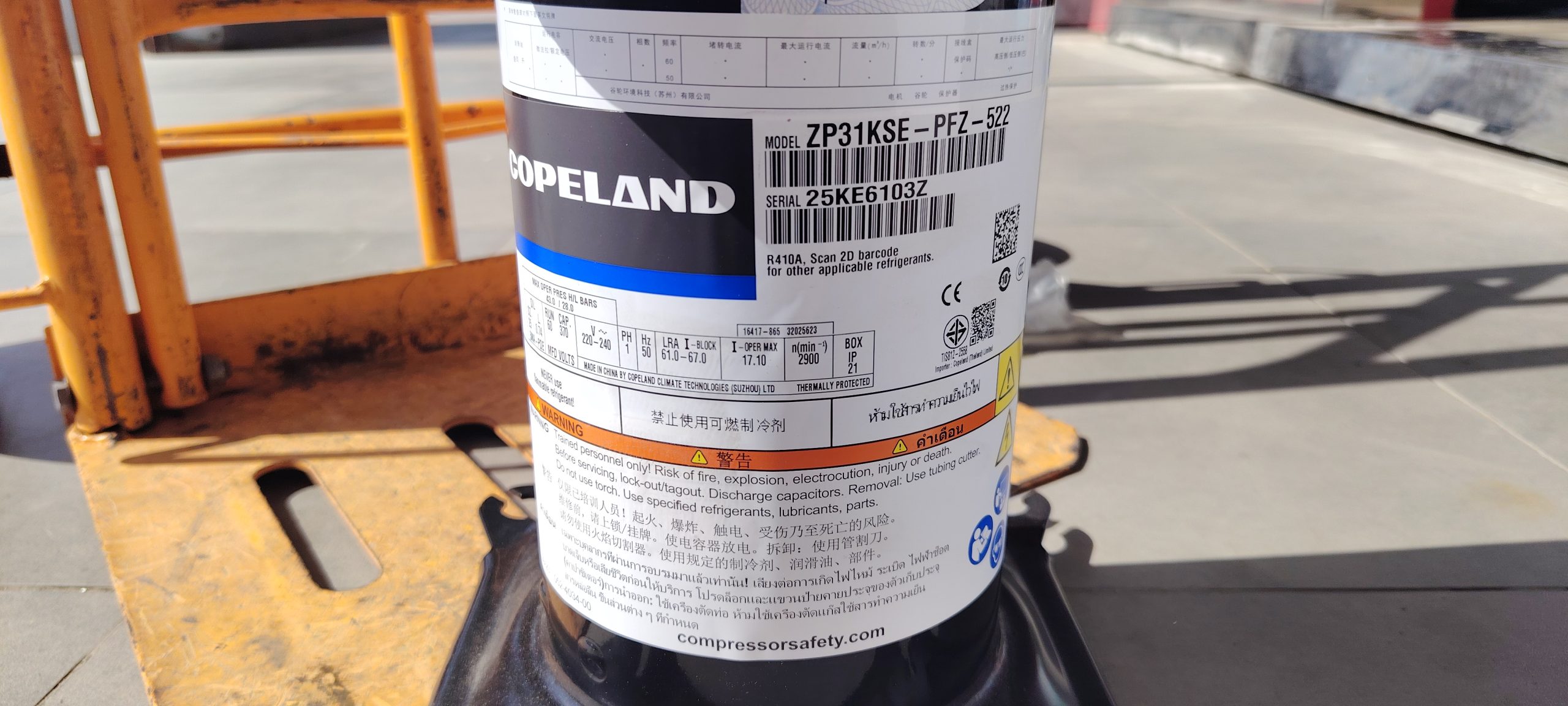
The ZP31KSE is part of Copeland’s Scroll (ZP) series, commonly used in commercial rooftop package units, split systems, and heat pumps. The “31” tells you roughly the tonnage range it’s built for — this one’s typically paired with systems in the 2.5 to 3-ton range depending on the application. The “PFZ-522” suffix is Copeland’s way of specifying the exact electrical configuration, refrigerant compatibility, and internal options for that specific build.
These are usually set up for R410A, which became the standard refrigerant for residential and light commercial AC systems after R22 got phased out. Scroll compressors work differently than the reciprocating piston compressors you’ll find in older units — instead of pistons going up and down, two spiral-shaped scrolls mesh together and compress refrigerant gas as it moves toward the center. Fewer moving parts, generally quieter, and pretty reliable when they’re not being pushed past their limits.
That last part — being pushed past their limits — turned out to be exactly what was happening on that rooftop.
The Rooftop Job: What I Almost Got Wrong
My first instinct when I heard “trips the breaker on hot afternoons” was locked rotor amps — basically the compressor drawing way more current than it should trying to start under high head pressure. I figured maybe the compressor was on its way out and struggling to start against high discharge pressure once the system got hot.
I climbed up, hooked up my gauges, and watched it run. Head pressure was climbing higher than it should’ve been for the ambient temp, but not dangerously high. Suction pressure looked reasonable. The compressor itself started up fine every time I watched it start cold. The problem only showed up after it had been running a while and the unit got hot.
That’s when I actually looked at the condenser coil instead of jumping straight to compressor diagnostics. It was packed with cottonwood fluff and dust, restricting airflow badly. On a rooftop unit, that stuff builds up fast and people forget these units even exist until something goes wrong.
I nearly quoted a compressor replacement before checking the simple stuff first. That would’ve been an expensive mistake for the property manager and a needless one on my part.
How I Actually Diagnosed It (Step by Step)
Here’s the order I worked through, and it’s the same order I’d recommend to anyone dealing with a ZP31KSE acting up:
- Visual and physical inspection first. Before touching gauges or meters, I look at the condenser coil, check for debris, check the fan motor is spinning freely, and make sure nothing’s physically obstructing airflow.
- Check run capacitor and contactor. A weak run capacitor makes a compressor draw more amps than it should, and a pitted or worn contactor can cause voltage drop under load. Both are cheap, both get overlooked.
- Clamp an amp meter on the compressor’s common wire during startup and while running. Compare the reading to the rated load amps (RLA) and locked rotor amps (LRA) on the compressor nameplate. I use a Fluke 325 clamp meter for this — nothing fancy needed, just something reliable.
- Check head and suction pressure with the unit running under load, ideally during the hottest part of the day if that’s when the problem happens. Pressures that look fine in the morning can look completely different by 3pm.
- Check superheat and subcooling to rule out a refrigerant charge issue, which can cause a compressor to work harder than it should and pull excessive amps.
- If everything electrical and refrigerant-related checks out and it’s still tripping, then start looking at the compressor itself — internal overload behavior, unusual noise, or a mechanical issue.
On this job, once I cleaned the condenser coil thoroughly with a coil cleaner and a hose, head pressure dropped noticeably, amp draw stayed within spec even on a 95-degree afternoon, and the breaker stopped tripping. No compressor replacement needed. Total fix cost the property manager a service call instead of a few thousand dollars.
When It Actually Is the Compressor
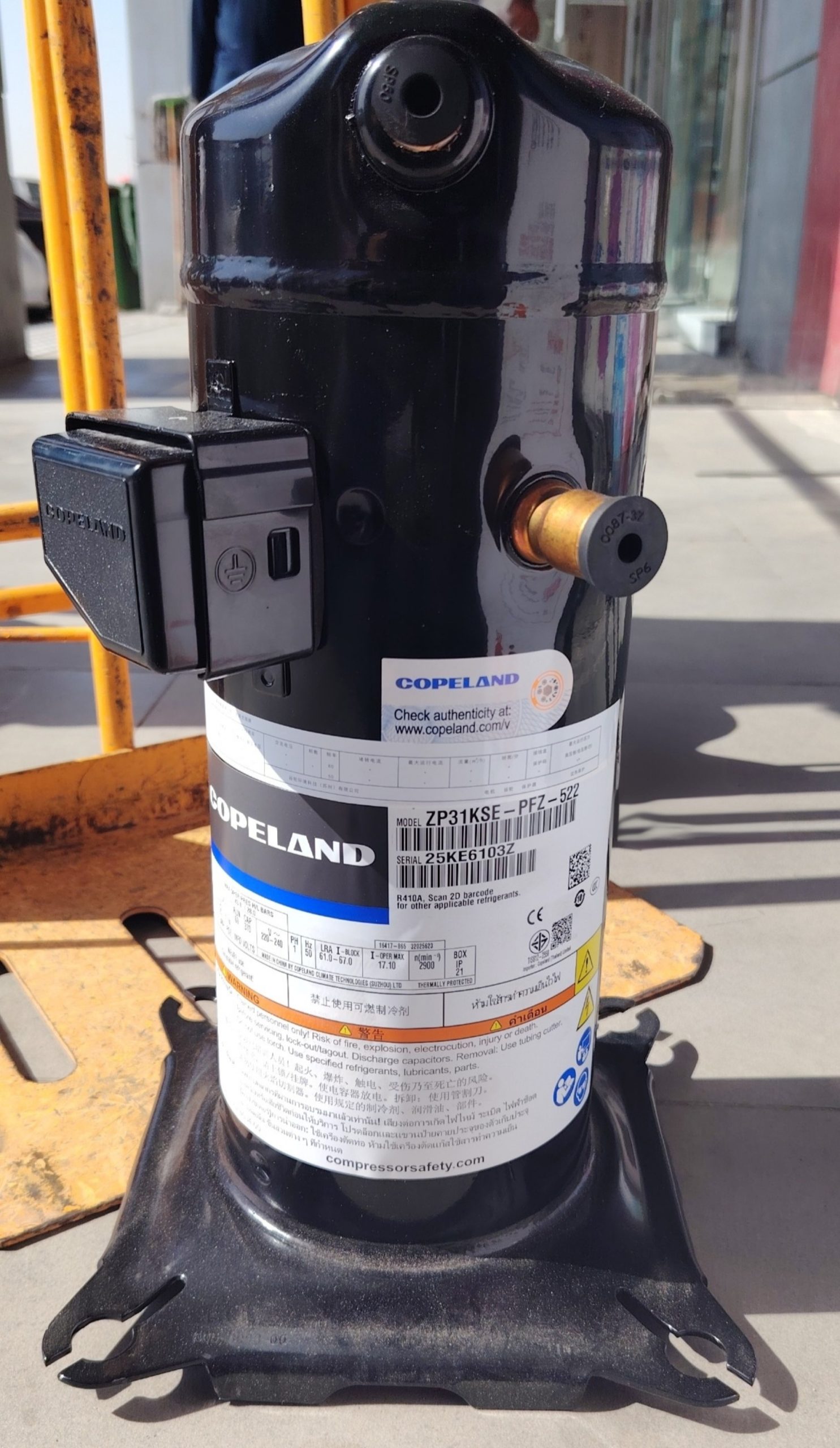
I’m not going to pretend these things never fail, because I’ve replaced plenty of ZP31KSE units too. Here’s how I confirm it’s genuinely the compressor and not something else:
- Winding resistance test. Kill power, disconnect the wires, and test resistance between the three winding terminals with a multimeter. You want continuity between all three and no continuity to the compressor shell.
- Grounded winding check. Any continuity from a terminal to the shell means the compressor has shorted internally. That’s a confirmed failure.
- Persistent high amp draw with everything else ruled out. If airflow’s good, capacitor and contactor test fine, refrigerant charge is correct, and it’s still pulling excessive amps or tripping — the compressor itself is likely struggling internally, sometimes from scroll wear or a valve issue.
- Unusual noise. A knocking, grinding, or rattling sound that wasn’t there before, especially combined with reduced cooling capacity, often points to internal mechanical wear.
Replacing a ZP31KSE-PFZ-522
If it does need replacing, here’s roughly how that goes:
- Recover the refrigerant properly using a recovery machine — never vent R410A into the atmosphere.
- Disconnect wiring and remove the old compressor, unsweating or cutting the suction and discharge lines.
- Replace the filter drier every time, especially after an electrical failure, since burnt windings contaminate the system.
- Install the new compressor, matching mounting orientation exactly since scroll compressors are sensitive to proper orientation for oil management.
- Braze the lines back in and pressure test with dry nitrogen, holding pressure for at least 15-20 minutes to check for leaks.
- Pull a deep vacuum to 500 microns using a digital micron gauge, not a standard analog gauge set.
- Weigh in the refrigerant charge based on the nameplate specs, then fine-tune using superheat and subcooling readings.
- Monitor startup and run time closely, watching amp draw and pressures for the first hour.
Common Mistakes I See With These Units
Jumping straight to compressor replacement without ruling out airflow, capacitors, and refrigerant charge first. This is the single biggest and most expensive mistake, and I almost made it myself on that rooftop job.
Ignoring coil maintenance. Rooftop units especially get neglected because nobody sees them day to day. A dirty condenser coil is one of the most common causes of high head pressure and compressor strain, and it’s the cheapest thing to fix.
Undersizing or oversizing the replacement compressor. Always match the exact model or a verified cross-reference from Copeland’s documentation. Guessing based on tonnage alone can cause real problems with system performance and reliability.
Skipping a proper vacuum. Moisture left in an R410A system can cause acid formation and premature compressor failure. Rushing this step to save time almost always costs more later.
Not checking scroll compressor rotation direction issues. Scroll compressors need to rotate in the correct direction to build pressure properly. If you rewire after a repair and get phasing wrong on a three-phase unit, the compressor will run loud and won’t build pressure. It’s an easy thing to overlook if you’re moving fast.
Final Thoughts
The ZP31KSE-PFZ-522 is a solid, dependable compressor when the rest of the system is taken care of around it. Most of the “compressor failures” I get called out for turn out to be something simpler — a dirty coil, a weak capacitor, a refrigerant charge issue — and it’s worth taking the time to actually test before assuming the worst and spending money you might not need to spend.
If you do end up needing a replacement, don’t rush the vacuum, don’t skip the filter drier, and make sure whoever’s doing the work understands scroll compressors aren’t quite the same animal as the old reciprocating units. Get those details right, and this compressor will run reliably for years.