
When a “Simple Gas Refill” Wasn’t the Real Problem
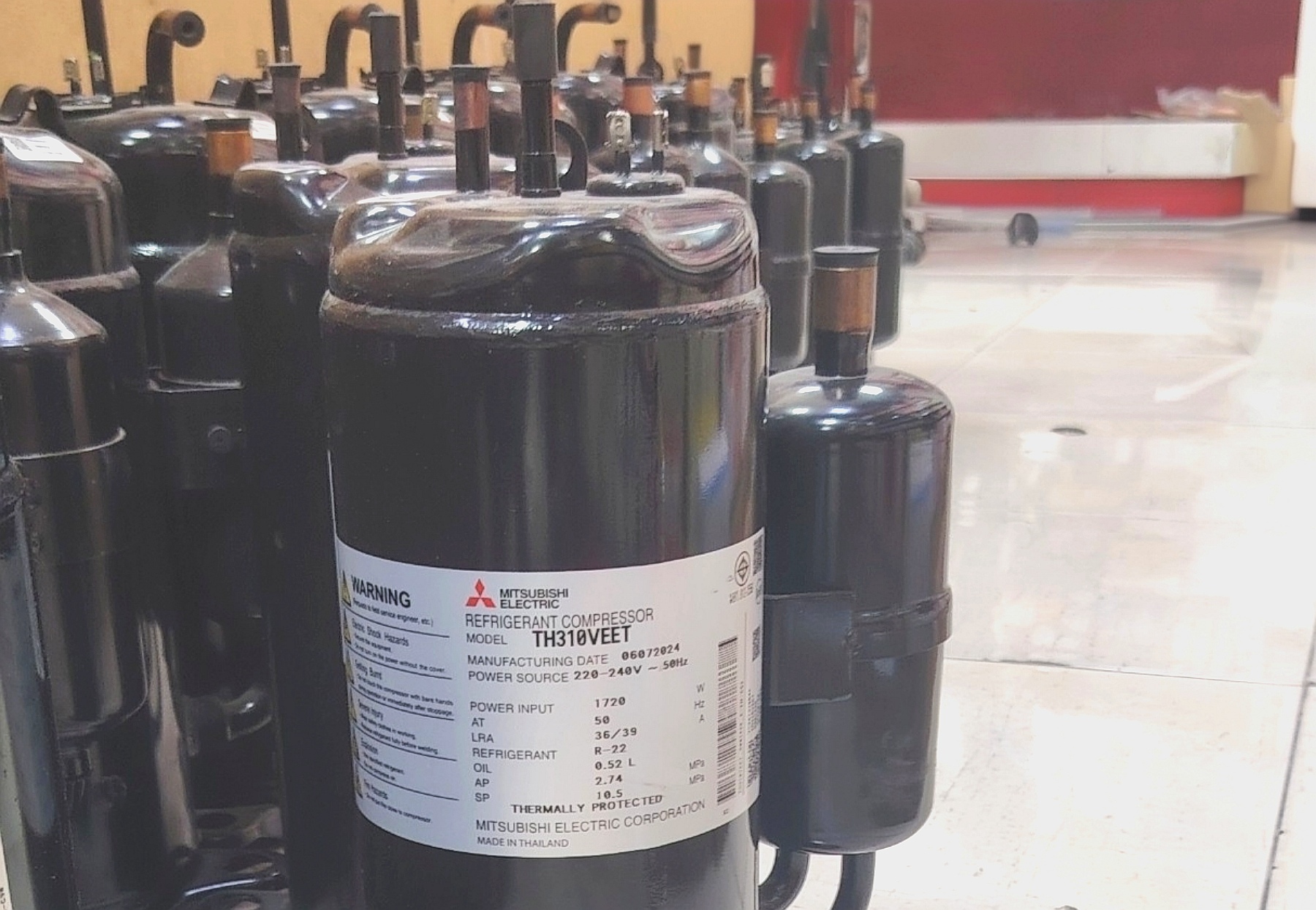
Not long ago, I was called to look at a 2-ton split air conditioner that wasn’t cooling properly. The homeowner was convinced it only needed more refrigerant because another technician had topped it up a few weeks earlier. The room cooled for a day or two, then the problem came back. Mitsubishi Rotary Compressor TH310VEET.
After connecting my digital manifold gauges and checking the compressor’s running current with a clamp meter, I noticed something wasn’t right. The pressures looked unstable, and the compressor was drawing more current than expected. Once I tested the compressor thoroughly, it became clear that the compressor had lost its pumping efficiency.
The replacement installed was the Mitsubishi Rotary Compressor TH310VEET. After pulling a deep vacuum, replacing the filter drier, and charging the system with the correct refrigerant weight, the air conditioner returned to normal. The outdoor unit became noticeably quieter, cooling improved, and the customer immediately noticed the difference.
That repair reminded me that even the best air conditioner depends on one critical component—the compressor. If you’re looking for information about the Mitsubishi Rotary Compressor TH310VEET, this guide covers everything you need to know before buying or replacing one.
What Is the Mitsubishi Rotary Compressor TH310VEET?
The Mitsubishi Rotary Compressor TH310VEET is a hermetically sealed rotary compressor designed for residential and light commercial air-conditioning systems. It is engineered to deliver reliable cooling performance while maintaining low noise and good energy efficiency. Mitsubishi Rotary Compressor TH310VEET.
Based on the compressor nameplate, this model is designed for 220–240V, 50Hz power supplies and operates with R-22 refrigerant. Mitsubishi Electric manufactures this compressor in Thailand, where many of its trusted HVAC components are produced.
Rotary compressors have become popular because they operate more smoothly than traditional reciprocating compressors. Instead of using a piston, the TH310VEET compresses refrigerant using a rotating roller inside a sealed chamber. This design helps reduce vibration, lower noise, and improve overall efficiency.
Key Features of Mitsubishi TH310VEET
After working with Mitsubishi rotary compressors for several years, I’ve found that they consistently offer dependable performance when installed correctly. The TH310VEET includes several features that make it a solid replacement or OEM choice.
Quiet Operation
One of the first things customers usually notice is the reduced outdoor unit noise after installation.
Smooth Rotary Compression
The rotary mechanism creates less vibration than many older piston compressors.
Reliable Cooling
The compressor maintains steady refrigerant flow, helping the air conditioner cool rooms quickly and consistently.
Compact Construction
Its compact design allows manufacturers to fit it easily into modern outdoor units.
Factory-Sealed Design
The hermetically sealed shell protects the internal motor and moving components from dust, moisture, and contamination.
Mitsubishi TH310VEET Specifications
The following specifications are taken from the compressor nameplate shown in the image.
| Specification | Details |
|---|---|
| Brand | Mitsubishi Electric |
| Model | TH310VEET |
| Compressor Type | Rotary Compressor |
| Power Supply | 220–240V |
| Frequency | 50 Hz |
| Power Input | 1720 W |
| Refrigerant | R-22 |
| LRA | 36/39 A |
| Oil Charge | 0.52 L |
| AP | 2.74 MPa |
| SP | 10.5 MPa |
| Protection | Thermally Protected |
| Country of Manufacture | Thailand |
Always verify the compressor nameplate before ordering a replacement to ensure compatibility with your system.

How Does the TH310VEET Work?
Although the compressor looks like a simple black steel cylinder from the outside, there’s a lot happening inside.
The basic cooling cycle works like this:
- Low-pressure refrigerant gas enters the compressor.
- A rotating roller compresses the refrigerant.
- The pressure and temperature increase.
- The hot refrigerant moves to the condenser coil.
- Heat is released outdoors.
- The cooled refrigerant continues through the expansion device and evaporator before returning to the compressor.
This process repeats continuously while the air conditioner is running.
Because there are fewer moving parts than in a reciprocating compressor, operation is generally smoother and quieter.
Where Is the Mitsubishi TH310VEET Commonly Used?
This compressor is suitable for a wide variety of cooling applications.
Residential Split Air Conditioners
Its primary application is home air-conditioning systems.
Small Offices
It provides dependable cooling during long daily operating hours.
Retail Stores
Small shops often use systems equipped with rotary compressors because of their quiet operation.
Apartments
Compact outdoor units frequently rely on rotary compressors to save space while maintaining cooling capacity.
Light Commercial Cooling
Many small commercial installations use compressors like the TH310VEET for reliable performance.
My Installation Checklist
Over the years, I’ve learned that most compressor failures aren’t caused by manufacturing defects—they’re caused by installation shortcuts. Whenever I replace a compressor like the TH310VEET, I follow the same routine.
Step 1: Recover the Refrigerant
Recover the existing refrigerant safely using approved recovery equipment.
Step 2: Replace the Filter Drier
A new filter drier helps remove moisture and contaminants that could damage the replacement compressor.
Step 3: Flush the System if Necessary
If the old compressor suffered an internal burnout, clean the refrigeration lines before installing the new compressor.
Step 4: Braze Carefully
Flow nitrogen through the tubing while brazing to reduce oxidation inside the pipes.
Step 5: Pull a Deep Vacuum
Use a quality vacuum pump and a micron gauge to remove moisture and air from the system.
Step 6: Recharge the Correct Refrigerant
Charge the exact amount of refrigerant recommended by the equipment manufacturer rather than estimating from pressure alone.
Step 7: Test the System
After startup, verify:
- Running current
- Suction pressure
- Discharge pressure
- Supply voltage
- Temperature difference
- Compressor sound
Taking these extra steps usually prevents repeat service calls.
Tools I Use for Compressor Replacement
These are the tools I never leave behind when replacing compressors like the Mitsubishi TH310VEET:
- Digital manifold gauge set
- Refrigerant recovery machine
- Vacuum pump
- Micron gauge
- Digital clamp meter
- Multimeter
- Electronic leak detector
- Nitrogen cylinder with regulator
- Brazing torch
- Tube cutter and flaring tools
Having the right equipment makes the installation safer and more reliable.
Performance After Installation
One thing I’ve consistently noticed with Mitsubishi rotary compressors is how smoothly they operate once everything is set up correctly.
Customers often mention:
- Faster cooling
- Reduced outdoor unit noise
- Stable room temperature
- Smooth compressor starting
- Less vibration
These improvements are especially noticeable when replacing an older compressor that has been gradually losing efficiency.
Common Problems That Are Often Misdiagnosed
Not every cooling problem means the compressor has failed.
Before replacing the TH310VEET, check these common issues:
Dirty Condenser Coil
A blocked condenser increases operating pressure and reduces cooling performance.
Weak Capacitor
A faulty capacitor can prevent the compressor from starting properly.
Refrigerant Leak
Low refrigerant causes poor cooling and can make the compressor appear weak.
Loose Wiring
Poor electrical connections create voltage drops and overheating.
Faulty Contactor
A worn contactor may interrupt power to the compressor.
Checking these items first can save both time and unnecessary replacement costs.
Mistakes to Avoid
I’ve seen even experienced technicians make these mistakes.
Skipping the Vacuum Process
Leaving moisture inside the system can create acids that damage compressor windings.
Reusing Contaminated Refrigerant
Dirty refrigerant may carry debris directly into the new compressor.
Overcharging Refrigerant
Too much refrigerant increases head pressure and reduces efficiency.
Ignoring Oil Compatibility
Always ensure the compressor oil matches the refrigerant and application.
Failing to Check Voltage
Low or unstable voltage can shorten compressor life significantly.
Avoiding these mistakes helps protect your investment.
Maintenance Tips for Longer Compressor Life
Although the compressor itself requires very little maintenance, the rest of the system should be serviced regularly.
Here are a few simple habits that can extend compressor life:
- Clean the outdoor condenser coil every few months.
- Replace or clean indoor air filters regularly.
- Inspect electrical terminals for looseness.
- Check refrigerant levels during annual servicing.
- Keep the outdoor unit free from leaves, dust, and debris.
- Schedule professional maintenance before the peak summer season.
Regular servicing reduces unnecessary stress on the compressor.
Is the Mitsubishi TH310VEET Energy Efficient?
Yes, when installed correctly.
The compressor is designed to deliver reliable cooling while maintaining efficient power consumption. However, overall efficiency also depends on:
- Correct refrigerant charge
- Clean heat exchangers
- Proper airflow
- Stable power supply
- Professional installation
Even the most efficient compressor cannot compensate for poor system maintenance.
Should You Repair or Replace?
If the issue involves a capacitor, contactor, thermostat, or loose wiring, repairing the existing system is usually the better option.
Replacement becomes the practical choice when:
- Compressor windings are burnt.
- Internal mechanical components have seized.
- Metal contamination is found in the oil.
- The compressor cannot build adequate pressure.
- It repeatedly trips despite proper voltage and refrigerant levels.
A complete diagnosis by a qualified HVAC technician helps avoid replacing parts unnecessarily.
Buying Tips
Before purchasing a Mitsubishi TH310VEET compressor, confirm:
- The model number matches exactly.
- The voltage and frequency are correct.
- The refrigerant type is compatible.
- Pipe connections match your system.
- The compressor comes from a trusted supplier.
- Warranty information is available.
Double-checking these details helps prevent installation issues later.
Final Thoughts
The Mitsubishi Rotary Compressor TH310VEET has earned its reputation as a dependable choice for residential and light commercial air-conditioning systems. Its smooth rotary design, quiet operation, and reliable cooling performance make it a practical option for replacing a worn compressor or servicing compatible AC units.
From my own experience, the compressor performs best when it’s installed with care. Recovering the refrigerant properly, replacing the filter drier, pulling a deep vacuum, and charging the exact refrigerant amount are the small details that make a big difference. When those steps are followed, the TH310VEET can deliver years of efficient and dependable cooling, even during demanding summer conditions.