
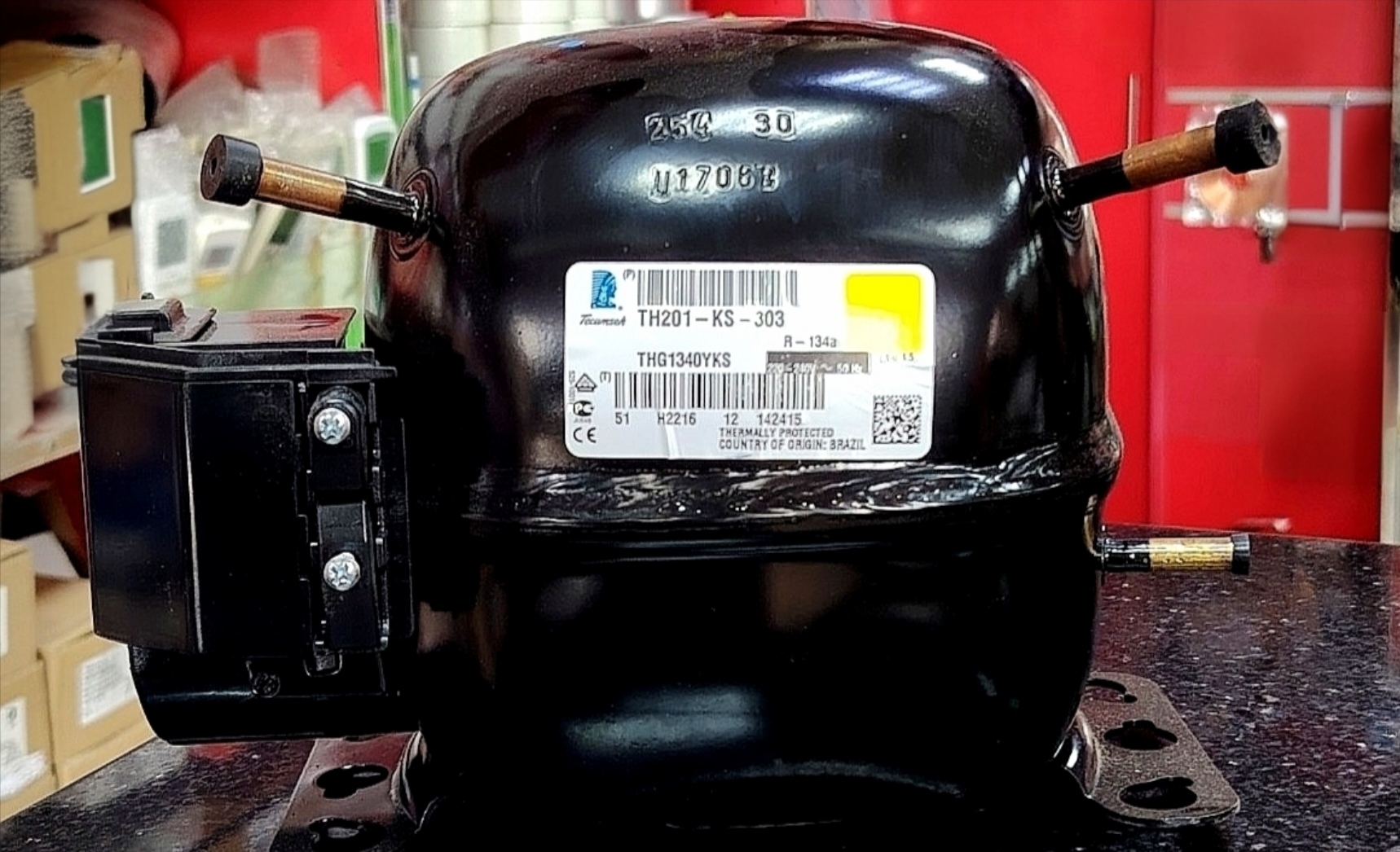
When a refrigerator starts running all day without getting properly cold, most people blame the thermostat or refrigerant. I’ve been in that situation more times than I can count. One repair that sticks in my memory involved a small household refrigerator that had been humming constantly for weeks. The owner thought it only needed a gas refill, but after checking the pressures with my manifold gauge and testing the compressor windings with a digital multimeter, it was clear the compressor had reached the end of its life. Tecumseh 1/8hp Compressor THG1340YKS.
We replaced it with the Tecumseh THG1340YKS 1/8HP compressor. After installing a new filter drier, pulling a deep vacuum, and charging the system correctly, the refrigerator cooled down much faster than expected. A week later, the customer called—not because of another problem, but simply to say the refrigerator had become quieter and the electricity bill had even improved slightly.
That job reminded me of something every refrigeration technician eventually learns: a quality compressor is the heart of every reliable refrigerator.
If you’re considering the Tecumseh THG1340YKS, this guide shares everything I’ve learned from working with similar Tecumseh compressors, along with manufacturer specifications and practical installation advice.
What Is the Tecumseh THG1340YKS Compressor?
The Tecumseh THG1340YKS is a 1/8 HP hermetic reciprocating compressor designed primarily for domestic refrigeration systems using R134a refrigerant. It operates on 220–240V single-phase, 50Hz power and is engineered for capillary tube systems with static cooling.
Because of its compact size, low power consumption, and dependable cooling performance, it’s commonly found in household refrigerators, minibar coolers, and other small refrigeration appliances.
Tecumseh THG1340YKS Specifications
Before replacing any compressor, I always compare the original unit with the replacement to avoid compatibility issues.
| Specification | Details |
|---|---|
| Brand | Tecumseh |
| Model | THG1340YKS |
| Compressor Type | Hermetic Reciprocating |
| Horsepower | 1/8 HP |
| Refrigerant | R134a |
| Voltage | 220–240V |
| Frequency | 50Hz |
| Phase | Single Phase |
| Displacement | 3.79 cc |
| Oil Type | Polyolester (POE) |
| Oil Quantity | 243 cc |
| Rated Current | 0.6 A |
| Locked Rotor Current | 8.5 A |
| Cooling Method | Static Cooling |
| Expansion Device | Capillary Tube |
| Net Weight | 7.7 kg |

Why I Like the Tecumseh THG1340YKS
Over the years, I’ve installed compressors from several well-known manufacturers. Some are powerful but noisy. Others are quiet but don’t seem to last very long.
The THG1340YKS has consistently impressed me because it balances reliability with efficiency.
Quiet Operation
One thing customers notice immediately is how quietly this compressor runs.
After installation, many people think the refrigerator has switched off because the compressor produces very little vibration compared with worn-out units.
Reliable Cooling Performance
When installed correctly, this compressor quickly pulls cabinet temperatures down to normal operating levels.
It’s particularly well suited for refrigerators that use capillary tube systems.
Energy-Efficient Design
With a rated running current of only 0.6 amps, the compressor is designed to operate efficiently while maintaining stable cooling.
Of course, overall energy consumption also depends on clean condenser coils, good door seals, and the condition of the entire refrigeration system.
Compact Construction
Its compact size makes replacement straightforward in many domestic refrigerator models where space inside the compressor compartment is limited.
Common Applications
The Tecumseh THG1340YKS is typically used in:
- Household refrigerators
- Mini refrigerators
- Hotel minibars
- Beverage coolers
- Small display coolers
- Domestic refrigeration cabinets
- Laboratory refrigerators
Because it is designed for R134a refrigerant, it should only be installed in compatible systems.
My Real-World Experience
A customer once insisted that adding refrigerant would fix their refrigerator because “that’s what someone on YouTube said.”
After checking the system, I found normal refrigerant pressure but poor compressor compression.
Instead of simply adding more refrigerant, we replaced the compressor.
The difference was immediate.
The refrigerator reached its normal temperature within a few hours, and food stayed fresh again.
That repair reminded me that diagnosing the problem properly always saves money in the long run.
Step-by-Step Installation Guide
Replacing a refrigerator compressor requires more than swapping one part for another.
Here’s the process I normally follow.
Step 1 – Confirm the Compressor Has Failed
Before ordering a replacement, check:
- Compressor winding resistance
- Starting device
- Overload protector
- Supply voltage
- Refrigerant pressures
Sometimes the compressor isn’t actually the problem.
Step 2 – Recover the Refrigerant
Always recover refrigerant using approved equipment.
Never vent refrigerant into the atmosphere.
Step 3 – Remove the Old Compressor
Disconnect electrical wiring carefully.
Cut or unbraze the copper tubing while preventing dirt from entering the system.
Step 4 – Replace the Filter Drier
Never reuse the old filter drier.
This inexpensive part removes moisture and contaminants that could damage the new compressor.
Step 5 – Braze the New Compressor
While brazing, I always flow a small amount of nitrogen through the pipes.
This helps reduce oxidation inside the refrigeration system.
Step 6 – Pull a Deep Vacuum
Use:
- Vacuum pump
- Micron gauge
- Vacuum-rated hoses
Removing moisture is one of the most important steps in compressor replacement.
Step 7 – Charge the Correct Refrigerant
Always charge the system with the manufacturer’s recommended amount of R134a.
Charging by weight gives much more accurate results than guessing by pressure.
Tools I Always Carry
Replacing refrigeration compressors is much easier with the proper equipment.
My usual toolkit includes:
- Digital manifold gauge
- Vacuum pump
- Refrigerant recovery machine
- Digital refrigerant scale
- Digital multimeter
- Clamp meter
- Nitrogen cylinder
- Brazing torch
- Electronic leak detector
- Infrared thermometer
Having the right tools reduces installation mistakes and improves system reliability.
Common Mistakes to Avoid
Many premature compressor failures are caused by installation errors rather than manufacturing defects.
Skipping the Vacuum Process
Moisture left inside the refrigeration system eventually forms acid that damages compressor windings.
Always evacuate the system thoroughly.
Reusing the Old Filter Drier
A clogged or moisture-saturated filter drier can contaminate the new compressor.
Replacing it is inexpensive insurance.
Overcharging Refrigerant
Adding extra refrigerant doesn’t improve cooling.
Instead, it increases system pressure and forces the compressor to work harder.
Ignoring Dirty Condenser Coils
Even a new compressor struggles when condenser airflow is restricted.
Cleaning the condenser regularly improves cooling efficiency.
Using Incorrect Electrical Components
The THG1340YKS uses a PTCSIR starting system with a specified overload protector and PTC starter. Always use compatible starting components for reliable operation.
Maintenance Tips for Longer Compressor Life
Routine maintenance often prevents expensive repairs.
Here’s what I recommend.
Keep Condenser Coils Clean
Dust and dirt reduce heat transfer.
A simple cleaning every few months helps maintain efficiency.
Check Door Seals
Leaking door gaskets force the compressor to run longer.
Replacing damaged seals reduces compressor workload.
Avoid Overloading the Refrigerator
Blocking internal airflow makes cooling less effective.
Leave space between food items whenever possible.
Listen for Unusual Sounds
Clicking, rattling, or excessive humming often indicates a developing problem.
Early diagnosis usually prevents larger repairs.
Schedule Regular Servicing
A quick inspection once a year can identify refrigerant leaks, electrical issues, or airflow problems before they become expensive.
Signs Your Compressor May Need Replacement
Watch for these symptoms:
- Refrigerator not cooling properly
- Compressor running continuously
- Frequent clicking sounds
- High electricity consumption
- Compressor overheating
- Weak cooling after thermostat adjustment
- Warm freezer compartment
- Compressor trips overload repeatedly
These symptoms don’t always mean the compressor has failed, but they do indicate the system needs professional inspection.
Advantages of the Tecumseh THG1340YKS
After working with similar Tecumseh models, these are the biggest advantages I’ve noticed.
- Reliable cooling performance
- Quiet operation
- Low power consumption
- Compact design
- Good compatibility with domestic refrigerators
- Trusted Tecumseh quality
- Easy servicing
- Stable operation with R134a systems
Is the Tecumseh THG1340YKS Worth Buying?
If your refrigerator originally used this model or a compatible equivalent, I believe it’s an excellent replacement choice.
It delivers dependable cooling, operates quietly, and is designed specifically for domestic refrigeration applications.
Just remember that even the best compressor won’t last long if it’s installed incorrectly or if the refrigeration system still contains moisture, contamination, or unresolved electrical faults.
Frequently Asked Questions
Can I replace this compressor with a different horsepower?
Only if the replacement matches the refrigerator manufacturer’s cooling capacity and system requirements. Using the wrong size can reduce efficiency and shorten compressor life.
Which refrigerant does the THG1340YKS use?
It is designed specifically for R134a refrigerant.
Can I install it myself?
Replacing a compressor requires specialised refrigeration tools, brazing equipment, refrigerant handling knowledge, and proper evacuation procedures. It is best handled by a qualified refrigeration technician.
How long does this compressor normally last?
With proper installation and routine maintenance, it can provide many years of dependable service. The actual lifespan depends on operating conditions, cleanliness, and overall system maintenance.
Final Thoughts
The Tecumseh 1/8HP Compressor THG1340YKS is a dependable solution for compatible domestic refrigeration systems using R134a refrigerant. From my experience, its quiet operation, efficient performance, and reliable cooling make it a solid replacement choice for household refrigerators and similar appliances.
The biggest lesson I’ve learned is that a successful compressor replacement goes beyond installing a new unit. Taking the time to replace the filter drier, pull a deep vacuum, verify the electrical components, and charge the correct amount of refrigerant gives the new compressor the best chance of delivering years of reliable, trouble-free operation.