
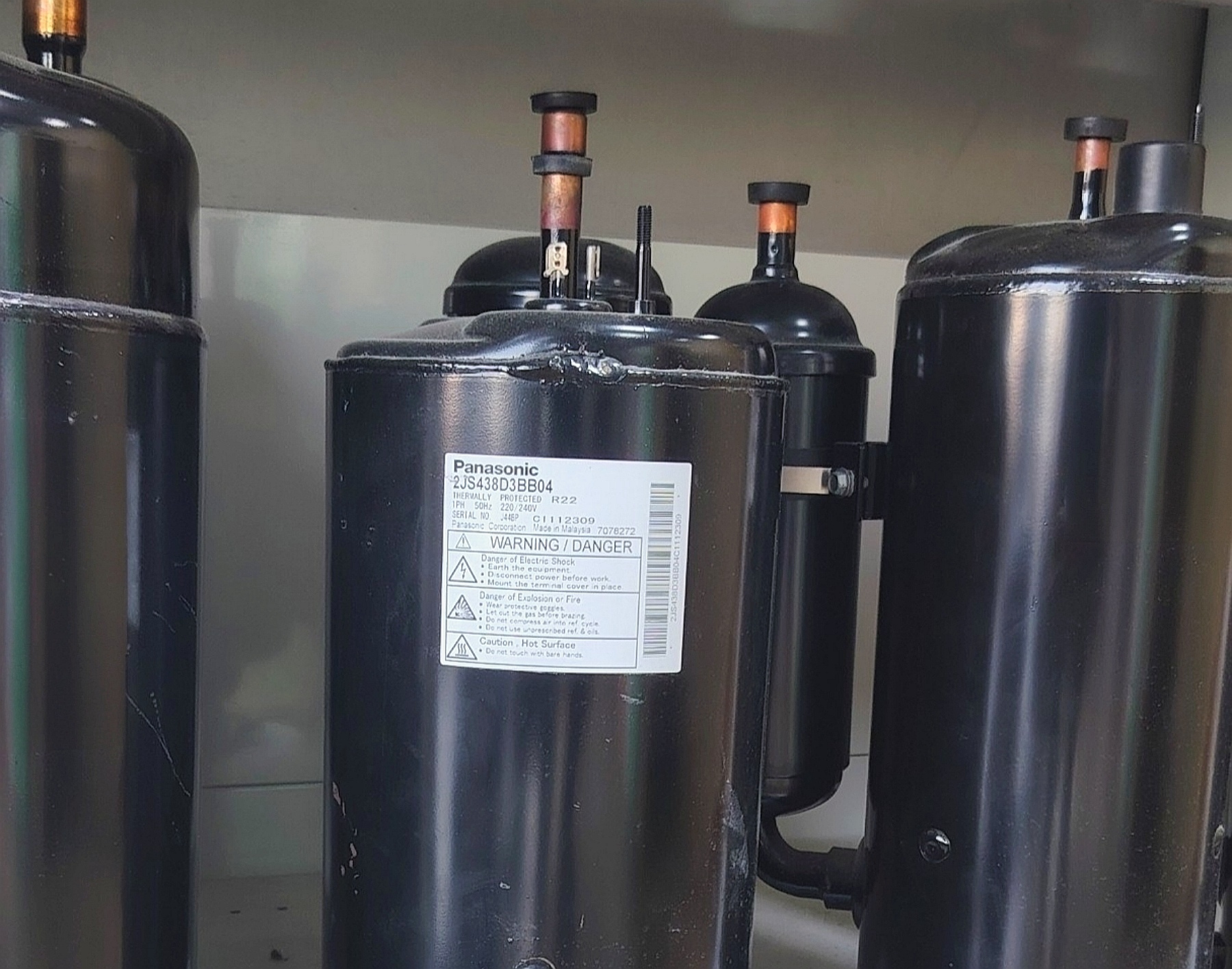
Looking for a reliable replacement compressor for your 2-ton air conditioner? The Panasonic 2TON Compressor 2JS438D3BB04 is known for its dependable cooling, energy-efficient operation, and long service life. In this guide, I’ll share my real-world experience, practical installation tips, maintenance advice, and common mistakes to avoid before replacing your AC compressor.
Why I Started Trusting the Panasonic 2JS438D3BB04
A couple of summers ago, I received a call from a customer whose 2-ton split air conditioner had suddenly stopped cooling. The indoor fan was running, but the room temperature barely changed. Standing outside beside the condenser unit, I could hear a loud humming noise followed by a click every few seconds. Panasonic 2Ton Rotary Compressor 2JS438D3BB04.
Like many technicians, I first suspected a weak capacitor. After replacing it, the problem didn’t disappear. A quick check with my digital multimeter confirmed that the compressor windings weren’t healthy anymore.
We replaced it with the Panasonic 2TON Compressor 2JS438D3BB04, vacuumed the system properly, replaced the filter drier, and charged it with the correct amount of refrigerant.
Within fifteen minutes, cold air was flowing again. More importantly, the compressor operated quietly with very little vibration. The customer later told me that the air conditioner actually cooled better than it had during the previous two years.
That repair reminded me that even the most expensive air conditioner depends heavily on one component—the compressor.
If you’re considering this Panasonic model, here’s everything I’ve learned from working with similar units.

What Is the Panasonic 2TON Compressor 2JS438D3BB04?
The Panasonic 2JS438D3BB04 is a rotary compressor designed for 2-ton split air conditioning systems. Panasonic has been manufacturing compressors for decades, and many HVAC technicians appreciate them for their smooth operation, dependable cooling performance, and durability in demanding climates.
Instead of producing excessive vibration like some older compressors, this model delivers steady cooling while maintaining relatively quiet operation. Panasonic 2Ton Rotary Compressor 2JS438D3BB04.
It is commonly used in residential and light commercial air conditioning systems.
Panasonic 2TON Compressor 2JS438D3BB04 Specifications
Before replacing any compressor, I always compare the specifications with the original unit.
| Specification | Details |
|---|---|
| Brand | Panasonic |
| Model | 2JS438D3BB04 |
| Compressor Type | Rotary Compressor |
| Capacity | 2 Ton |
| Application | Split Air Conditioner |
| Phase | Single Phase |
| Cooling | Residential & Commercial AC |
| Installation | Outdoor Unit |
| Performance | High Efficiency |
| Operation | Low Noise & Low Vibration |
Always verify refrigerant compatibility, operating voltage, and pipe connections before ordering a replacement.
Key Features of the Panasonic 2JS438D3BB04
After installing several Panasonic compressors over the years, these are the features that consistently stand out.
Reliable Cooling Performance
This compressor delivers stable cooling even during long operating hours.
Once the refrigerant pressure stabilises, the cooling remains consistent without noticeable fluctuations.
Quiet Operation
One thing customers notice immediately is how quietly this compressor runs.
Compared to many ageing compressors, vibration levels are noticeably lower.
Energy-Efficient Design
Although electricity consumption depends on the complete AC system, Panasonic compressors are designed to operate efficiently when paired with clean condenser coils and the correct refrigerant charge.
Durable Construction
Internal components are designed to withstand continuous operation during hot weather, making this compressor a dependable option for regions with long summers.
Smooth Starting
With healthy electrical components and proper voltage, the compressor starts smoothly without excessive strain.
Where Is This Compressor Commonly Used?
The Panasonic 2JS438D3BB04 is suitable for various cooling applications.
Typical installations include:
- Residential split air conditioners
- Villas
- Apartments
- Offices
- Retail shops
- Clinics
- Small commercial buildings
- Server rooms
- Reception areas
Its 2-ton capacity makes it ideal for medium-sized spaces that require dependable cooling.
My Real-World Experience After Installation
One installation still sticks in my mind because the customer thought the air conditioner needed replacing.
Fortunately, the indoor and outdoor units were still in good condition.
The compressor had simply reached the end of its service life after years of running through extremely hot summers.
After installing the Panasonic 2JS438D3BB04, we carefully:
- Pressure-tested the system with nitrogen
- Replaced the filter drier
- Pulled a deep vacuum
- Recharged the refrigerant using a digital scale
The difference was immediate.
The compressor started quietly, suction pressure stabilised quickly, and the supply air temperature dropped much faster than expected.
Six months later, the customer called—not because of a fault, but simply to thank us for recommending the replacement instead of replacing the entire air conditioner. Panasonic 2Ton Rotary Compressor 2JS438D3BB04.
Step-by-Step Compressor Installation Guide
Replacing an AC compressor isn’t simply removing one and fitting another.
Proper installation makes all the difference.
Step 1 – Confirm the Compressor Has Failed
Before ordering a replacement, always inspect:
- Compressor windings
- Capacitor
- Contactor
- Supply voltage
- Refrigerant pressure
- Overload protector
Many compressors get replaced when the real problem is a faulty electrical component.
Step 2 – Recover the Refrigerant
Use an approved refrigerant recovery machine.
Never release refrigerant into the atmosphere.
Step 3 – Remove the Old Compressor
Disconnect electrical wiring carefully.
Cut or unbraze the refrigerant pipes without introducing contamination.
Step 4 – Install a New Filter Drier
Never reuse the old filter drier.
Replacing it helps remove moisture and contaminants that can damage the new compressor.
Step 5 – Braze the Pipe Connections
Flow nitrogen while brazing whenever possible.
This reduces oxidation inside the refrigeration tubing.
Step 6 – Pull a Deep Vacuum
Use:
- Vacuum pump
- Micron gauge
- Vacuum-rated hoses
Removing moisture is essential for compressor reliability.
Step 7 – Charge the Correct Refrigerant
Always charge according to the manufacturer’s specifications.
Charging by weight is much more accurate than guessing based on pressure alone.
Tools I Normally Use
Whenever I replace compressors, these tools come with me.
- Digital manifold gauge set
- Refrigerant recovery machine
- Vacuum pump
- Digital refrigerant scale
- Digital multimeter
- Clamp meter
- Nitrogen cylinder
- Leak detector
- Brazing torch
- Infrared thermometer
Having the proper tools prevents many common installation mistakes.
Common Mistakes to Avoid
Over the years, I’ve seen the same mistakes repeated again and again.
Skipping the Vacuum Process
Moisture inside the system eventually creates acid that damages compressor windings.
Never skip evacuation.
Overcharging Refrigerant
Adding “a little extra” refrigerant doesn’t improve cooling.
Instead, it increases compressor workload.
Ignoring Dirty Condenser Coils
A blocked condenser causes high discharge pressure.
The compressor has to work much harder than necessary.
Reusing Old Electrical Components
Old capacitors and contactors may still operate, but weak components often shorten compressor life.
Poor Airflow Around the Outdoor Unit
Outdoor units need plenty of airflow.
Keep at least the recommended clearance around the condenser.
Maintenance Tips for Longer Compressor Life
Preventive maintenance is much cheaper than replacing a compressor.
Here’s what I recommend.
Clean the Condenser Regularly
Dust and dirt reduce heat transfer.
Cleaning the outdoor coil every few months improves efficiency.
Replace Dirty Air Filters
Restricted indoor airflow affects the entire cooling system.
Check Refrigerant Levels
Low refrigerant increases compressor operating temperature.
Tighten Electrical Connections
Loose terminals generate heat and can damage electrical components.
Listen for Unusual Sounds
Clicking, rattling, or loud humming often indicates developing problems.
Schedule Annual Maintenance
A yearly inspection helps identify small issues before they become expensive repairs.
Signs Your Compressor May Be Failing
Watch for these warning signs.
- Warm air from indoor vents
- Outdoor unit humming but not starting
- Frequent circuit breaker trips
- High electricity bills
- Poor cooling performance
- Compressor overheating
- Loud operating noise
- Ice forming on refrigerant lines
Early diagnosis often prevents further system damage.
Advantages of the Panasonic 2JS438D3BB04
From my experience, the biggest benefits include:
- Excellent cooling performance
- Reliable operation
- Quiet running
- Energy-efficient design
- Low vibration
- Durable construction
- Trusted Panasonic quality
- Suitable for demanding climates
Is the Panasonic 2JS438D3BB04 Worth Buying?
If your air conditioner originally used this model or a compatible replacement, I’d say it’s a solid choice.
Its combination of dependable performance, quiet operation, and long-term reliability makes it a favourite among many HVAC technicians.
Just remember that even the best compressor won’t perform well if it’s installed incorrectly or paired with a poorly maintained refrigeration system.
Always check compatibility before purchasing and have the installation completed by a qualified HVAC professional.
Frequently Asked Questions
Can this compressor fit every 2-ton split AC?
No. Always verify the refrigerant type, voltage, pipe size, mounting arrangement, and manufacturer specifications before replacing a compressor.
How long does the Panasonic 2JS438D3BB04 usually last?
With correct installation and regular maintenance, it can provide many years of reliable service. Its lifespan depends on operating conditions, electrical supply, and overall system care.
Can I replace the compressor myself?
Compressor replacement requires specialised tools, refrigerant handling equipment, brazing skills, and safety knowledge. It’s best left to a qualified HVAC technician.
Why do some new compressors fail early?
Early failures are usually caused by contaminated refrigerant circuits, moisture, poor evacuation, incorrect refrigerant charging, or unresolved electrical faults rather than defects in the compressor itself.
Final Thoughts
The Panasonic 2TON Compressor 2JS438D3BB04 has proven itself to be a dependable replacement for compatible split air conditioning systems. After working with similar Panasonic compressors, I’ve found that they offer reliable cooling, quiet performance, and good durability when installed correctly.
The biggest lesson I’ve learned is that a successful compressor replacement isn’t just about fitting a new part. Taking the time to clean the system, replace the filter drier, pull a proper vacuum, and charge the refrigerant accurately makes all the difference. If those steps are followed, this compressor can provide years of efficient and trouble-free cooling.