
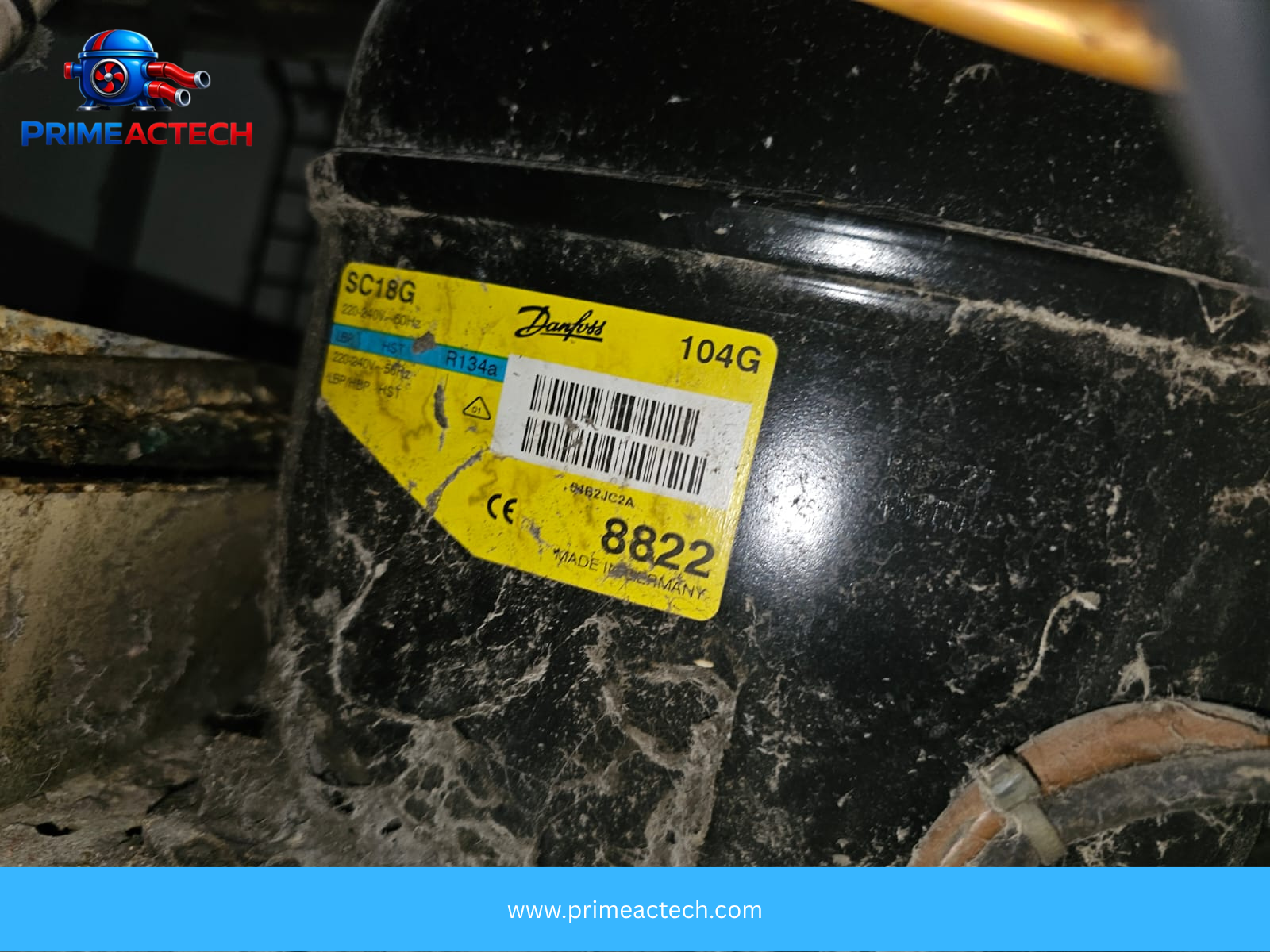
I still remember a service call from a small restaurant owner who was frustrated because his beverage cooler kept losing temperature during busy hours. The cooler would work fine in the morning, but by lunchtime the drinks weren’t cold enough. Like many people, he assumed the thermostat was the problem.
After checking the refrigerant charge, cleaning the condenser, and testing electrical components, it became obvious that the compressor had lost efficiency after years of operation.
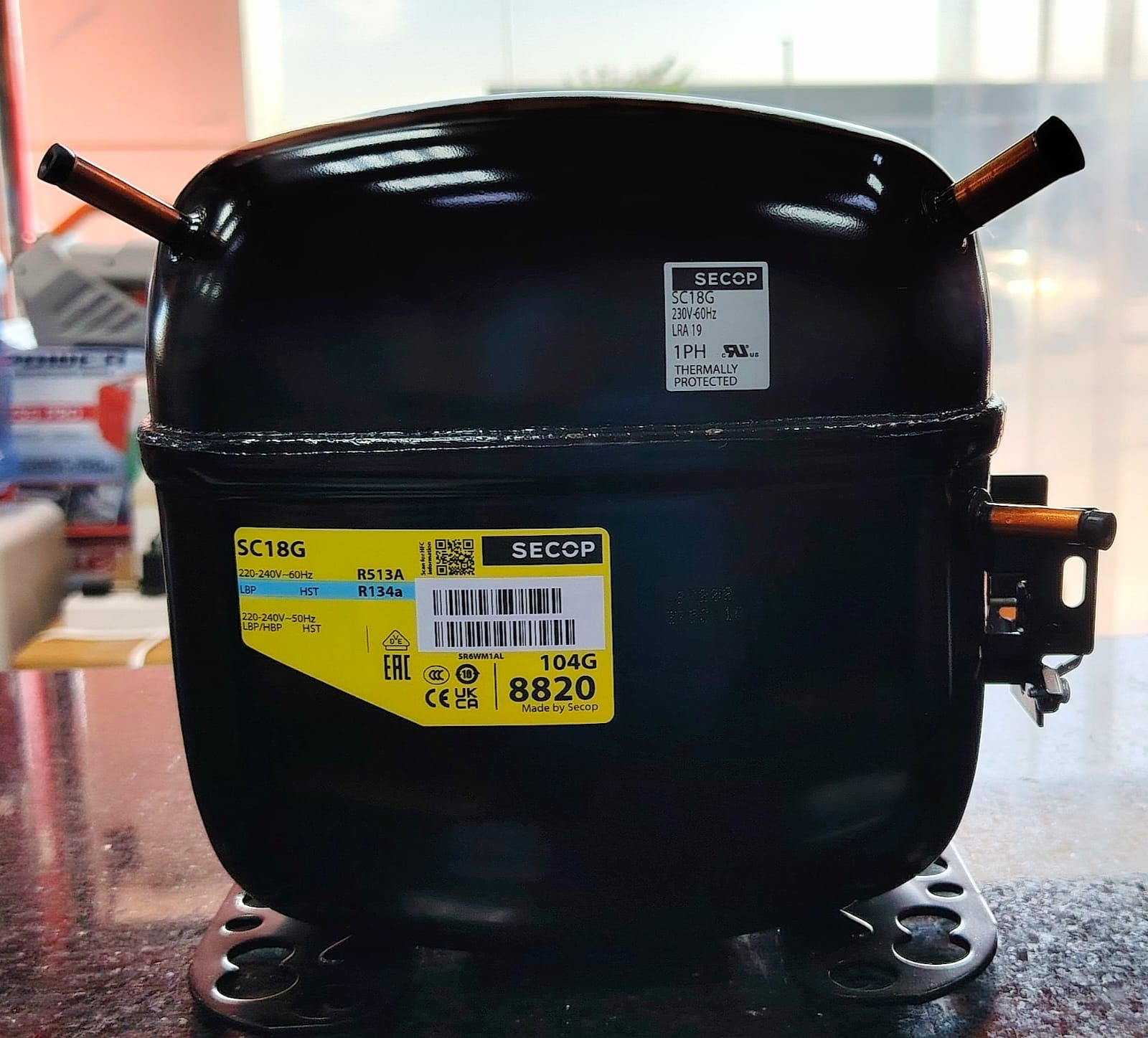
We replaced it with a Danfoss SC18G 5/8HP compressor, and the difference was noticeable within a few hours. The cabinet temperature stabilized, recovery time improved, and the compressor operated much smoother than the old unit.
Since then, I’ve worked with several refrigeration systems using the SC18G, and it has become one of those compressors that technicians generally trust when reliability matters.
What Is the Danfoss SC18G 5/8HP Compressor?
The Danfoss SC18G is a hermetic reciprocating compressor designed primarily for commercial refrigeration applications. It is widely used in bottle coolers, display refrigerators, reach-in coolers, ice cream cabinets, and other medium-duty refrigeration systems.
With its 5/8 horsepower rating, the SC18G sits in a sweet spot between smaller domestic compressors and larger commercial units. It provides enough cooling capacity for demanding applications while remaining relatively compact and energy efficient.
One reason many refrigeration technicians like this model is that Danfoss has built a strong reputation for producing compressors that can handle continuous operation without frequent breakdowns.
Technical Specifications OF SC18G
THE specifications and overall data of sc18g compressor:
| COMPANY | DANFOS SECOP |
| FULL MODEL | SC18G |
| VOLTAGE | 220-240V |
| REFRIGERANT | R134A / R513A |
| FREQUENCY | 50HZ/60HZ |
| HORSE POWER | 5/8HP |
| APPLICATION | LBP/HBP |
| Refrigerant charge | 1.3 kg |
| Displacement (Swept Volume) | 17.69 cm³ |
| PHASE | SINGLE PHASE |
| TYPE | HERMATIC |
| Oil Quantity | 550 cm³ |
| Refrigerant Charge (Max) | 1.3 kg |
| Free Gas Volume | 1460 cm³ |
| Oil type | POE (Polyolester) |
| Motor type | CSIR |
| Net weight | 13 Kilogram |
| Gross weight | 16 Kilogram |
| STARTING CAPACITOR | 80UF |
| ORIGIN | MADE BY SECOP (CHINA) |
First Impressions After Installation
The first thing I noticed when handling the SC18G was its solid construction.
Some compressors feel lightweight and somewhat fragile during installation. The SC18G gives the impression that it was built for years of service rather than just getting through a warranty period.
The compressor housing is well-finished, connections are easy to access, and installation is straightforward for anyone familiar with commercial refrigeration systems.
Another pleasant surprise was the startup behavior.
Some compressors create a noticeable “kick” when starting. The SC18G tends to start smoothly when paired with the correct starting components and electrical supply.
For restaurant owners and shopkeepers, quieter operation often becomes one of the most appreciated benefits.
Where the SC18G Performs Best
Over the years, I’ve seen this compressor used successfully in several applications.
Beverage Coolers
Convenience stores often rely on beverage coolers that experience constant door openings throughout the day.
The SC18G handles these temperature fluctuations quite well and recovers quickly after customers repeatedly access the cooler.
Display Refrigerators
Bakery display cases and supermarket refrigerators require stable temperatures to maintain product quality.
The compressor provides consistent cooling performance without excessive cycling.
Reach-In Coolers
Restaurants and cafés frequently use reach-in refrigerators that operate almost continuously.
The SC18G is well suited for these environments because it is designed for long operating periods.
Ice Cream Cabinets
Ice cream storage requires dependable low temperatures.
Many technicians choose Danfoss compressors because of their ability to maintain stable operation under demanding conditions.
Real-World Performance
What matters most isn’t what a brochure says—it’s how equipment behaves after months or years of operation.
In my experience, the SC18G delivers three key advantages:
Consistent Cooling
Temperature swings are minimal when the refrigeration system is properly designed.
This means products stay colder and customers experience fewer cooling-related issues.
Dependable Operation
I’ve encountered SC18G units that have been running for years with only routine maintenance.
While no compressor lasts forever, this model has earned a reputation for longevity.
Good Efficiency
Electricity costs matter, especially for businesses operating refrigeration equipment 24 hours a day.
The SC18G generally offers a good balance between cooling performance and energy consumption.
Step-by-Step Installation Tips
A great compressor can still perform poorly if installation shortcuts are taken.
Here’s the process I normally follow.
Step 1: Verify System Compatibility
Before ordering any compressor, confirm:
- Refrigerant type
- Voltage requirements
- Cooling capacity requirements
- Mounting dimensions
Never assume two compressors are interchangeable simply because they look similar.
Step 2: Replace the Filter Drier
This is one shortcut I never recommend.
Every compressor replacement should include a new filter drier.
Old moisture and contaminants can quickly damage a new compressor.
Step 3: Check the Condenser
Many cooling problems are caused by dirty condensers rather than compressor failures.
Clean the condenser thoroughly before commissioning the new unit.
Step 4: Pressure Test the System
A small refrigerant leak can create major performance problems later.
Always pressure test before charging.
Step 5: Pull a Deep Vacuum
Removing moisture and non-condensable gases is essential.
I use a vacuum pump and micron gauge whenever possible.
Step 6: Charge Refrigerant Correctly
Avoid guessing.
Use the manufacturer’s recommended charging procedure and verify operating conditions.
Step 7: Monitor Operation
After startup, check:
- Running current
- Suction pressure
- Discharge pressure
- Cabinet temperature
- Compressor sound
These readings provide valuable information about system health.
Common Mistakes to Avoid
Over the years, I’ve seen the same installation mistakes repeated many times.
Reusing Old Components
A new compressor should not inherit old problems.
Replace worn contactors, capacitors, and filter driers when necessary.
Ignoring Airflow Problems
Poor condenser airflow can make a healthy compressor appear defective.
Always inspect fans and coils.
Incorrect Refrigerant Charge
Both overcharging and undercharging can reduce efficiency and shorten compressor life.
Poor Brazing Practices
Oxidation inside refrigeration tubing can contaminate the system.
Using nitrogen while brazing helps reduce this risk.
Skipping Electrical Checks
Loose terminals and voltage issues often create symptoms that resemble compressor failure.
Maintenance Tips That Actually Work
One thing I’ve learned over the years is that maintenance is far cheaper than emergency repairs.
For the SC18G, I recommend:
Clean Condenser Coils Regularly
Dust and grease reduce heat transfer and force the compressor to work harder.
Check Refrigerant Leaks
Small leaks gradually reduce system performance.
Early detection prevents expensive repairs.
Inspect Electrical Connections
Loose terminals create heat and increase electrical resistance.
Monitor Operating Temperatures
Unexpected temperature changes often reveal problems before complete failure occurs.
Listen to the Compressor
Experienced technicians can often identify developing issues simply by noticing changes in compressor sound.
How Long Can an SC18G Last?
This is one of the most common questions I receive.
The honest answer is that lifespan depends heavily on installation quality and maintenance.
I’ve seen compressors fail within a few years due to contaminated systems, poor airflow, or electrical issues.
I’ve also seen Danfoss compressors remain operational for well over a decade with proper care.
The compressor itself is only one part of the equation.
A clean condenser, correct refrigerant charge, and stable power supply contribute significantly to long service life.
Is the SC18G Worth Buying?
For medium-sized commercial refrigeration systems, the Danfoss SC18G remains one of the safer choices available.
It isn’t necessarily the cheapest compressor on the market, but reliability usually matters more than saving a small amount upfront.
Business owners care about product temperature, energy costs, and avoiding emergency service calls.
Technicians care about predictable performance, straightforward installation, and parts availability.
The SC18G checks all of those boxes.
Whenever I encounter a refrigeration application that falls within its capacity range, it’s one of the models I feel comfortable recommending because I’ve seen how it performs in real-world conditions—not just in technical specifications.
If you’re looking for a dependable 5/8HP compressor for commercial refrigeration, the Danfoss SC18G has earned its reputation through years of reliable service in shops, restaurants, supermarkets, and cold storage applications around the world.