
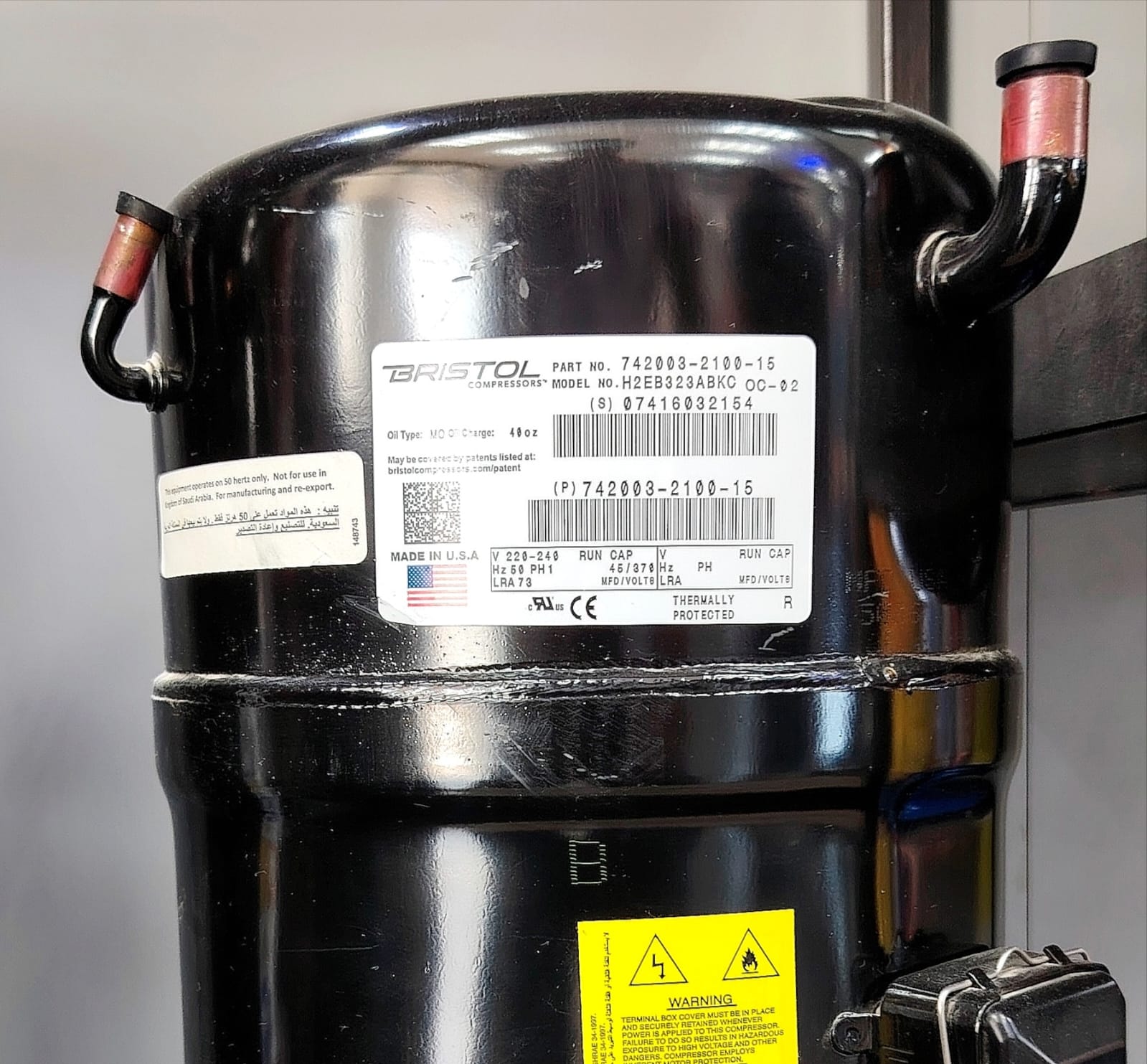
A few summers ago, I received a service call from a customer whose split air conditioner had suddenly stopped cooling. The indoor unit was running, the fan was working, but the room temperature barely changed. Bristol Compressor H2EB323ABKC 1PH Review & Specifications.
Like many technicians, I initially suspected low refrigerant or a faulty capacitor. After opening the outdoor unit, I found the real culprit—a compressor that had reached the end of its service life after years of operation.
The replacement unit installed was a Bristol H2EB323ABKC compressor, and that experience gave me a chance to see how this compressor performs in real-world HVAC applications.
Since then, I’ve encountered this model in several residential and light commercial air conditioning systems. While it may not be as widely discussed as some Copeland or Danfoss compressors, it has built a reputation for dependable cooling performance and solid durability.
If you’re researching the Bristol H2EB323ABKC compressor, this guide will help you understand its specifications, applications, strengths, and maintenance considerations from a practical perspective.
What Is the Bristol H2EB323ABKC Compressor?
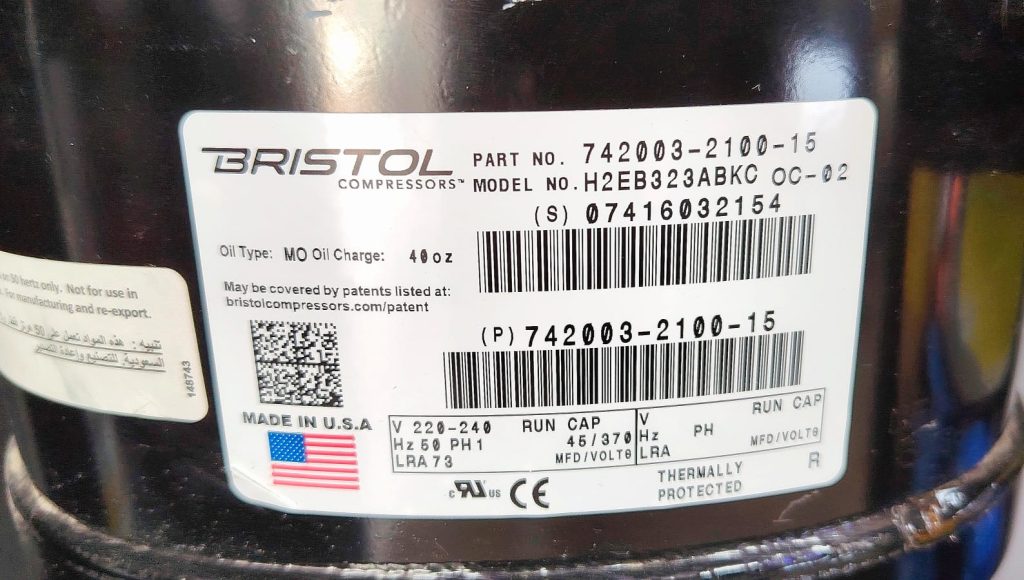
The Bristol H2EB323ABKC is a hermetic reciprocating compressor commonly used in air conditioning systems.
Based on the compressor nameplate, this model operates on:
- 220-240V
- 50Hz
- Single Phase
- LRA (Locked Rotor Amps): 73
- Run Capacitor: 45/370 MFD/Volt
- Mineral Oil Charge: 40 oz
- Thermal Protection Built-In
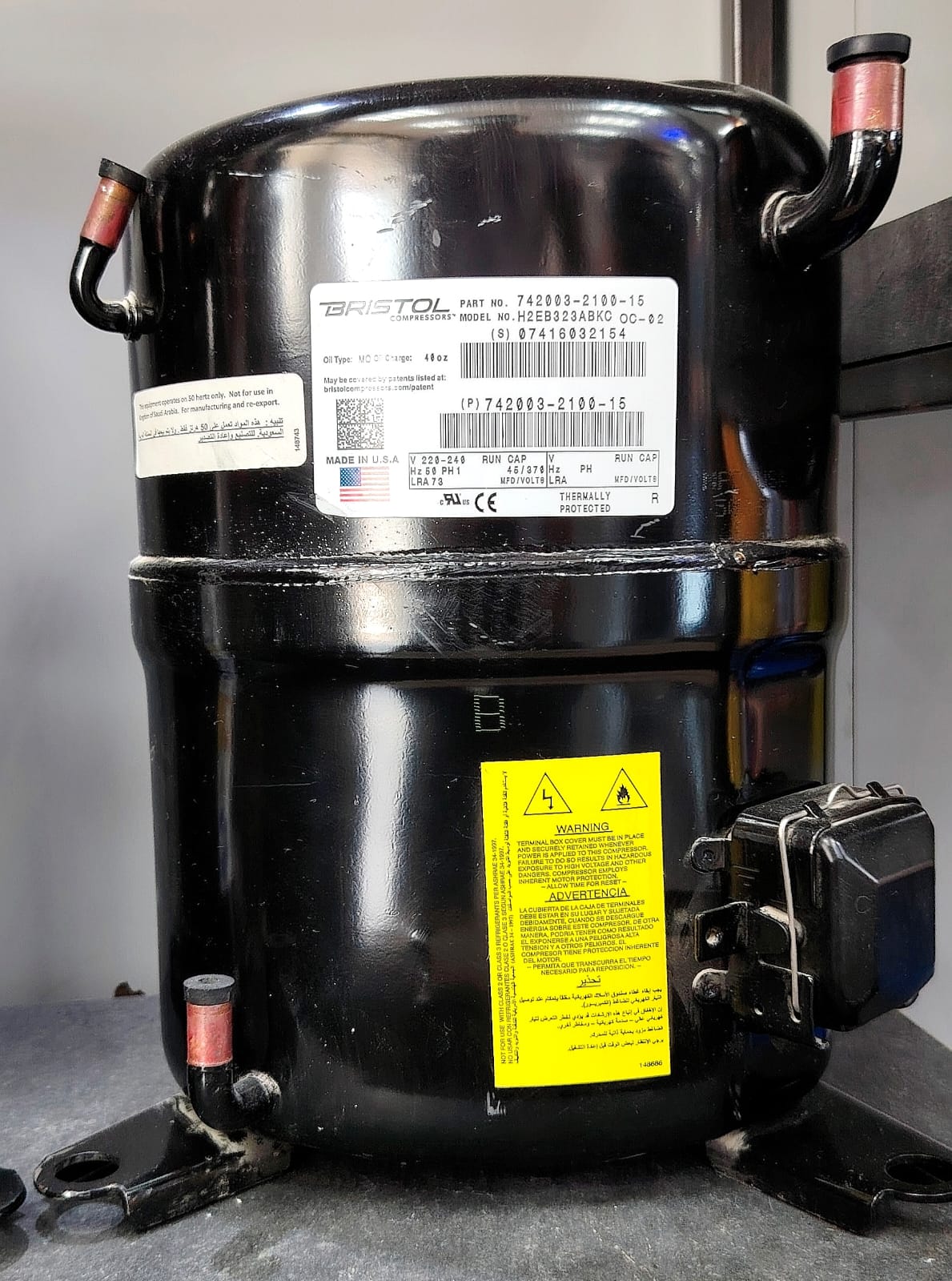
The compressor is manufactured in the USA and designed for reliable operation in residential and commercial cooling applications.
One thing I appreciate about Bristol compressors is their straightforward design. They don’t try to be overly complicated. Instead, they focus on dependable cooling performance and long service life when installed correctly.
First Impressions During Installation
The first thing I noticed when handling the H2EB323ABKC was its robust construction.
Some compressors feel lightweight and almost fragile. The Bristol unit gives the impression of being built for continuous operation.
The welded shell feels solid, the terminal arrangement is easy to access, and the labeling is clear enough to make installation straightforward.
When replacing an existing compressor, clear electrical information saves valuable troubleshooting time.
For technicians working in the field, that matters more than most people realize.
Estimated Capacity and Application Range
Although exact cooling capacity depends on system design and operating conditions, the H2EB323ABKC is generally found in systems around the 2.5 to 3-ton air conditioning range.
The compressor’s LRA rating of 73 amps supports this estimate.
In practical applications, I’ve seen similar Bristol compressors used in:
Residential Split Air Conditioners
Many homes rely on compressors in this capacity range for cooling living rooms, bedrooms, and entire apartments.
Small Commercial Offices
Offices with moderate cooling loads often use systems equipped with compressors of similar size.
Retail Shops
Small stores benefit from dependable cooling during long operating hours.
Light Commercial HVAC Systems
Certain packaged units and rooftop systems also utilize Bristol compressors depending on manufacturer design.
Real-World Cooling Performance
Technical specifications tell part of the story.
The more important question is:
How does the compressor actually perform?
From my experience, the H2EB323ABKC offers several advantages.
Reliable Startup
A properly installed compressor should start smoothly.
When paired with the correct 45/370 run capacitor, startup performance is generally consistent.
Many compressor failures begin because of incorrect starting components.
The Bristol design handles normal operating conditions well when electrical supply remains stable.
Stable Cooling
One thing I’ve noticed is that Bristol compressors tend to maintain stable cooling performance once operating conditions are properly set.
This means:
- Consistent room temperature
- Reduced temperature fluctuations
- Better occupant comfort
Good Durability
Several Bristol compressors I’ve encountered have remained operational for many years with routine maintenance.
Like any compressor, lifespan depends heavily on:
- Refrigerant charge
- Airflow
- Voltage quality
- Maintenance practices
But overall durability has been impressive.
Understanding the Electrical Specifications
Many homeowners become confused when reading compressor labels.
Let’s simplify some of the key numbers.
Voltage: 220-240V
This means the compressor is designed for standard single-phase power commonly used in many residential and commercial HVAC systems.
Frequency: 50Hz
The compressor is intended for regions using 50Hz electrical supply.
LRA: 73 Amps
LRA stands for Locked Rotor Amps.
This is the brief current surge that occurs during startup.
Some people panic when they see 73 amps.
However, this current lasts only momentarily during startup.
Normal operating current is much lower.
Run Capacitor: 45/370
The compressor requires a:
- 45 microfarad capacitor
- Rated at 370 volts
Using the wrong capacitor can cause:
- Hard starting
- Overheating
- Reduced lifespan
Common Problems I’ve Seen in the Field
Many compressor failures are blamed on the compressor itself.
In reality, surrounding system issues are often responsible.
Dirty Condenser Coils
This is one of the most common causes of poor performance.
A dirty condenser forces the compressor to operate under higher pressures.
Over time, this increases wear.
Low Refrigerant Charge
Leaks reduce cooling capacity and can cause overheating.
Poor Electrical Connections
Loose terminals create heat and voltage drops.
Incorrect Capacitor Size
Installing the wrong capacitor is surprisingly common.
Always verify capacitor ratings before replacement.
Restricted Airflow
Blocked filters and dirty evaporator coils force the system to work harder.
Step-by-Step Maintenance Tips
If you want the H2EB323ABKC compressor to last as long as possible, follow these simple maintenance steps.
Step 1: Clean Condenser Coils
Remove dirt, leaves, and debris regularly.
Good airflow improves efficiency.
Step 2: Replace Dirty Air Filters
A clogged filter reduces airflow and increases compressor workload.
Step 3: Check Electrical Connections
Inspect terminals and wiring annually.
Step 4: Monitor Cooling Performance
A noticeable decline in cooling often signals a developing issue.
Step 5: Schedule Professional Service
Annual inspections help identify problems before major failures occur.
A Lesson I Learned the Hard Way
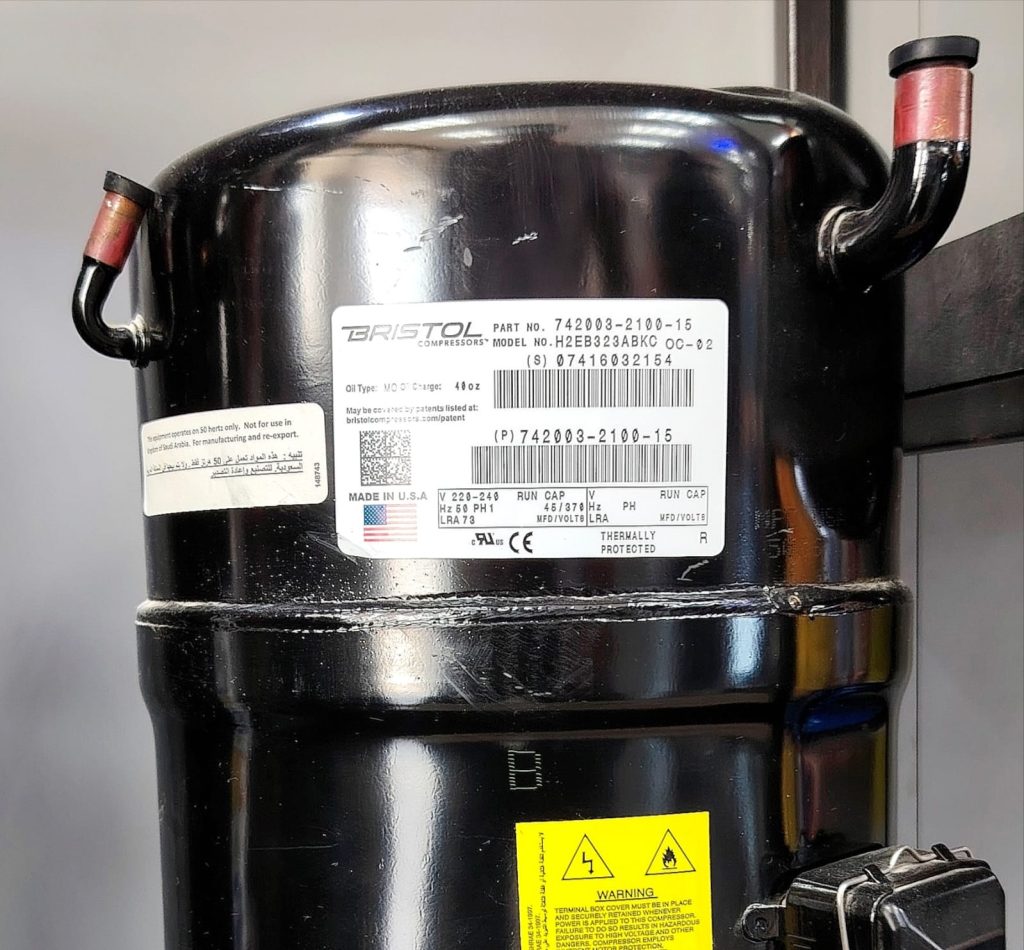
Years ago, I replaced a compressor that repeatedly overheated during summer afternoons.
Initially, I suspected an internal compressor issue.
After further investigation, I discovered the condenser coil was severely clogged.
The replacement compressor was working harder than necessary because airflow was restricted.
Once the condenser was cleaned, operating pressures dropped significantly.
That experience taught me a valuable lesson:
A compressor should never be evaluated in isolation.
The entire HVAC system must be considered.
Is the Bristol H2EB323ABKC Worth It?
For systems designed around this compressor, the answer is generally yes.
What I like most about the H2EB323ABKC is its simplicity.
It isn’t packed with complex electronics or specialized controls.
Instead, it focuses on delivering dependable cooling performance with straightforward maintenance requirements.
For homeowners, that means:
- Reliable comfort
- Easier servicing
- Readily available replacement components
- Proven compressor technology
For technicians, it means a compressor that behaves predictably when installed correctly.
Final Thoughts
The Bristol H2EB323ABKC may not be the most talked-about compressor in the HVAC industry, but it has earned respect among technicians who value reliability over marketing hype.
With its 220-240V single-phase operation, 73 LRA rating, thermal protection, and durable construction, it remains a solid choice for many residential and light commercial air conditioning applications.
The biggest factor affecting its lifespan isn’t the compressor itself—it’s the quality of installation and maintenance surrounding it.
Keep the condenser clean, maintain proper refrigerant charge, use the correct capacitor, and ensure good airflow.
Do those things consistently, and this Bristol compressor can provide years of dependable cooling performance.
Bristol Compressor H2EB323ABKC 1PH Review & Specifications