
There was a time when a customer called me because their older split air conditioner had stopped cooling during one of the hottest weeks of summer. The outdoor unit was running, but the air inside the room felt almost warm. After checking the electrical components, measuring refrigerant pressure, and listening carefully to the compressor, it became obvious that the compressor had reached the end of its life. LG Rotary Compressor QP442 1ph R22.
The replacement was an LG Rotary Compressor QP442 1Ph R22, and honestly, I was curious to see how it would perform because I had worked with several LG rotary compressors before but not this exact model. After installation, proper evacuation, and charging the system, the AC returned to cooling surprisingly fast. More importantly, the compressor operated quietly and maintained stable suction and discharge pressures throughout the testing period.
That experience reminded me that choosing the right replacement compressor matters just as much as installing it correctly.
In this guide, I’ll share what I’ve learned about the LG Rotary Compressor QP442 1Ph R22, where it’s commonly used, its advantages, installation tips, and the mistakes I’ve seen technicians make over the years.
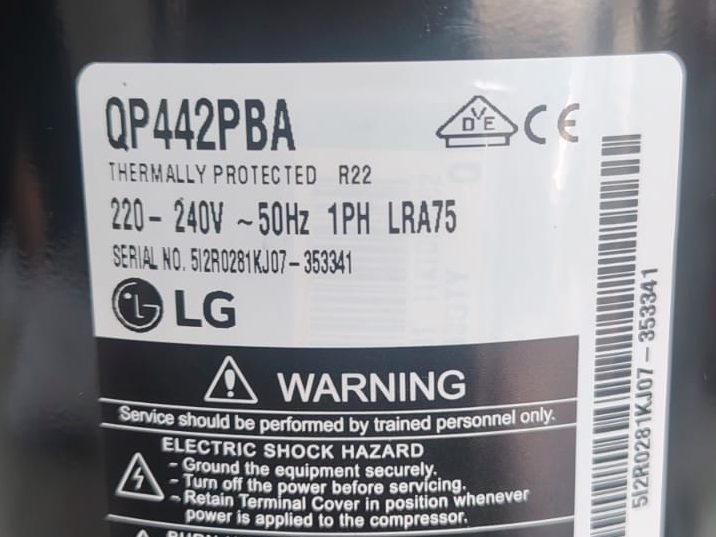
What Is the LG Rotary Compressor QP442 1Ph R22?
The LG Rotary Compressor QP442 1Ph R22 is a single-phase rotary compressor designed primarily for residential and light commercial air conditioning systems operating with R22 refrigerant.
Although many new air conditioners now use R410A or R32 refrigerants, thousands of R22 systems remain in service across many countries. For these systems, replacing a failed compressor with a compatible model is often much more affordable than replacing the entire air conditioning unit.
The QP442 is built for:
- Split air conditioners
- Wall-mounted AC systems
- Small package units
- Residential cooling applications
- Light commercial installations
Its rotary compression mechanism provides smooth operation while keeping energy consumption relatively low for older R22 systems.
Main Features
Here are some of the notable characteristics of the LG QP442 rotary compressor.
Single-Phase Operation
The compressor runs on a standard single-phase power supply, making it suitable for homes and small businesses without requiring three-phase electrical service.
Designed for R22 Refrigerant
This model is specifically engineered for R22 refrigerant systems. Using another refrigerant without proper engineering modifications is never recommended.
Rotary Compression Technology
Unlike reciprocating compressors that use pistons, rotary compressors compress refrigerant using a rotating roller inside a cylinder.
This design generally offers:
- Lower vibration
- Quieter operation
- Better efficiency
- Fewer moving parts
- Smooth performance
Typical Technical Specifications
The exact specifications can vary depending on production batches and regional versions, but most QP442 compressors offer characteristics similar to these:
| Specification | Typical Value |
|---|---|
| Compressor Type | Rotary |
| Brand | LG |
| Model | QP442 |
| Phase | Single Phase |
| Refrigerant | R22 |
| Cooling Application | Air Conditioning |
| Frequency | 50/60 Hz |
| Lubrication | Refrigeration Oil |
| Mounting | Rubber Mounted |
Always verify the compressor nameplate before installation.
Where Is It Commonly Used?
I’ve personally seen the QP442 installed in many older residential AC systems that are still operating reliably after several years.
Common applications include:
- Home split AC units
- Apartment air conditioners
- Office cooling systems
- Small retail shops
- Villas
- Guest houses
Many HVAC technicians still encounter these compressors during replacement work because R22 systems remain operational in several regions.
Performance in Daily Use
One thing I appreciate about LG rotary compressors is how quietly they run when installed correctly.
After replacing an old worn-out compressor with the QP442, the difference is often noticeable almost immediately.
Instead of hearing loud knocking or excessive vibration, the outdoor unit usually produces a smooth humming sound.
Cooling also becomes more stable because the compressor maintains consistent refrigerant circulation.
Of course, performance still depends on several factors:
- Correct refrigerant charge
- Clean condenser coil
- Good airflow
- Proper capacitor size
- Correct voltage supply
Even the best compressor won’t perform well if the rest of the system has problems.
Advantages of the LG Rotary Compressor QP442
Quiet Operation
Rotary compressors naturally produce less mechanical noise than many older reciprocating designs.
For homeowners, this often means a quieter outdoor unit.
Reliable Cooling
When installed correctly, the compressor delivers steady refrigerant flow that helps maintain consistent indoor temperatures.
Compact Design
The compressor fits easily inside many outdoor condenser units, simplifying replacement work.
Energy Efficient for Older Systems
Although it isn’t as efficient as modern inverter compressors, it still performs well compared to many aging R22 compressors.
Good Durability
I’ve seen properly maintained LG compressors continue working for years without major issues.
Routine maintenance makes a huge difference.
Installation Tips from Experience
Replacing a compressor isn’t simply removing one unit and installing another.
Several important steps determine whether the new compressor lasts ten years—or fails within months.
1. Recover the Refrigerant Properly
Never vent refrigerant into the atmosphere.
Always recover it using approved recovery equipment.
2. Flush the Refrigeration Lines
If the old compressor burned internally, acid and debris may remain inside the system.
Flushing the lines helps prevent contamination.
3. Replace the Filter Drier
This is one step many people skip.
A new filter drier removes moisture and contaminants before they damage the new compressor.
4. Pull a Deep Vacuum
I always spend extra time evacuating the system.
Removing moisture is essential for compressor reliability.
A quality vacuum pump and micron gauge make this process much more dependable than relying on time alone.
5. Charge the Correct Amount of Refrigerant
Guessing isn’t good enough.
Use a digital charging scale whenever possible.
Overcharging and undercharging both reduce efficiency.
6. Check Operating Pressures
Once the system is running, compare suction and discharge pressures with expected values.
This confirms the compressor is operating normally.
Tools That Make the Job Easier
Over the years, these tools have become part of my standard service kit:
- Digital manifold gauge
- Vacuum pump
- Micron gauge
- Refrigerant recovery machine
- Clamp meter
- Digital multimeter
- Refrigerant charging scale
- Leak detector
- Nitrogen cylinder for pressure testing
Using proper tools saves time and helps avoid expensive mistakes.
Common Problems That Are Not Actually Compressor Failures
One lesson I’ve learned is that many compressors get blamed for problems caused by something else.
Before replacing a compressor, check these items first.
Faulty Capacitor
A weak capacitor can prevent the compressor from starting even though it’s perfectly healthy.
Low Refrigerant
Insufficient refrigerant can cause poor cooling that resembles compressor failure.
Dirty Condenser Coil
A clogged condenser raises operating pressure and reduces cooling performance.
Electrical Problems
Loose wiring, low voltage, or damaged contactors can interrupt compressor operation.
Blocked Airflow
Dirty filters or indoor coil restrictions can reduce system performance significantly.
Common Installation Mistakes
I’ve seen these errors repeated by both inexperienced technicians and DIY installers.
Skipping Vacuum Evacuation
Some people assume releasing refrigerant will remove moisture.
It won’t.
Moisture remains trapped inside the system.
Reusing Old Oil
Always follow the manufacturer’s recommendations regarding compressor oil.
Contaminated oil shortens compressor life.
Incorrect Refrigerant Charge
Adding refrigerant “until it feels cold” is not a professional approach.
Accurate charging produces better performance.
Ignoring Electrical Checks
Always verify:
- Supply voltage
- Running current
- Capacitor value
- Terminal connections
Electrical issues often damage compressors over time.
Not Replacing Burned Components
If the old compressor experienced an internal burnout, simply installing a new compressor without cleaning the system can result in another failure.
Maintenance Tips for Long Compressor Life
Good maintenance doesn’t require expensive equipment.
Simple routine care goes a long way.
Keep the Outdoor Unit Clean
Remove leaves, dust, and dirt from the condenser coil.
Better airflow improves efficiency.
Wash the Indoor Filter
Dirty filters restrict airflow and increase compressor workload.
Inspect Electrical Connections
Loose terminals create heat and voltage drops.
Checking them during annual maintenance helps prevent unexpected failures.
Monitor Refrigerant Levels
If cooling performance suddenly changes, investigate for leaks instead of repeatedly adding refrigerant.
Schedule Professional Servicing
A yearly inspection can identify small issues before they become costly repairs.
Is It Still Worth Replacing an R22 Compressor?
This depends on the condition of the air conditioner.
If the indoor coil, outdoor coil, fan motors, and electrical components are all in good shape, replacing the compressor can extend the life of the system at a lower cost than buying a new unit.
However, if the system has multiple major issues or refrigerant leaks that are difficult to repair, investing in a modern air conditioner using a current refrigerant may be the better long-term choice.
Evaluating the overall condition of the equipment before making a decision can save both time and money.
Final Thoughts
The LG Rotary Compressor QP442 1Ph R22 has earned a reputation as a dependable replacement option for compatible R22 air conditioning systems. From my experience, it delivers smooth operation, stable cooling, and quiet performance when installed with the right procedures and supported by regular maintenance.
The compressor itself is only part of the equation. Taking the time to recover refrigerant properly, replace the filter drier, evacuate the system thoroughly, and charge the correct refrigerant amount has a much bigger impact on long-term reliability than simply swapping components. If those fundamentals are followed, the QP442 can provide years of dependable service in residential and light commercial applications.