
What I Learned After Replacing One in a Dead Walk-In Cooler
It was a Tuesday morning when a restaurant owner called me in a panic. His walk-in cooler had gone warm overnight, and by the time I got there, a whole delivery of dairy and produce was sitting at 58°F. Not good. I popped the access panel on the condensing unit, put my hand near the compressor housing, and felt… nothing. No hum, no vibration, no heat. Dead compressor. It turned out to be a Tecumseh FH2480Z-CX3A, running on R404A, and that call ended up teaching me more about this specific compressor than any manual ever could.
If you’re reading this because your own unit just quit, or you’re trying to figure out if replacing it yourself is realistic, I want to walk you through what I actually saw, what I did wrong the first time, and what I’d tell a friend before they touch a wrench.

What This Compressor Actually Is (In Plain Terms)
The FH2480Z-CX3A is a hermetic reciprocating compressor from Tecumseh’s commercial refrigeration line. You’ll usually find it in low-temp applications — think walk-in freezers, reach-in freezers, or ice machines — rather than medium-temp coolers. It’s built for R404A refrigerant specifically, which for years was the go-to blend for commercial low-temp systems before the industry started pushing everyone toward R448A and R449A for environmental reasons.
The “Z” in the model name tells you it’s a low back pressure (LBP) compressor, meaning it’s designed to handle the lower suction pressures you get in freezer applications, not the higher pressures of a standard cooler. This matters a lot, and it’s actually where my first real mistake happened.
Mistake Number One: Assuming It’s Interchangeable
On an earlier job — not the restaurant one, a smaller job at a corner store — I grabbed a compressor I had in stock that looked close enough on paper. Same horsepower rating, similar physical size. I figured close enough would work.
It didn’t run right. The unit short-cycled, the suction pressure looked off, and the freezer never pulled down to temperature properly. Turned out I’d grabbed an HBP (high back pressure) unit meant for cooler duty, not the LBP compressor the freezer actually needed. Lesson learned the expensive way: always match the application type, not just the horsepower and voltage. Tecumseh’s own cross-reference charts (or a quick call to a supply house like Johnstone Supply or Heat Controller) will save you this headache.

Diagnosing Before You Buy a Replacement
Before you assume the compressor itself is toast, it’s worth ruling out the cheaper stuff first. Here’s the order I actually check things in:
- Power supply — Check voltage at the compressor terminals with a multimeter. No power, no problem with the compressor itself yet.
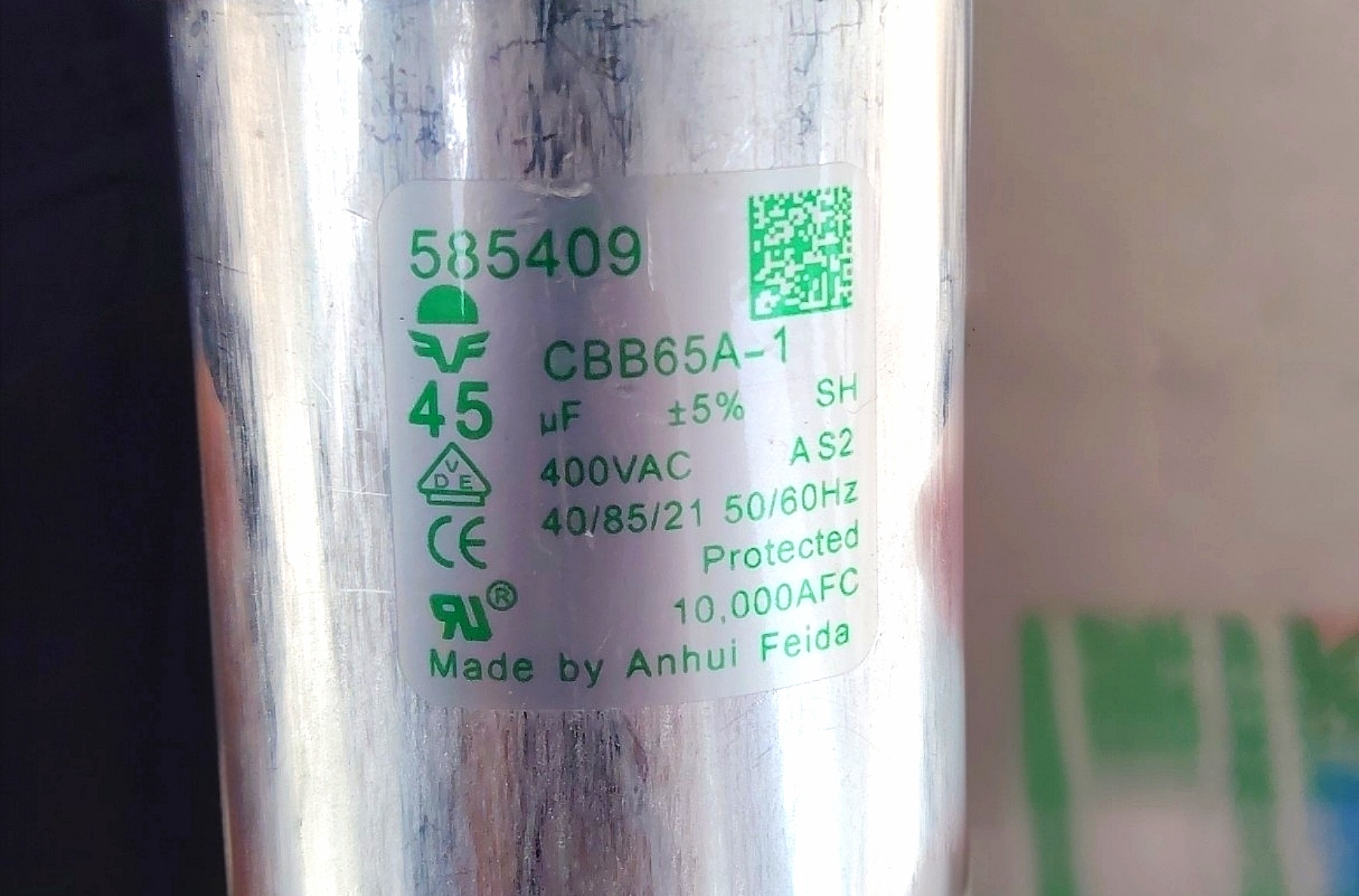
- Start relay and capacitors — A bad start relay or a weak run capacitor will make a compressor “hum and die” and get blamed for being dead when it’s actually fine.
- Internal overload protector — These trip when the compressor overheats and will reset once it cools. Give it 30–60 minutes and test again.
- Winding resistance — Pull the terminal cover, disconnect wires, and test resistance between the common, start, and run terminals with a multimeter. If you’re reading infinite resistance (open winding) or a dead short to the compressor shell, it’s done.
- Locked rotor check — If the compressor hums but won’t start, and the capacitor and relay test fine, the motor may be mechanically locked. At that point, it’s not coming back.
On the restaurant job, the compressor had a shorted winding to ground — confirmed with the multimeter reading near zero ohms to the case. No amount of capacitor swapping was going to fix that.
Replacing the FH2480Z-CX3A: What the Job Actually Involves
This isn’t a bolt-it-in-and-go job unless you’re EPA 608 certified and have proper refrigerant recovery equipment. Here’s roughly how it went:
Recover the refrigerant first. You cannot legally or safely vent R404A into the atmosphere. I used a recovery machine (I run a Yellow Jacket RecoverXLT) to pull the charge into a recovery tank.
Remove the old compressor. Unsweat or cut the suction and discharge lines, disconnect the wiring, and unbolt it from the base.
Check the drier and oil. Any time you replace a compressor after a failure — especially an electrical one — change the filter drier. Burned-out windings can contaminate the system with acid, and skipping this step is asking for a repeat failure.
Install the new FH2480Z-CX3A, braze in the new lines, and pressure test with dry nitrogen before anything else. I hold pressure for at least 15–20 minutes watching the gauge for any drop.
Evacuate the system with a proper vacuum pump down to around 500 microns, using a digital micron gauge, not just a compound gauge — those aren’t accurate enough at that level.
Recharge with R404A by weight, using the nameplate charge amount as your starting point, then fine-tune based on superheat and subcooling readings once it’s running.
Start it up and monitor. Watch suction and discharge pressures, amp draw, and listen for anything unusual for the first hour.

The Mistake I Still Think About
On that same restaurant job, I fired the system up, saw good pressures, and left feeling good about myself. Came back the next day to a callback — the compressor was cycling on its overload every twenty minutes.
Turned out I hadn’t fully evacuated the system. There was still a small amount of moisture and air trapped in a section of line I hadn’t isolated properly during the pump-down. Moisture in a low-temp R404A system is brutal — it can freeze at the metering device and cause exactly this kind of erratic cycling.
I pulled the vacuum again, this time isolating every branch of the line set individually, and it ran clean after that. Now I always break the system into sections during evacuation on anything with multiple branches or a reach-in case tied into the same line set. It costs an extra 20 minutes. It saves a return trip.
A Few Practical Tips If You’re Dealing With One of These
- Keep the nameplate photo on your phone before you disconnect anything — model number, oil type, refrigerant charge amount, all of it.
- R404A is being phased down under EPA regulations, so pricing has crept up over the last couple of years. If your system needs a full recharge anyway, it might be worth asking a licensed tech about a retrofit to R448A or R449A, which are drop-in-ish replacements with similar performance and better long-term availability.
- Don’t reuse the old filter drier. It’s cheap insurance against a repeat failure.
- If the compressor trips on overload repeatedly but tests fine electrically, check condenser airflow and ambient temperature around the unit before blaming the compressor again. Overheating from a dirty condenser coil will kill compressors early and get blamed on “bad parts.”

Final Thoughts
Compressors like the FH2480Z-CX3A are solid, dependable units when they’re matched to the right application and installed properly. Most of the failures I’ve seen — including my own mistakes — come down to skipping steps under time pressure: rushing the evacuation, grabbing the wrong replacement, or not diagnosing thoroughly before condemning the compressor.
If you’re facing a dead unit right now, slow down, test the electrical side first, and if you do end up replacing it, don’t cut corners on the vacuum and drier change. It’s the boring parts of the job that actually determine whether the fix lasts six months or six years.