
A few years ago, I received a call from the owner of a medium-sized office building whose air conditioning system kept shutting down during the hottest part of the afternoon.The maintenance team had already inspected the electrical components, verified the refrigerant charge, and thoroughly cleaned the condenser coils, yet the system continued to struggle with consistent cooling performance.
After a detailed inspection, the issue was traced back to a compressor that had lost efficiency after years of operation. The replacement selected was a Copeland Scroll ZR72KCE-TFD-522, and the improvement was immediate. The system cooled faster, operated more quietly, and the building occupants stopped complaining about warm meeting rooms.
Experiences like that explain why the Copeland ZR72KCE-TFD-522 remains one of the most trusted scroll compressors in commercial air conditioning systems. Whether installed in rooftop units, packaged systems, ducted split systems, or commercial HVAC equipment, this compressor has built a reputation for dependable performance and long service life.
This guide covers the technical specifications, applications, installation tips, troubleshooting advice, and real-world observations that every HVAC technician, contractor, or facility manager should know about the ZR72KCE-TFD-522.
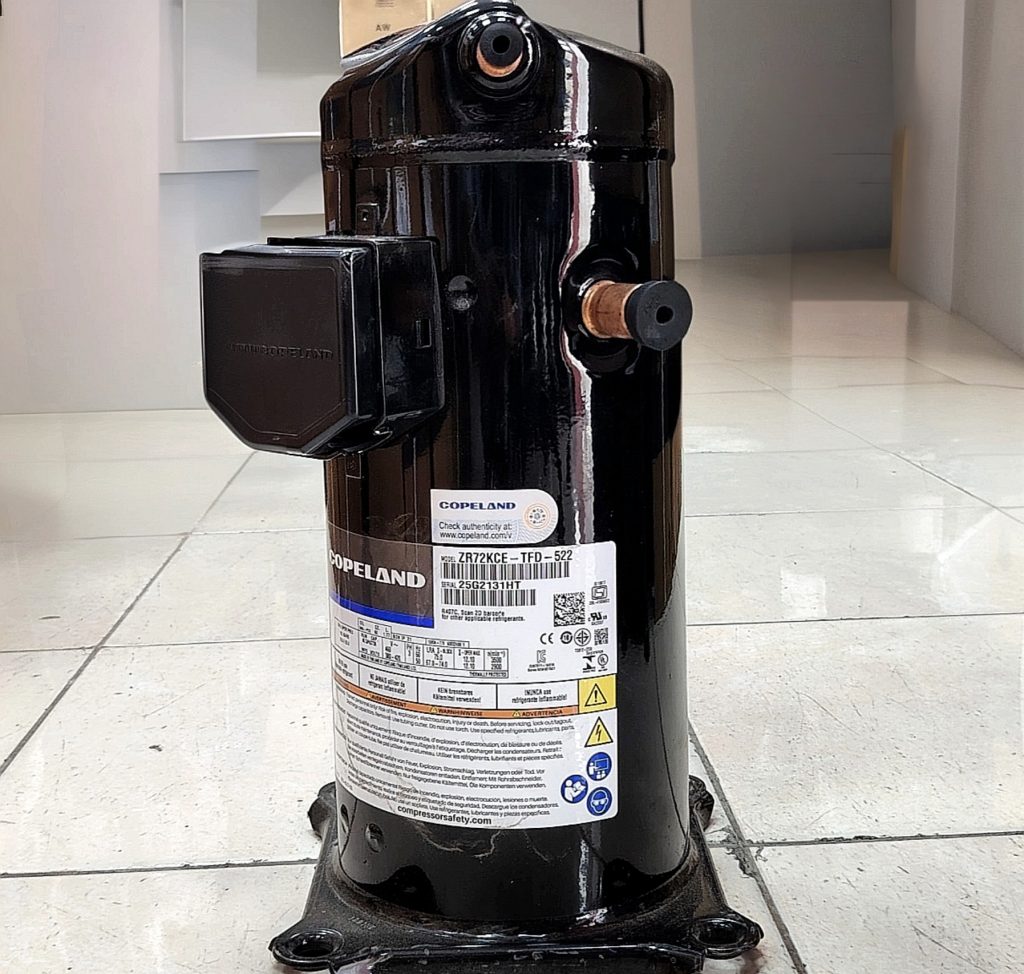
Overview of the Copeland ZR72KCE-TFD-522
The Copeland ZR72KCE-TFD-522 is a hermetic scroll compressor designed primarily for air conditioning applications. It operates on R-407C refrigerant and uses a 380-420V three-phase, 50Hz power supply. According to the compressor specification sheet, it is intended for commercial air conditioning systems and offers strong cooling capacity with efficient operation. Copeland Scroll Compressor ZR72KCE-TFD-522 – Complete Technical Guide.
Unlike traditional reciprocating compressors that use pistons and valves, a scroll compressor utilizes two interlocking spiral elements. One scroll remains stationary while the other moves in an orbital motion to compress refrigerant gas.
This design provides several advantages:
- Fewer moving parts
- Lower vibration levels
- Improved efficiency
- Reduced mechanical wear
- Quieter operation
- Enhanced reliability
These characteristics are major reasons why scroll compressors dominate modern commercial HVAC installations.
Key Technical Specifications
Based on the manufacturer’s technical data, the ZR72KCE-TFD-522 includes the following specifications:
Refrigerant
- R-407C
- Also listed for certain alternative air-conditioning applications using R-134a depending on system design.
Electrical Supply
- 380-420V
- Three-phase
- 50Hz
Cooling Capacity
At standard operating conditions, the compressor provides:
- Approximately 56,500 BTU/hr under one rating condition
- Up to approximately 69,000 BTU/hr under another specified operating condition
Motor Performance
- Maximum Continuous Current (MCC): 14 Amps
- Locked Rotor Amperage (LRA): 74 Amps
- Running Load Current values vary according to operating conditions.
Oil Charge
- Initial oil charge: 56 ounces
- Oil recharge: 60 ounces
Connection Sizes
- Suction connection: 7/8 inch stub
- Discharge connection: 1/2 inch stub
Physical Dimensions
- Overall height: approximately 17.75 inches
- Width: approximately 9.71 inches
- Length: approximately 9.48 inches
- Net weight: approximately 85 pounds
These performance characteristics make the compressor an excellent choice for commercial HVAC applications where consistent cooling and dependable operation are essential.
Why HVAC Technicians Like Scroll Compressors
Having worked on a wide range of HVAC systems over the years, I’ve found that scroll compressors generally offer smoother operation and fewer maintenance headaches than many traditional compressor designs.
When a properly installed ZR72KCE-TFD-522 starts operating, vibration levels are significantly lower compared to many piston-type compressors.
In practical terms, this means:
- Less pipe vibration
- Fewer noise complaints
- Reduced mechanical stress
- Longer component life
Building owners often notice quieter operation before they notice any efficiency improvements.
Common Applications of the ZR72KCE-TFD-522
This compressor is frequently found in commercial cooling systems where reliability matters more than anything else.
Rooftop Air Conditioning Units
Commercial rooftops often house large packaged HVAC units.
The ZR72KCE-TFD-522 performs well in these installations because it can handle long operating cycles during periods of heavy cooling demand.
Office Buildings
Office environments require stable temperatures throughout the day.
A dependable compressor helps maintain occupant comfort while minimizing service interruptions.
Retail Stores
Shops and supermarkets experience frequent door openings that increase cooling loads.
The compressor’s strong capacity allows systems to recover quickly when indoor temperatures rise.
Restaurants
Restaurants generate significant heat from:
- Cooking equipment
- Lighting
- Refrigeration systems
- Customer traffic
Reliable compressor performance becomes essential in maintaining comfortable indoor conditions.
Educational Facilities
Schools, training centers, and universities often use HVAC systems equipped with compressors in this capacity range.
These systems frequently operate for extended hours during warm seasons.
Real-World Installation Tips
I’ve seen expensive compressors fail within months because of poor installation practices.
The compressor itself wasn’t defective—the installation process was.
Here are several lessons learned from real service work.
Always Replace the Filter Drier
Many technicians understand this rule, but some still skip it.
Whenever replacing a compressor:
- Install a new filter drier.
- Remove contaminants from the system.
- Protect the new compressor from moisture and debris.
A contaminated system can quickly destroy a new compressor.
Pull a Proper Vacuum
This step is often rushed.
A quality vacuum pump and micron gauge are worth every dollar.
Before charging refrigerant:
- Evacuate the system thoroughly
- Verify deep vacuum levels
- Confirm vacuum stability
Moisture left inside the system can lead to acid formation and oil degradation.
Check Phase Rotation
Three-phase compressors require proper phase sequencing.
Incorrect rotation may cause:
- Reduced performance
- Abnormal noise
- Increased wear
A simple phase rotation meter can prevent unnecessary troubleshooting later.
Verify Voltage Stability
Before startup, I always check supply voltage using a digital multimeter.
Low voltage conditions can create:
- Hard starting
- Overheating
- Increased current draw
- Premature motor failure
Stable power is essential for reliable compressor operation.
Performance Benefits in Daily Operation
Several characteristics make this compressor attractive for commercial applications.
Efficient Cooling
The scroll compression process minimizes refrigerant leakage during compression.
As a result:
- Cooling capacity remains consistent
- Energy efficiency improves
- System performance remains stable
This becomes especially noticeable during extended operating periods.
Lower Maintenance Requirements
Because scroll compressors contain fewer moving parts than many reciprocating designs, there are fewer components subject to mechanical wear.
This does not eliminate maintenance requirements, but it can reduce certain failure points.
Improved Reliability
One facility manager told me his building had operated for nearly a decade with only routine maintenance and no major compressor-related repairs.
While every installation differs, stories like this explain why Copeland compressors have earned industry trust.
Common Problems and Troubleshooting
Even reliable compressors can experience issues.
Understanding the most common causes helps simplify diagnosis.
High Head Pressure
Possible causes include:
- Dirty condenser coils
- Blocked airflow
- Overcharged refrigerant
- Failed condenser fans
Cleaning coils often solves the problem faster than many technicians expect.
Compressor Overheating
Common causes:
- Low refrigerant charge
- Restricted airflow
- High ambient temperatures
- Electrical imbalance
Monitoring discharge temperatures can help identify problems before shutdown occurs.
Hard Starting
Possible reasons include:
- Voltage issues
- Contactor failure
- Electrical imbalance
- Internal motor damage
Always inspect the electrical system before assuming compressor failure.
Poor Cooling Capacity
When cooling performance drops:
- Check refrigerant charge.
- Verify airflow.
- Inspect evaporator cleanliness.
- Measure operating pressures.
- Evaluate superheat and subcooling.
Skipping diagnostic steps often leads to unnecessary part replacement.
Maintenance Practices That Extend Compressor Life
One observation from years in HVAC service is that maintenance matters more than compressor brand alone.
A premium compressor installed in a neglected system may fail sooner than a budget compressor in a well-maintained system.
Clean Condenser Coils Regularly
Dirty coils increase operating temperatures and energy consumption.
Monitor Refrigerant Charge
Incorrect charge levels place unnecessary stress on the compressor.
Inspect Electrical Components
Check:
- Contactors
- Terminals
- Wire connections
- Circuit breakers
- Overload protection devices
Record System Data
I often use digital HVAC gauges and maintenance apps to track:
- Suction pressure
- Discharge pressure
- Superheat
- Subcooling
- Current draw
Comparing historical readings helps identify developing problems early.
Maintain Proper Airflow
Restricted airflow forces the compressor to work harder and longer.
Regular inspection of filters, coils, and fans improves overall system efficiency.
Common Mistakes to Avoid
Several mistakes appear repeatedly during compressor replacements.
Replacing the Compressor Without Finding the Cause
Always identify why the original compressor failed.
Possible root causes include:
- Refrigerant leaks
- Contamination
- Electrical issues
- Airflow problems
- Incorrect refrigerant charging
Installing a new compressor without correcting the underlying issue often leads to another failure.
Poor Brazing Practices
Using nitrogen while brazing helps prevent internal oxidation inside refrigerant lines.
This simple step can significantly improve system cleanliness.
Ignoring Oil Management
Proper oil levels are critical for scroll compressor longevity.
Always follow manufacturer recommendations regarding oil type and quantity.
Skipping Startup Measurements
Record operating pressures, amperage, and temperatures during commissioning.
Baseline measurements provide valuable reference data for future maintenance.
Final Thoughts
The Copeland Scroll Compressor ZR72KCE-TFD-522 continues to be a dependable choice for commercial air conditioning systems because it combines strong cooling performance, efficient operation, and proven scroll compressor reliability. With cooling capacities reaching approximately 56,500–69,000 BTU/hr depending on operating conditions, three-phase electrical compatibility, and a durable scroll design, it is well suited for office buildings, retail stores, rooftop units, restaurants, and other commercial HVAC applications.
From practical field experience, the biggest factor affecting compressor lifespan is rarely the compressor itself. Proper installation, accurate refrigerant charging, clean airflow paths, stable electrical supply, and routine maintenance make the difference between years of trouble-free operation and repeated service calls. When those fundamentals are handled correctly, the ZR72KCE-TFD-522 has the potential to deliver reliable cooling performance for many years in demanding commercial environments. Copeland Scroll Compressor ZR72KCE-TFD-522 – Complete Technical Guide.
1 thought on “Copeland Scroll Compressor ZR72KCE-TFD-522 – Complete Technical Guide”
Comments are closed.