
A few summers ago, I received a call from a customer whose office air conditioning system had suddenly stopped keeping the building cool. The outdoor temperature was pushing past 40°C, employees were complaining, and the existing compressor was drawing excessive current before shutting down on overload. ZR61KCE-TFD-522 Copeland scroll Compressor.
After a detailed inspection, it became clear that the old compressor had reached the end of its service life. The replacement selected was the ZR61KCE-TFD-522 Copeland Scroll Compressor, and within hours of installation, the difference was obvious. The system operated more smoothly, noise levels dropped noticeably, and cooling performance returned to normal.
Since then, I have encountered this compressor in numerous commercial HVAC installations, from office buildings and retail stores to restaurants and light industrial facilities. It has earned a reputation for dependable operation, efficient performance, and long service life when installed correctly.
If you’re considering the ZR61KCE-TFD-522 for a replacement project or a new air conditioning system, this guide will help you understand its features, applications, benefits, and real-world performance.
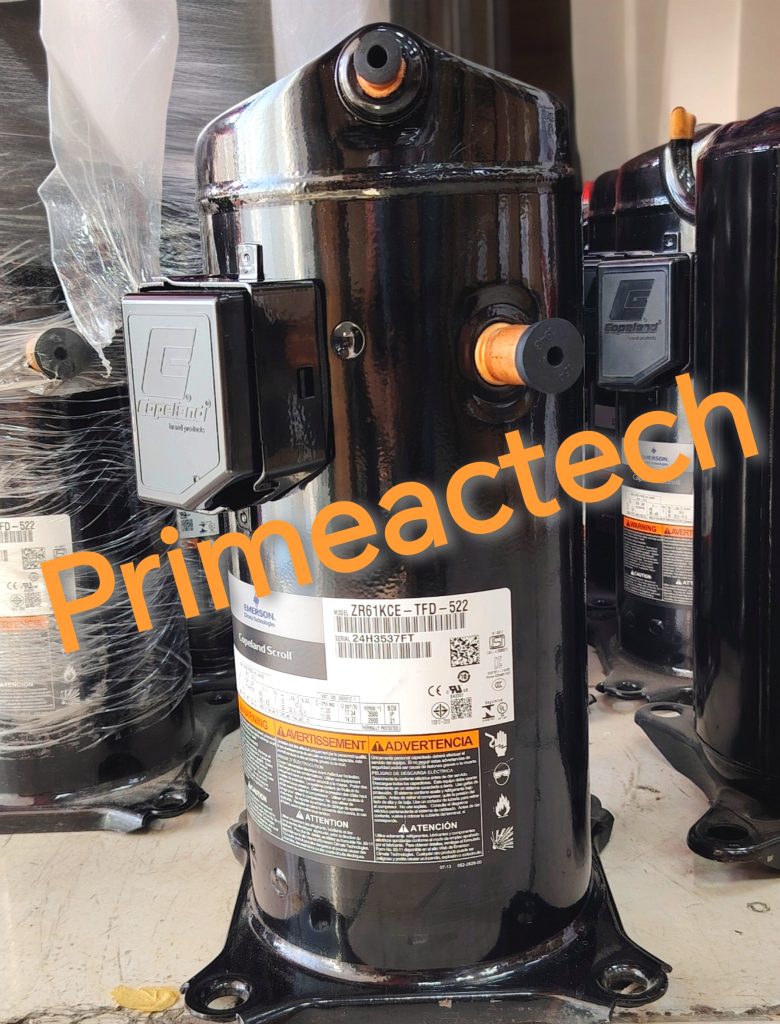
What Is the ZR61KCE-TFD-522 Copeland Scroll Compressor?
The ZR61KCE-TFD-522 is a three-phase scroll compressor designed primarily for commercial air conditioning systems. Manufactured by Copeland, a brand widely respected in the HVAC industry, this compressor utilizes advanced scroll technology to provide efficient and reliable refrigerant compression.
Unlike traditional reciprocating compressors that rely on pistons moving up and down, a scroll compressor uses two interlocking spiral scrolls. One remains stationary while the other orbits around it, compressing refrigerant smoothly and continuously.
This design reduces mechanical wear and vibration while improving efficiency and reliability.
According to the technical data sheet, the ZR61KCE-TFD-522 is designed for R-407C refrigerant, operates on 380–420V three-phase power at 50Hz, and is intended for air conditioning applications.
Key Technical Specifications
Here are some important specifications taken from the compressor documentation:
| Specification | Value |
|---|---|
| Model | ZR61KCE-TFD-522 |
| Compressor Type | Scroll |
| Refrigerant | R-407C |
| Frequency | 50 Hz |
| Phase | 3 Phase |
| Voltage | 380–420 V |
| Application | Air Conditioning |
| Suction Connection | 7/8″ Stub |
| Discharge Connection | 1/2″ Stub |
| Oil Charge | 62 oz |
| Net Weight | 79.5 lbs |
| Sound Power | 71 dBA Average |
| Horsepower Class | Approximately 5 HP |
Technical performance values show cooling capacities reaching approximately 58,000 Btu/hr under specified operating conditions while maintaining efficient power consumption.
First Impressions During Installation
One thing I immediately appreciate about Copeland scroll compressors is how straightforward they are to install when replacing an existing compatible unit.
The ZR61KCE-TFD-522 has a compact footprint considering its capacity. Access to suction and discharge connections is convenient, making pipework modifications easier compared to some older compressor designs.
After installation and startup, technicians often notice how quietly the compressor operates.
I remember checking one newly installed unit because I initially thought it wasn’t running. The vibration level was so low compared to the old reciprocating compressor that I had to verify operation through system pressures and amperage readings.
That smooth operation is one of the biggest advantages of scroll technology.
How Scroll Technology Works
Many building owners hear the term “scroll compressor” but aren’t entirely sure what makes it different.
Here’s a simple explanation.
Step 1: Refrigerant Enters the Compressor
Low-pressure refrigerant vapor enters through the suction port.
Step 2: The Scrolls Begin Compression
The orbiting scroll traps refrigerant gas between two spiral surfaces.
Step 3: Compression Increases Gradually
As the refrigerant moves toward the center of the scroll set, the volume decreases and pressure increases.
Step 4: High-Pressure Gas Exits
The compressed refrigerant exits through the discharge port and continues through the condenser.
Because this process is continuous rather than pulsed like a piston compressor, operation is smoother and more efficient.
Performance in Real HVAC Applications
Over the years, I’ve seen the ZR61KCE-TFD-522 perform successfully in several different environments.
Office Buildings
Commercial offices often operate HVAC systems for ten to twelve hours daily.
This compressor handles continuous operation well and maintains stable cooling even during peak summer conditions.
Retail Stores
Customer traffic can significantly increase indoor heat loads.
The compressor responds effectively to changing cooling demands without excessive cycling.
Restaurants
Restaurant kitchens generate substantial heat.
Reliable compressor performance becomes critical for maintaining comfortable dining areas.
Educational Facilities
Schools and training centers often require dependable cooling during extended operating hours.
The smooth operation and relatively low noise output make this compressor suitable for these environments.
Rooftop Package Units
Many rooftop air conditioning systems utilize Copeland scroll compressors because of their proven durability and simple maintenance requirements.
Benefits That Stand Out in Everyday Use
After working with many HVAC systems, certain strengths of the ZR61KCE-TFD-522 consistently become apparent.
Excellent Reliability
Perhaps the biggest reason technicians trust Copeland compressors is reliability.
When properly installed and maintained, these units often provide years of trouble-free service.
Many compressor failures blamed on the compressor itself are actually caused by:
- Dirty condenser coils
- Refrigerant contamination
- Improper charging
- Voltage imbalance
- Poor airflow
The compressor design itself is generally very robust.
Lower Noise Levels
Compared with older reciprocating compressors, noise reduction is significant.
The compressor documentation lists an average sound power level of approximately 71 dBA, which contributes to quieter overall system operation.
Reduced Vibration
Low vibration helps protect:
- Refrigerant piping
- Mounting hardware
- Electrical connections
- Condensing unit components
This often translates into fewer maintenance issues over time.
Energy Efficiency
Energy costs matter for every building owner.
The continuous compression process used in scroll technology typically delivers better efficiency than many traditional piston-type compressors.
Strong Starting Characteristics
The compressor starts smoothly and handles commercial operating conditions effectively, reducing stress on system components.
Installation Tips Based on Field Experience
Proper installation can make the difference between a compressor that lasts fifteen years and one that fails prematurely.
Check Voltage Before Startup
Always verify:
- Supply voltage
- Phase balance
- Frequency
- Grounding
Even small voltage imbalances can increase motor temperature significantly.
Replace the Filter Drier
This is one shortcut that should never be taken.
A new compressor deserves a new filter drier.
Contaminants left inside the system can quickly damage the replacement compressor.
Pull a Deep Vacuum
Use a quality vacuum pump and micron gauge.
Moisture remaining in the system can create acid formation and reduce compressor lifespan.
Confirm Refrigerant Charge
Charge according to manufacturer specifications and verify system pressures after startup.
Both overcharging and undercharging can reduce efficiency and increase operating temperatures.
Verify Oil Return
Proper refrigerant velocity and piping design are essential for returning lubricant to the compressor.
This becomes particularly important in larger commercial installations.
Common Problems and Troubleshooting
Even reliable compressors occasionally experience operational issues.
Compressor Won’t Start
Possible causes include:
- Blown fuses
- Faulty contactor
- Phase loss
- Internal overload protection
- Control circuit failure
Always perform electrical diagnostics before assuming compressor failure.
High Head Pressure
Common reasons include:
- Dirty condenser coils
- Failed condenser fans
- Refrigerant overcharge
- Restricted airflow
Cleaning the condenser often resolves the problem.
Poor Cooling Performance
Investigate:
- Refrigerant leaks
- Airflow restrictions
- Expansion valve operation
- Evaporator coil condition
Many cooling problems originate elsewhere in the system.
Excessive Current Draw
Possible causes:
- Voltage imbalance
- High condensing temperatures
- Mechanical restrictions
- Incorrect refrigerant charge
Monitoring amperage alongside pressure readings helps identify the root cause quickly.
Common Mistakes to Avoid
Skipping System Cleaning
Contamination is one of the leading causes of compressor failure.
Always keep piping sealed and clean during installation.
Ignoring Electrical Issues
A compressor can only perform properly if power quality is acceptable.
Never overlook voltage measurements.
Reusing Contaminated Components
Old filter driers and contaminated oil can damage even a brand-new compressor.
Poor Brazing Practices
Always use nitrogen while brazing refrigerant lines.
This prevents internal oxidation that can circulate through the system later.
Incorrect Refrigerant Handling
The ZR61KCE-TFD-522 is designed for specific refrigerants and operating conditions. Following manufacturer recommendations is essential for reliable operation.
Is the ZR61KCE-TFD-522 Worth Choosing?
From my experience working on commercial HVAC systems, the answer is yes.
The ZR61KCE-TFD-522 Copeland Scroll Compressor combines dependable performance, smooth operation, low vibration, and solid energy efficiency. Whether it’s installed in an office building, retail space, restaurant, or rooftop package unit, it consistently delivers the reliable cooling performance contractors and facility managers expect.
No compressor is immune to poor installation practices or neglected maintenance, but when the system is clean, properly charged, and electrically sound, this Copeland model proves why scroll compressors have become the preferred choice across much of the HVAC industry.
1 thought on “ZR61KCE-TFD-522 Copeland scroll Compressor”
Comments are closed.