
There was a time when I got a call from a small office building where the air conditioning system kept shutting down every afternoon. The technicians had already checked the refrigerant level, cleaned the condenser, and even replaced a contactor, but the problem kept coming back. After tracing the issue step by step, we discovered the compressor was simply worn out after years of continuous service.
The replacement chosen was the Copeland Scroll Compressor ZR81KCE-TFD-522.
I’ll admit I was expecting a routine compressor swap, but after seeing how quietly it ran and how stable the system became over the following months, I understood why so many HVAC technicians trust Copeland scroll compressors for commercial cooling applications.
If you’re researching this model before buying or replacing an existing compressor, here’s everything I’ve learned from working with it.
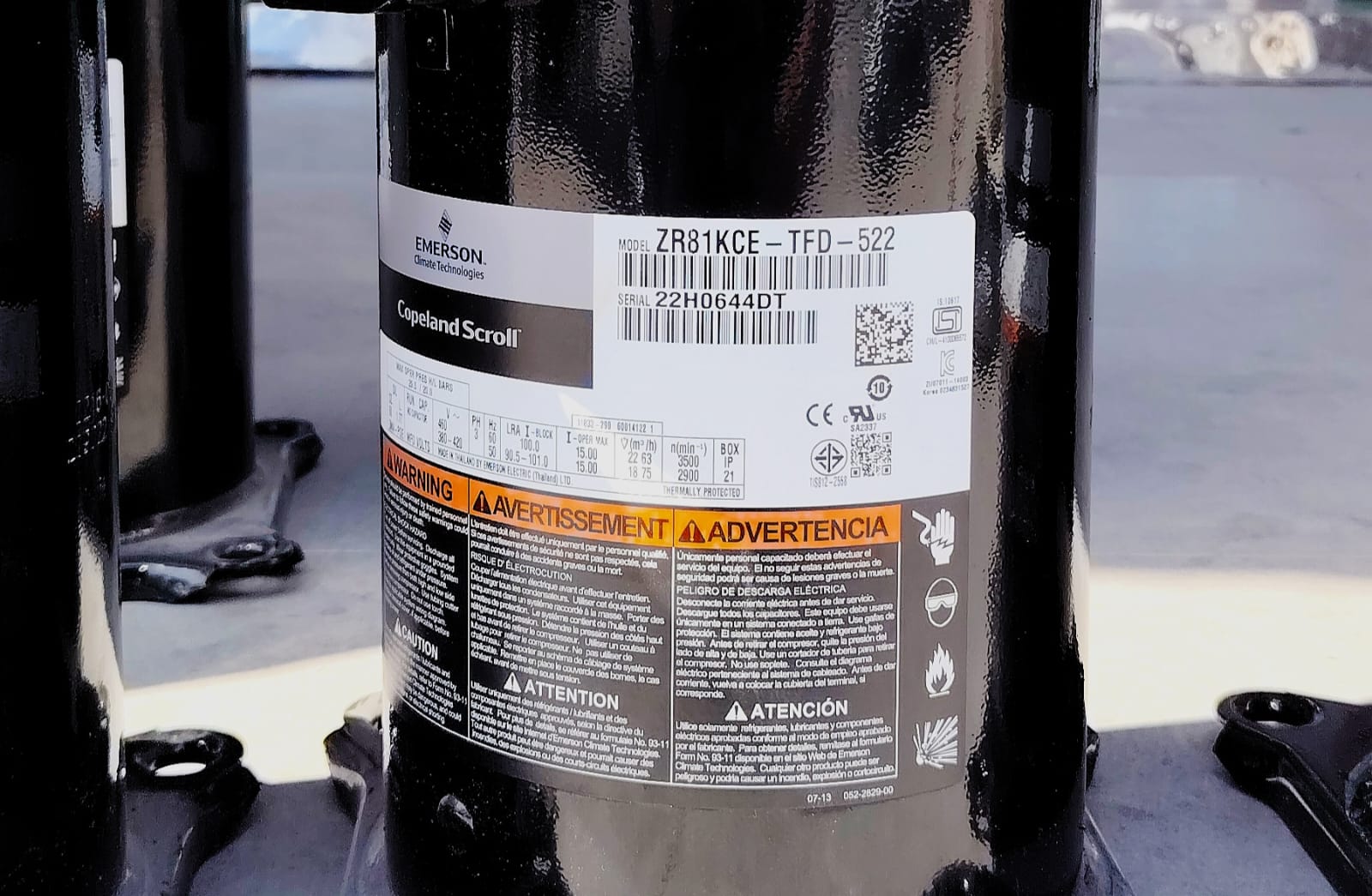
What is the Copeland Scroll Compressor ZR81KCE-TFD-522?
The Copeland ZR81KCE-TFD-522 is a three-phase scroll compressor designed primarily for commercial air conditioning systems. It is commonly installed in:
- Rooftop packaged units
- Commercial split AC systems
- Large ducted air conditioners
- Light industrial cooling systems
- Office buildings
- Retail stores
- Restaurants
This model is built for continuous operation where reliability matters far more than squeezing out a tiny bit of extra capacity.
Quick Specifications
According to the manufacturer specifications provided in the uploaded datasheet:
| Specification | Details |
|---|---|
| Model | Copeland ZR81KCE-TFD-522 |
| Compressor Type | Scroll |
| Refrigerant | R-407C |
| Frequency | 50 Hz |
| Phase | 3 Phase |
| Voltage | 380–420V |
| Cooling Application | Air Conditioning |
| Oil Charge | 56 oz |
| Net Weight | 86 lbs (39 kg) |
| Suction Connection | 7/8″ Stub |
| Discharge Connection | 3/4″ Stub |
| Rated Speed | 2900 RPM |
| Maximum Operating Current | 17 Amps |
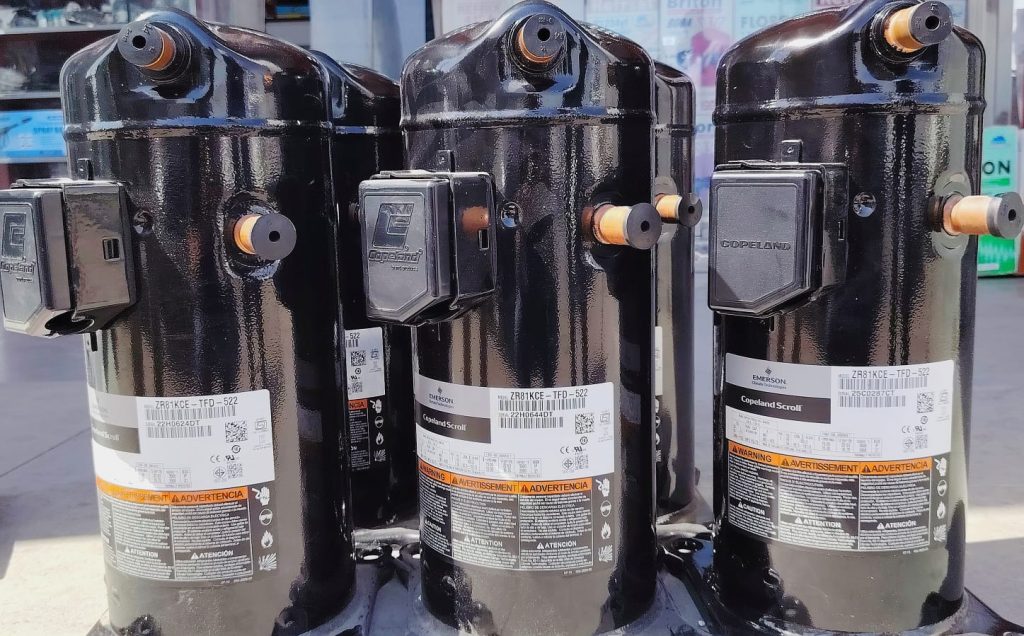
My First Impression
One thing I noticed immediately after unpacking the compressor was its solid construction.
Copeland compressors have always felt heavier and better assembled than many lower-cost alternatives I’ve installed over the years. The welds looked clean, the terminals were protected well, and nothing felt cheaply made.
Installation also went smoothly because the mounting dimensions matched the original unit we were replacing.
That saved us a surprising amount of labor.
Performance in Daily Operation
After installation, the system stabilized within a short period.
Here are the improvements we noticed:
- Faster cooling
- Lower compressor noise
- Smooth startup
- Stable suction pressure
- Better discharge temperature
- Reduced vibration
Perhaps the biggest surprise was how quiet the system became.
Many older reciprocating compressors create noticeable vibration throughout the piping. With this scroll compressor, those vibrations were significantly reduced.
Cooling Capacity
The compressor delivers approximately:
- 65,100 BTU/hr under one test condition
- Up to 78,300 BTU/hr under another standard operating condition
This makes it suitable for medium to large commercial cooling systems.
Why Scroll Compressors Are Popular
Years ago, reciprocating compressors dominated commercial HVAC systems.
Today, scroll compressors have become the preferred choice for several reasons.
Fewer Moving Parts
The scroll mechanism has fewer components compared to piston compressors.
That usually means:
- Less wear
- Fewer failures
- Longer service life
Lower Noise
One thing customers appreciate immediately is quieter operation.
Instead of loud knocking sounds during startup, the compressor starts smoothly and runs with a soft humming sound.
This makes a noticeable difference in offices, clinics, and hotels.
Better Reliability
When systems operate for long hours every day, reliability becomes more important than anything else.
The ZR81KCE-TFD-522 has built a strong reputation for surviving years of continuous service when properly maintained.
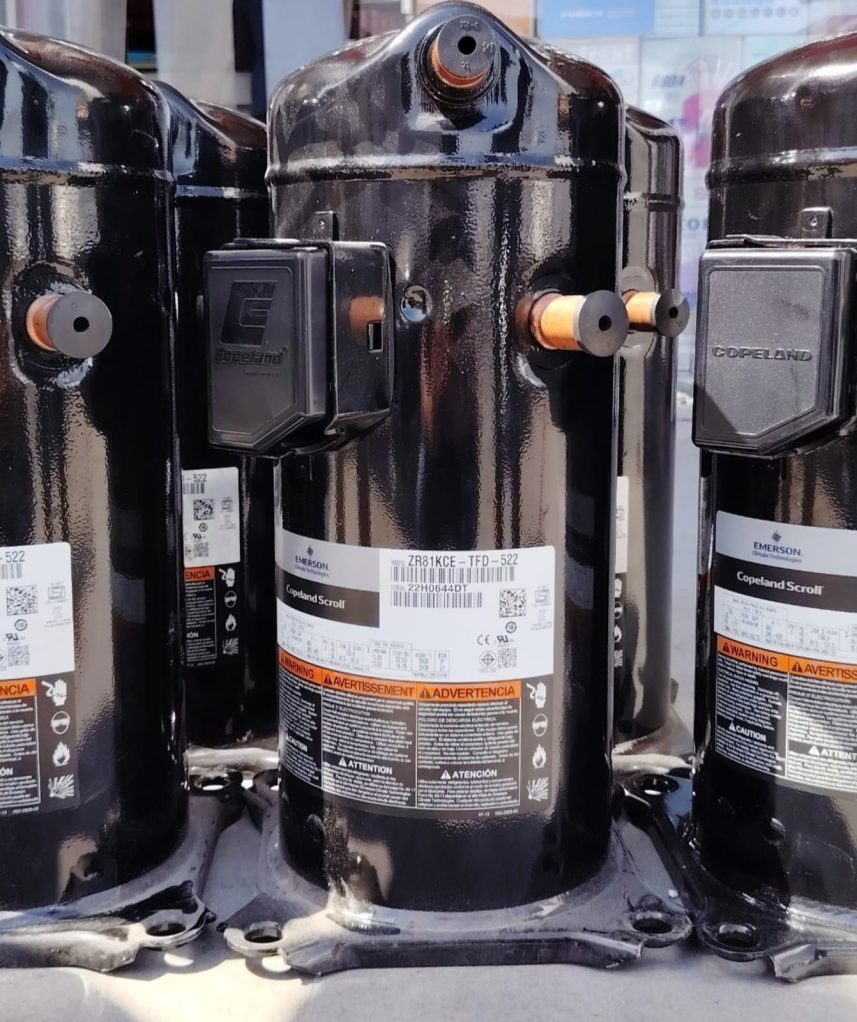
Installation Tips from Experience
Although replacing the compressor isn’t especially difficult for an experienced HVAC technician, there are a few steps that should never be skipped.
Recover the Refrigerant Properly
Never vent refrigerant into the atmosphere.
Always use proper recovery equipment.
Flush the System
If the previous compressor failed internally, flush the refrigerant lines before installing the replacement.
Skipping this step can contaminate the new compressor.
Replace the Filter Drier
This is one mistake I see surprisingly often.
Some installers try to save money by reusing the old filter drier.
Don’t.
A new filter drier costs very little compared to replacing another compressor.
Check Oil Compatibility
The ZR81KCE-TFD-522 uses oil compatible with its specified refrigerant. Mixing incompatible oils can reduce lubrication and shorten compressor life.
Pull a Deep Vacuum
Before charging refrigerant, evacuate the system thoroughly.
Removing moisture is one of the simplest ways to extend compressor life.
Common Applications
I’ve seen this compressor installed in many different environments.
Some of the most common include:
- Shopping centers
- Restaurants
- Warehouses
- Office buildings
- Hotels
- Schools
- Medical clinics
Anywhere dependable cooling is needed, this model performs well.
Things I Like Most
After working with several installations, these stand out the most.
Excellent Build Quality
Nothing feels flimsy.
Everything from the shell to the electrical terminals gives confidence.
Quiet Performance
Customers often comment that the outdoor unit sounds noticeably quieter after replacement.
Stable Cooling
Temperature fluctuations become much smaller once the compressor starts operating normally.
Easy Replacement
If replacing another compatible Copeland model, installation is generally straightforward because of similar dimensions and connections.
A Few Things to Keep in Mind
No compressor is perfect.
Here are a few practical considerations.
Three-Phase Power Required
This model requires 380–420V three-phase power.
It isn’t suitable for residential single-phase electrical systems.
Proper Refrigerant Matters
Using the wrong refrigerant can damage the compressor and reduce efficiency.
Always verify system compatibility before installation.
Installation Quality Matters
I’ve seen expensive compressors fail simply because:
- Moisture remained in the system
- Refrigerant charge was incorrect
- The expansion valve wasn’t replaced when needed
- Contaminants were left inside the piping
Even the best compressor can’t compensate for poor installation practices.
Common Mistakes to Avoid
Over the years, I’ve seen several avoidable issues that lead to premature compressor failure:
- Reusing contaminated oil
- Skipping system flushing after a burnout
- Installing without replacing the filter drier
- Charging refrigerant by guesswork instead of measuring
- Ignoring airflow problems at the condenser
- Operating with incorrect voltage
- Failing to check superheat and subcooling after startup
Taking the time to do these checks can save both money and downtime.
Is the ZR81KCE-TFD-522 Worth Buying?
Based on my experience, I would recommend the Copeland Scroll Compressor ZR81KCE-TFD-522 for commercial air conditioning systems that require dependable, long-term performance. It offers smooth operation, quiet running, and the durability that many facility managers and HVAC technicians look for in a replacement compressor.
It isn’t the cheapest option on the market, but reliability often outweighs the initial purchase price. A well-installed compressor that runs for years without major issues usually proves to be the better investment.
If your existing system is designed for R-407C, operates on 380–420V three-phase power, and matches the compressor’s capacity and specifications, the ZR81KCE-TFD-522 is a strong choice for restoring efficient and dependable cooling. Before ordering, always verify compatibility with your system and follow the manufacturer’s installation guidelines to maximize performance and service life.